
Clintel at Heartland Conference: new terminology in climate debate needed
At the Heartland Conference in Washington, D.C., Clintel highlighted new perspectives on climate science, including the benefits of CO₂-driven global greening and the need for a renewed vocabulary in the climate debate, as presented by Marcel Crok.

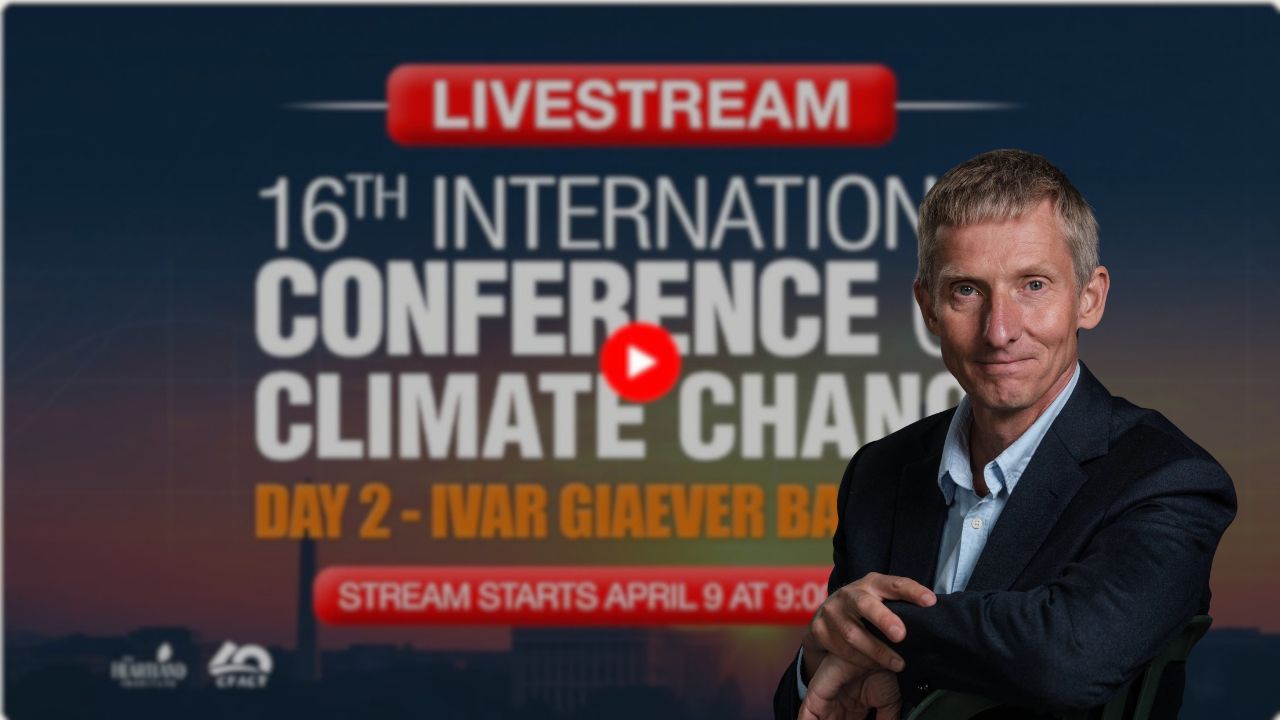
Marcel Crok
Peter Baeten
Date: 11 April 2026
Last week (April 8 and 9), Clintel attended the 16th International Conference on Climate Change in Washington, D.C., organized by the Heartland Institute. Clintel Director Marcel Crok was one of the speakers at this important annual climate-realist conference. The focus of his presentation was on the significant (positive impact of the) greening of the Earth due to the increased concentration of CO2 in the atmosphere. This greening effect is now undeniable and also has a positive impact on global agricultural yields.
New language and vocabulary are needed
Clintel’s American branch, Climate Intel, led by researcher Forrest Frantz, is also closely monitoring this greening effect and contributed to the data presented. Frantz has also put forward striking suggestions regarding the language used in the climate debate, a topic Marcel also addressed in his presentation. Language plays an enormous role in how people experience the climate debate. Climate alarmists have been using this to their advantage since the beginning of the discussion. Crok and Frantz therefore advocate that the climate-realist side also start using new, more positive terms. As a start, Crok offered six concrete suggestions:
Emissions is replaced by: Restoration of CO2 to the air
Fossil fuels becomes: Natural Organic Energy
Carbon dioxide changes into: CO2, Earth’s Oxygen-of-Life
Climate change becomes: climate (because the climate is always changing anyway)
Greenhouse gas is replaced by: Active IR-effect of CO2
H2O and CO2 emissions from power plants becomes: Atmospheric rivers of life
Watch Marcel Crok’s lecture below:


more news
China’s Massive Coal-to-Liquids Expansion
In this article, Australian science writer Jo Nova examines China’s rapidly expanding coal-to-chemicals and coal-to-liquids industry. While much of the West focuses on phasing out fossil fuels, China is quietly transforming coal into fuels, plastics and fertilizers at massive scale—raising important questions about energy security and global climate policy.
New Ice Core Study Finds No Clear CO₂–Temperature Link
New research from ancient Antarctic ice cores is challenging long-held assumptions about the role of carbon dioxide in Earth’s climate history. Evidence suggests that CO₂ and methane levels remained remarkably stable over millions of years—even as the planet experienced dramatic temperature shifts. These findings raise fresh questions about the extent to which greenhouse gases alone can explain past and present climate change.

BlackRock CEO Abandons Climate Delusion for Investor Needs
BlackRock CEO Larry Fink has publicly shifted toward what he calls energy pragmatism, admitting that society now demands a balanced approach to meeting power needs rather than adherence to rigid climate agendas. This could be a pivotal moment for global energy policy, as one of the planet's most powerful financial players steps back from decades of ill-advised “green” mandates.

