
Europe’s ‘Green’ Emperor Is Naked and Cold
Europe stands as the self-proclaimed cathedral of the “green” transition. Bureaucrats in Brussels and politicians in Berlin have spent decades lecturing the world on the moral necessity to abandon hydrocarbons. They have constructed a narrative of the European Union as a shining city powered by the breeze and sun, modeling a net-zero utopia.

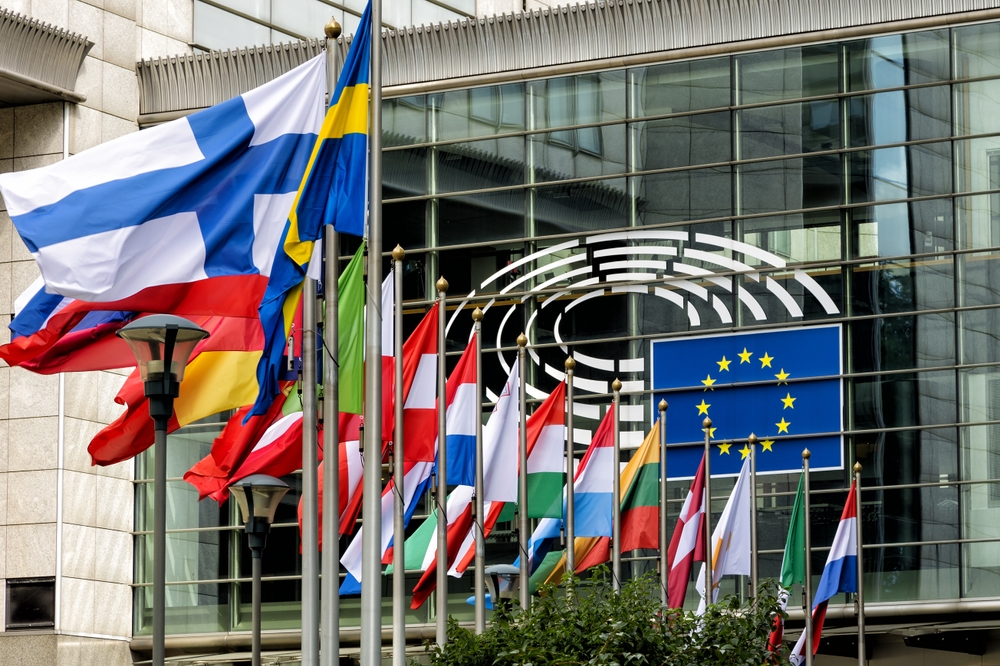
Source: Fabrizio Maffei / Shutterstock.com
Vijay Jayaraj
Date: 18 December 2025
Yet, when the first real chill of winter settled over the continent this fall, that facade collapsed under the weight of physical reality.
Europe depends on fossil fuels for approximately 70% of its total energy consumption. This figure has remained stubbornly consistent over the years despite billions of euros spent on solar and wind infrastructure. The much-celebrated growth in those technologies masks a fundamental truth about energy systems that European policymakers refuse to acknowledge in public: Electricity accounts for only a fraction of total energy demand.
Transportation, heating, industrial processes and manufacturing continue to run overwhelmingly on oil, natural gas and coal. Highlighting additions in renewable power generation while ignoring the broader energy picture is like taking pride in a new front door while the rest of the house is in shambles
In late November, the fragility of a weather-dependent energy system went on display as temperatures dropped and the demand for space heating surged. This is a predictable feature of life in the Northern Hemisphere, yet European energy policy seems perpetually surprised by it.
Right when families needed heat the most, the wind refused to blow. This is the “Dunkelflaute” – the dark doldrums – about which engineers have warned for years. Wind generation plummeted by 20%.
Operators of the power grid, needing a backup source to avoid blackouts, turned not to batteries, which remain woefully inadequate for the job. Instead, they harnessed a workhorse of today’s energy systems: natural gas. Gas-fired generation surged by more than 40% to fill the void left by stalled wind turbines.
In the Netherlands, heating-degree days – a measure of demand for warmth – were 35% above the five-year average. Data from mid-November paints a damning picture of the failure of so-called renewables. Between November 14 – 21, as the first cold spell gripped the region, European gas demand skyrocketed by 45%.
In absolute terms, daily gas demand leaped by 0.6 billion cubic meters per day. This was not a gradual uptick. It was the panic-induced spike of a 75% increase in residential and commercial heating needs.
Gas storage sites were the unsung heroes of this drama, meeting approximately 90% of the jump in daily demand during a critical week. Withdrawals from storage facilities surged by nearly 450%.
The magnitude of this intervention by natural gas is difficult to overstate. To put the 0.6 billion cubic meters of gas into perspective, consider that the energy equivalent of that amount of gas is the daily output of 220 nuclear power plants – a number nearly five times the size of France’s entire nuclear fleet.
Imagine the catastrophe if Europe had achieved its net-zero goals and eliminated its gas infrastructure. There is no battery system on Earth, existing or planned, that could deploy the equivalent of 220 nuclear reactors.
Despite this frantic consumption of gas, prices have remained relatively stable. This was not due to European foresight. It was due to the “peace dividend” of potentially resolving the Ukraine conflict and, more importantly, a flood of liquefied natural gas from the United States.
Herein lies the supreme irony of the story: An anti-fossil fuel, anti-drilling European Union is keeping its population alive only because of a pro-fossil fuel, pro-human administration across the Atlantic. The United States, by encouraging hydrocarbon production, has created the surplus that now warms European homes.
Fossil fuels are the lifeblood of daily life, especially in advanced societies, which cannot run on the wishful thinking of wind and sun worshipers. The stability of European society today rests on the shoulders of American drillers of gas wells.
The European Union serves as a warning of what happens when ideology trumps physics. Climate mandates cannot make the wind blow. The “green” emperor has no clothes, and, baby, it’s cold outside.

This commentary was first published at RealClear Markets December 16.

Vijay Jayaraj
Vijay Jayaraj is a Science and Research Associate at the CO2 Coalition, Fairfax, Virginia. He holds an M.S. in environmental sciences from the University of East Anglia and a postgraduate degree in energy management from Robert Gordon University, both in the U.K., and a bachelor’s in engineering from Anna University, India.

more news
No Evidence Weather Extremes Are Becoming More Frequent or Intense: (3) Floods
In a series of articles on extreme weather attribution, physicist Ralph B. Alexander examines whether observational evidence supports claims that weather extremes are becoming more frequent or intense. Following his previous article on droughts, this installment focuses on floods.
The Biggest Garbage Heaps in Human History
So much for the lies about clean, renewable, sustainable energy. Where will all the trash go? Cumulative global wind garbage (blades only) is projected to reach 200,000,000 tons by 2050 and cumulative global solar trash, 78,000,000 tons, says Paul Driessen.

“There Is No Such Thing as Renewable Energy”
Geologist, energy expert and educator Scott Tinker challenged some of the central assumptions behind the modern energy transition in his recent appearance on the popular podcast Triggernometry: “There’s no such thing as renewable energy.”

