
Germany’s Energy Minister Admits Renewable Energy is Ruining the Country
Germany’s Energy Minister recently delivered a verdict that would have been career-ending heresy only a year ago: “One fact has been concealed for too long: an energy transition that ignores system costs will ruin the country it claims to save.” So fifteen years after Merkel’s nuclear panic, reality is reasserting itself with the cold logic of physics and markets.

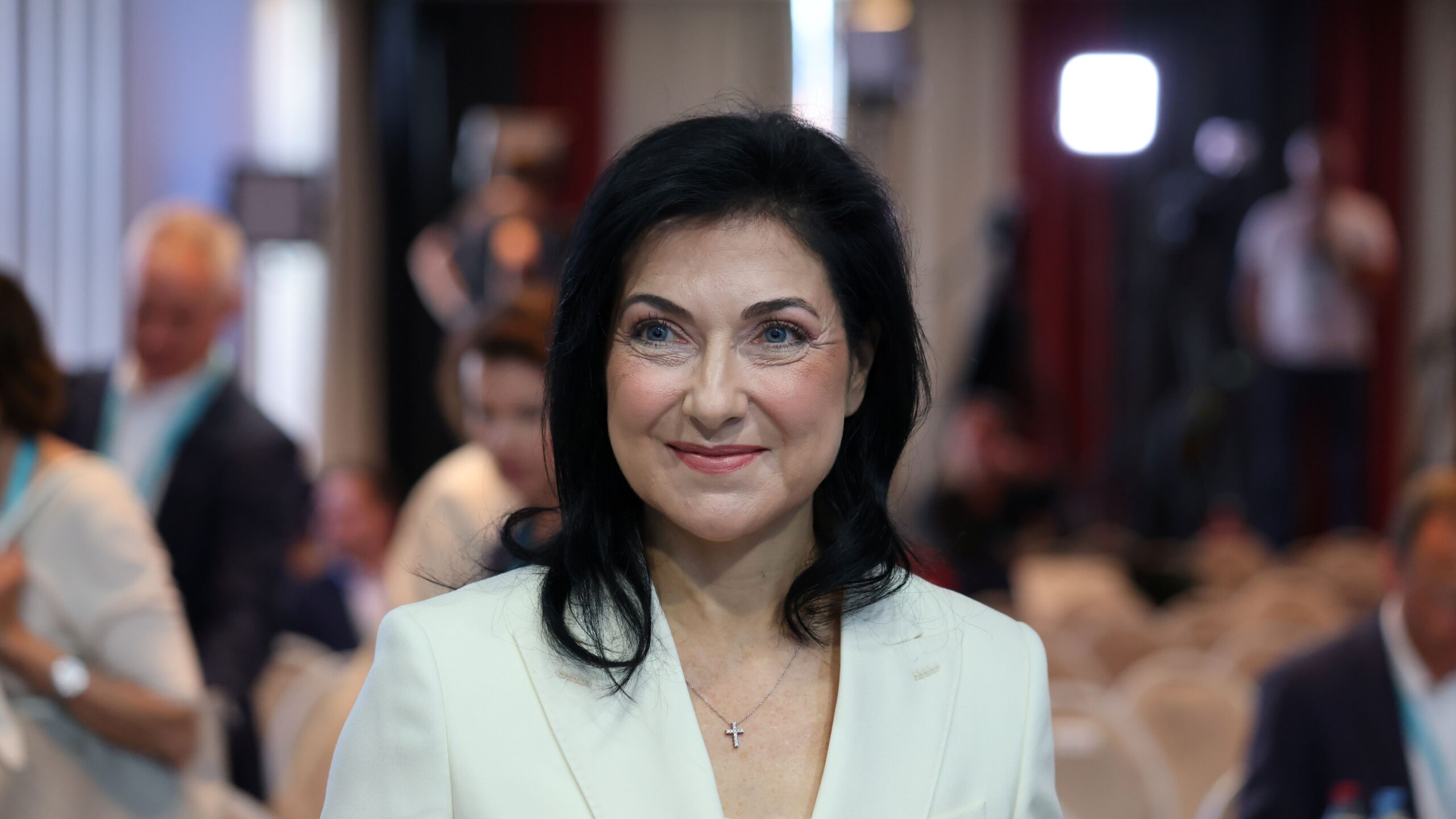
Energy Minister Katherina Reiche. (Source: Shutterstock)
Tilak Doshi
Date: 20 April 2026
When Simon Wakter, Political Adviser to Sweden’s Minister for Energy, posted on X last Wednesday with a simple “Wow, incredible article” and a clapping emoji, he captured the shock rippling through Europe’s energy commentariat. The target of his applause was not some fringe sceptic but Germany’s own Economy and Energy Minister, Katherina Reiche.
In a guest column for the Frankfurter Allgemeine Zeitung, Reiche delivered a verdict that would have been career-ending heresy only a year ago: “One fact has been concealed for too long: an energy transition that ignores system costs will ruin the country it claims to save.” To anyone who has watched Germany’s Energiewende — that totemic experiment in decarbonisation-by-decree — unfold like a slow-motion train wreck, Reiche’s words land like a thunderclap from the Establishment itself.
Here is a senior CDU Minister in Chancellor Friedrich Merz’s Government openly admitting that two decades of Green-inspired fantasy have saddled the continent’s industrial powerhouse with hidden costs now running, according to estimates she cites, at €36 billion a year and climbing towards €90 billion. Grid expansions, backup power for intermittent wind and solar and the sheer inefficiency of trying to run a modern economy on the weather: all of it, she says, must stop being airbrushed out of the official narrative. The self-deception, she warns, is over.
Green Tyranny
This is not mere technocratic tinkering. It is the first major public crack in the ideological edifice that has dominated German — and by extension European — energy policy since the anti-nuclear, beatnik ’68ers’ generation seized the cultural high ground. Rupert Darwall chronicled the phenomenon with great precision in Green Tyranny: how a handful of German Greens, personified by the sneaker-wearing Joschka Fischer swearing in as Hesse’s environment minister in 1985, exported their peculiar red-green blend of anti-capitalist zeal and romantic environmentalism across the continent and beyond.
That gospel found a ready audience in the Anglosphere. In the summer of 1988, NASA scientist James Hansen delivered his now-infamous testimony to the US Congress, declaring that “the greenhouse effect has been detected and is changing our climate now”. The moment was theatrical, the science shaky, but the political effect electric. It fused with the inchoate ideas already circulating among Western intellectuals: Paul Ehrlich’s The Population Bomb (1968), which prophesied mass famine that never came; Rachel Carson’s Silent Spring (1962), which launched the modern environmental movement on the back of exaggerated claims about DDT; and E.F. Schumacher’s Small is Beautiful (1973), the manifesto of ‘Buddhist economics’ that preached reducing human demand rather than raising living standards. As the great Chicago economist Frank Knight observed, economic progress consists not in suppressing desires nor even in satiating them but in their “ever greater refinement and multiplication” — a direct antithesis to Schumacher’s call for ascetic material restraint as spiritual virtue.
Misanthropy
This European ideological curse of environmental misanthropy spread among the young urban intelligentsia of the developing countries through the educational curricula and mass media and the vast number of students studying in the progressive universities of the West, from Canada to Australia, Ireland to Italy and New York to California and Florida.
The spread of Europe’s green gospel was enthusiastically supported by Left-wing billionaire foundations which sprouted thousands of “grassroots NGOs” in Asia, Africa and Latin America. These so-called grassroots NGOs were handy to provide a moral cover for grifting renewable-energy lobbies seeking rents from the public purse. Local ‘Bootleggers and Baptists‘ coalitions arose across the developing countries that derived mutual benefits in Europe’s carbon colonialism. To complete the circle, captured agencies such as the World Bank, the Asian Development Bank and the IMF imposed anti-fossil-fuel constraints as a condition for aid and public finance to poorer African and Asian governments.
At the root of it all lay Europe’s long love affair with Jean-Jacques Rousseau’s “noble savage”, the fantasy that the simple, low-energy lifestyles of Tahitian natives represented a purer existence than the artifice of industrial civilisation. When Voltaire received a copy of Rousseau’s book The Social Contract, he replied:
I have received your new book against the human race, and thank you for it. Never was such a cleverness used in the design of making us all stupid. One longs, in reading your book, to walk on all fours. But as I have lost that habit for more than 60 years, I feel unhappily the impossibility of resuming it.
Perhaps the German intelligentsia never saw the thrust of Voltaire’s rather disdainful response to Rousseau’s love affair with Pacific Islanders.
Fukushima
What began as German domestic posturing metastasized into EU-wide dogma with Angela Merkel’s fateful 2011 decision to shut the country’s nuclear plants after the Fukushima incident in Japan. The results were as predictable as they were catastrophic. Germany, once the engineering envy of the world, now imports electricity when the wind doesn’t blow and the sun doesn’t shine. It has destroyed its nuclear industry — 20 gigawatts of reliable, low-carbon baseload — only to watch coal-fired plants, including the dirty lignite variety, roar back to life.
Fritz Vahrenholt, one of the few credentialled German voices who has consistently refused to drink the Gaia Kool-Aid, pointed out in an interview last week that the country sits atop enough domestic gas reserves for 25 years of secure supply. Yet it refuses to exploit them, crippled by what he calls the “German disease” of nature worship.
The March 2026 closure of the Strait of Hormuz by Iran’s IRGC merely administered the coup de grâce to an already terminal patient. Qatar’s force majeure on LNG shipments removed nearly 20% of global supply overnight. European gas prices spiked and power prices followed as German storage levels plunged.
Bad joke
Suddenly the same political class that had spent years lecturing voters about the moral imperative of Net Zero found itself quietly dusting off moribund lignite coal plants previously earmarked for closure. A ‘renaissance for coal’ is how analysts describe the spectacle. The prior government’s solemn pledge to phase out coal by 2030 now reads like a bad joke told at the expense of German households and manufacturers.
In a Facebook post, the TechTimes said:
In a move that highlights the severe economic strain of the Middle East conflict, the German Government is reportedly considering a ‘renaissance for coal’ to prevent a total energy meltdown. … While Germany has spent years pushing for a 2030 coal phase-out, the current energy crisis has forced a pivot toward energy security over climate targets. Reports indicate that several lignite units, previously held in safety reserve, may be returned to full market operation.
Conservative leader Alice Weidel, riding a surge of popularity for the conservative-populist AfD party that is now second only to the ruling CDU/CSU coalition, has forthrightly stated that under an AfD-led government, the Net Zero movement would be rejected:
We must also declare the climate crisis over. The whole thing is, as the American President so nicely puts it, a hoax – it is a complete scam. … We must immediately end the failed Energiewende. We must also immediately cut back and eliminate the waste of resources and the subsidies for so-called renewable energies.
Not alone
German Energy Minister Reiche is not alone in her seeming Damascene conversion. Chancellor Merz has repeatedly called the 2023 nuclear shutdown a “serious strategic mistake” that left Germany vulnerable to import shocks and deindustrialisation. Even EU Commission President Ursula von der Leyen, that high priestess of the Green Deal, stood before a nuclear summit in Paris on March 10th and confessed that “reducing Europe’s nuclear sector was a strategic mistake”. Reliable, affordable, low-emission power had been sacrificed on the altar of ideology, she effectively admitted — 15 years too late for the German utilities that had already been forced into insolvency or foreign ownership.
Yet these deathbed ‘repentances’ cannot disguise the deeper truth: the entire red-green project was always a triumph of wishful thinking over engineering reality, favouring Rousseau’s imaginations of noble savages in the South Pacific over Voltaire’s rather commonsensical rejection of being told that walking on all fours was heavenly.
The West’s punitive climate policies — layered atop self-inflicted energy sanctions on Russia — have boomeranged with spectacular precision. Entire sectors of German manufacturing have decamped to jurisdictions unburdened by the climate industrial complex. Energy-intensive industries that once powered the Mittelstand now eye the exits, while households stare at electricity prices that remain among the highest in the developed world.
Following the recent elections in Baden-Württemberg, the exasperated pseudonymous commentator Eugyppius remarked that: “Stupid people in Baden-Württemberg hand massive electoral victory to the Greens so they can continue to sacrifice their industry to the weather gods.” For the German Greens and their socialist allies, of course, the stupid people are the working- and middle-class majority who are ‘climate deniers’. Never mind that they are cost-of-living realists who notice when their heating bills triple, when German industry bleeds jobs and when the same politicians who preached energy poverty as virtue now scramble to fire up the dirtiest coal plants to prevent blackouts.
The polling numbers tell the story with merciless clarity. Alternative für Deutschland (AfD) is now routinely polling at 25–27% nationally, ahead of or level with the CDU/CSU in several surveys. In western states long considered immune to its message, AfD has doubled its vote share in Baden-Württemberg and Rhineland-Palatinate. Its platform could not be clearer: man-made climate change is a ‘scam’, the entire Net Zero apparatus a vehicle for crushing industry and sovereignty.
Enter the ‘far Right’
This is not fringe muttering; it is the explicit rejection of the Energiewende that Reiche herself is now edging towards. The pattern repeats across Europe. In France, Marine Le Pen’s National Rally leads Presidential polling by framing the Green transition as “ultra-ecological fanaticism” that punishes farmers and motorists while enriching the Davos set. Britain’s Reform UK under Nigel Farage mocks Net Zero as “Net stupid Zero” and surges on promises to drill domestic resources. Italy’s Giorgia Meloni, though more circumspect in office, has little patience for Brussels’s eco-mandates and has quietly prioritised energy security over emission targets. Even a section of British Conservatives, once captured by the same delusions, have begun to row back on timelines that threatened to bankrupt households.
What unites these movements is not they are led by ‘far-Right’ extremists, as the legacy press hysterically insists, but a straightforward recognition that ideology has collided with physics and economics. German households — those not among the young urban Greens steeped in deep-ecology dogma — are fed up. They have watched their country destroy its nuclear fleet, subsidise intermittent renewables to the tune of hundreds of billions of Euros and then beg Qatar and the United States for LNG while quietly reopening coal mines. The same elites who imposed these costs now express shock that voters are turning to parties promising relief.
The Hormuz shock has merely accelerated a reckoning that was already baked in. Ireland’s riots and protests over energy-driven cost-of-living pain offer a grim preview of what happens when governments refuse to admit their role in manufacturing the crisis. Dublin is quietly backing down without ever conceding the policy errors that made energy poverty inevitable. Berlin, Paris and Brussels are engaged in the same contortions: walking back punitive green measures while pretending the original strategy was sound.
History’s reckoning
Yet there is a larger historical arc at work. The German Greens’ capture of energy policy was never really about climate; it was about power — cultural, political and economic. It represented the final victory of a post-1968 worldview that equated industrial civilisation with original sin. BRICS nations and the Global South have no intention of sacrificing development on the altar of Western guilt. China builds coal plants and nuclear reactors with equal enthusiasm; India refuses to apologise for using its own coal.
Only in Europe did policymakers convince themselves that virtue-signalling could substitute for watts. Reiche’s epiphany, however partial, is therefore welcome. So too are Merz’s and von der Leyen’s belated acknowledgments. But rhetorical corrections will not suffice. Germany must confront the full cost of its ideological detour: the lost nuclear capacity, the stranded assets, the industrial hollowing-out and the political polarisation that has handed AfD its strongest hand since its founding.
Courage
The question is whether the Establishment possesses the courage to follow where basic economics and common-sense leads — towards a pragmatic energy mix that includes nuclear revival where feasible, domestic fossil resources where necessary and an end to the ruinous subsidies that have enriched renewables rent-seekers while impoverishing citizens.
Fifteen years after Merkel’s nuclear panic and decades after the Greens first infiltrated the corridors of power, reality is reasserting itself with the cold logic of physics and markets. The fevered dream of a weather-dependent utopia is dissolving under the pressure of rolling blackouts, price spikes and voter revolt.
What comes next will hopefully be a return to something more honest: an energy policy grounded in engineering, not eschatology. For a country that once prided itself on Sachlichkeit — sobriety and realism — the awakening cannot come soon enough. The alternative is not climate salvation but national decline. Germany, and Europe with it, stands at the threshold. The only question remaining is whether its leaders will step through it before the lights go out for good.
A version of this article was first published in the Daily Sceptic on 17 April 2026.

Dr Tilak K. Doshi
Dr Tilak K. Doshi is the Daily Sceptic‘s Energy Editor. He is an economist, a member of the CO2 Coalition and a former contributor to Forbes. Follow him on Substack and X.

more news

Paris Climate Accord’s Demise – James Hansen was Right
Robert L. Bradley Jr. explores why the Paris Climate Agreement is faltering—and why James Hansen may have been right all along.
Michelle Stirling: The facts just don’t matter to Catherine McKenna
Author Michelle Stirling offers a sharp analysis of Catherine McKenna’s new COP30-aligned report, challenging its claims, assumptions, and implications for climate policy and energy realities.

Dr Fritz Vahrenholt: Belém highlights the growing gap between climate targets and reality
In his newsletter, Dr Fritz Vahrenholt reports on the stalled climate diplomacy in Belém, the global increase in the use of fossil fuels and the risks of the planned tropical forest fund for taxpayers.

