
Marc Morano: the best time for climate realism in the last 50 years
At the 16th ICCC in Washington, D.C., Marc Morano argues that the global climate agenda is weakening, calling this the most promising moment for climate realism in the past 50 years.

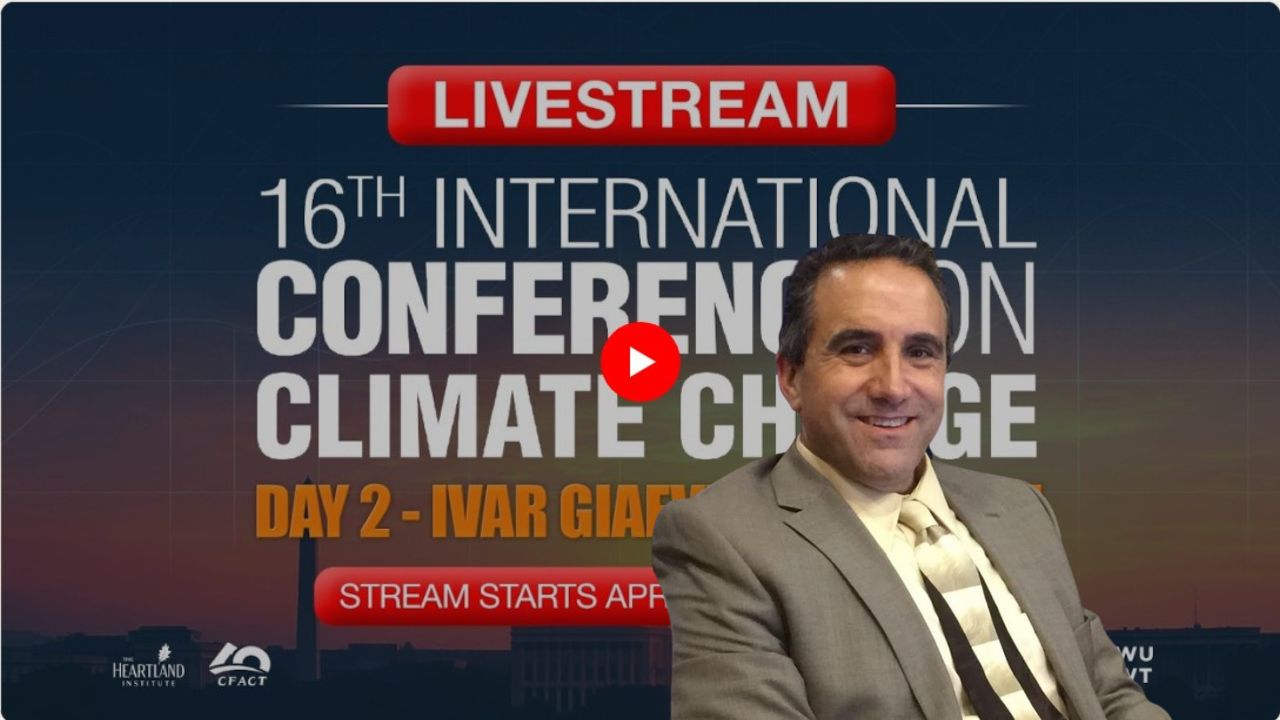
Marc Morano
Marcel Crok
Date: 12 April 2026
The final talk of the 16th International Conference on Climate Conference in Washington DC (8 and 9 April) was given by Marc Morano of the website climatedepot.com. Morano is a longtime follower of the climate agenda (he visited close to all the yearly Conference of the Parties, COP’s). He gave a fascinating overview of how the climate agenda has been crumbling down in the past year or so, not only in the US but around the globe (although Europeans maybe notice this less). He concluded with the remark that we live in the best times for climate realism in the last 50 years.
That’s all good news, but Morano also warned that we aren’t there yet and that the forces behind the climate agenda can or will pop up again, for example these days in the form of energy lockdowns because of the crisis in the Strait of Hormuz. So we have to be very vigilant. But the fact of the matter is that Trump, Chris Wright and administrator Lee Zeldin (who spoke at the Conference) are punching big holes in the climate agenda currently and that the other side is not fighting back at all. They seem to have given up, maybe because of a lack of funding (Bill Gates, Jeff Bezos, Larry Fink all moved away from the climate agenda, partly or mainly because of their interests in AI for which you need dispatchable energy).
The Conference in Washington is organised every year by the Heartland Institute. Clintel and The Heartland Institute (and maybe other organisations) have serious plans to organise next year’s conference in The Netherlands.
The complete recordings of both days (in both rooms) are available on the conference website. You can see the presentation by Clintel Director Marcel Crok: here.
Watch Marc Morano’s lecture below:

more news
Clearing up some misconceptions about the DoE report
After environmental groups sued to halt a critical Department of Energy climate report, accusations of secrecy and political bias quickly followed. Ross McKitrick responds by challenging what he calls widespread misconceptions about the project, defending its transparency, scientific grounding and editorial independence.
India Builds a ‘Fossil Future’
While Western governments continue to speak the language of net zero, India is rapidly expanding coal, oil and natural gas production to secure long-term energy security and economic growth. By strengthening hydrocarbon trade with the United States and other partners, India is building what the author calls a “fossil future,” prioritizing reliable and affordable energy over climate pledges.
Interview with Dr. Guus Berkhout: A Different Perspective on Climate Science and Energy Policy
The big problem today is that climate models are not fit-for-purpose, says Clintel co-founder dr. Guus Berkhout. They do not reflect the real world. That is the reason why the Net Zero policy does not work. We need fundamental changes in climate science and climate policies. We now see that this message gets more and more support.

