Microsoft Pauses Its Carbon Indulgence Spending. The Usual Suspects Are Upset.
Reports have emerged that Microsoft has quietly paused future carbon removal purchases, sending shockwaves through a market it effectively dominates. What might appear as a routine financial decision has instead exposed the fragility of an industry built around a single buyer—and triggered a swift, organized backlash from climate advocates.

Image created with AI
Charles Rotter
Date: 17 May 2026
On April 10, Heatmap News broke the story that Microsoft had begun telling carbon removal suppliers and partners that it was pausing future purchases. Bloomberg followed the next day with a confirming account from inside the company. The Microsoft employees who placed the calls, Bloomberg reported, told the developers in at least one case that the decision was “motivated by financial considerations.”
This is, in plain English, a very large deal.
Microsoft was not just a buyer in the carbon removal market. Microsoft, by every available accounting, was the carbon removal market. As of April 13, per CDR.fyi via ESG Dive, Microsoft accounted for 78.5% of all disclosed durable carbon removal contracts, with over 36.4 million metric tons purchased. MIT Technology Review put it more bluntly: “Microsoft is the carbon removal market.” If you have spent the last five years building a startup to extract CO2 from the atmosphere, you have almost certainly been counting on Microsoft to write you a check.
So Microsoft’s “pause,” whatever its eventual duration, has cascaded through what the New York Times itself called, in a December 2024 piece, the “New Climate Gold Rush.” Climeworks and Carbon Engineering, two of the largest direct air capture firms, each hold multi-year Microsoft contracts in the nine-figure range. Bloomberg’s follow-up reporting describes at least one developer being instructed by Microsoft to review the terms of an existing contract in case the company later tried to cut it. Bloomberg’s headline word was “spooked.”
Microsoft’s official line, delivered through Chief Sustainability Officer Melanie Nakagawa, is that all of this is part of a “disciplined approach” rather than a change in ambition. The disciplined approach apparently involves telling counterparties they may want to lawyer up. Welcome to corporate climate communications in 2026.
The Reaction
That is the business story. The political story is more interesting.
Within days of the news, a coalition of fifty-plus advocacy organizations led by the San Francisco activist group Stand.earth published an open letter under the URL microsoftlies.com. As of this writing, the letter is also running as a paid advertisement on Reddit, with Reddit’s own click-tracking IDs in the URL confirming an active promoted-post campaign. The letter is co-signed by Sierra Club, Greenpeace USA, Public Citizen, Friends of the Earth U.S., Hip Hop Caucus, Amazon Employees for Climate Justice, 350 Seattle, and a long tail of regional and topical groups.
The letter accuses Microsoft of abandoning its climate commitments, betraying community trust, and killing its leadership on clean energy. It treats the carbon removal pause as part of a broader pattern that includes Microsoft’s AI data center build-out and its enterprise contracts with oil and gas companies. It is, in the well-developed genre of environmentalist open letters, a relatively standard product.
What is worth noticing is the timing, and the apparatus.
A Campaign in Progress
Stand.earth has been escalating attacks on Microsoft for more than two years. The campaign predates the carbon removal pause by a wide margin.
In February 2024, Stand.earth published a report titled “Ctrl-Alt-Incomplete: The Gaps in Microsoft’s Climate Leadership,” arguing that Microsoft’s emissions had risen 46% since its 2020 net-zero pledge. In early 2025, the organization’s blog turned its attention to Microsoft’s AI data center expansion, framing it as a hidden climate cost. In January 2026, Stand.earth issued a critical statement on Microsoft’s data center community plan, attacking its lack of explicit renewable commitments. In March 2026, Stand.earth’s research arm published an analysis calculating that a single Microsoft data center in West Virginia would increase the company’s annual emissions by 44%. Around the same time, it published a follow-on study claiming a combined 160% data center carbon footprint increase from three methane gas projects.
So when Microsoft paused its carbon removal purchases on April 10, the activist infrastructure had already spent two years building the case that Microsoft was a climate villain. The open letter, the website, and the paid Reddit campaign represent the operational arm of that infrastructure, switched on.
This is what a coordinated NGO pressure campaign actually looks like. Reports, then research, then escalation, then events, then paid digital media. It is professional, well-resourced, and built to last.
Who Pays for All of This?
Here is the question Microsoft is presumably asking itself, and that shareholders, reporters, and ratepayers might profitably ask too.
The activist organizations attacking Microsoft for stepping back from carbon removal purchases are not disinterested observers. They sit inside a broader ecosystem of climate advocacy organizations that are, themselves, funded by the same large foundations and corporate donors who have spent the last decade building out the case for corporate net-zero spending. The carbon removal industry that has lost most of its 2026 pipeline is staffed by the same kind of credentialed climate professionals who, on a different day, work for the NGOs writing the open letters. The line between “industry” and “advocacy” in the climate space has been functionally erased for a long time. Even Heatmap News, which broke the story, is a climate-aligned publication. MIT Technology Review’s reporting treated Microsoft’s pause as a crisis for “the industry,” not an episode of a customer making a financial decision.
When eighty percent of a market is one buyer, you do not have a market. You have a subsidy program. When the subsidy pauses, the recipients get loud. And Microsoft who funded the subsidy in the first place is also a major source of funding the NGO’s driving the campaign demanding it resume.
This is the structural reality of the carbon removal economy that the press has not been comfortable describing in plain language. Microsoft’s “disciplined approach” is forcing it into view.
The Inconvenient Comparison
While we are on the subject of Microsoft’s environmental footprint, it is worth noting an unrelated decision the company made in October 2025 that the activist letter conspicuously does not mention.
On October 14, 2025, Microsoft ended free security support for Windows 10. Hundreds of millions of currently-functional PCs cannot meet Windows 11’s hardware requirements (TPM 2.0, eighth-generation Intel processors, comparable AMD processors) and will, as a result, be steered toward either insecure operation, paid extended support, or replacement. The Public Interest Research Group warned before the deadline that the policy could generate a tsunami of e-waste from working hardware that has been arbitrarily deprecated.
This is, by any reasonable measure, a far more direct environmental harm than a temporary pause on speculative atmospheric carbon removal. It is concrete. It is measurable. It is happening right now. Yet none of the fifty-plus signatories of microsoftlies.com have, apparently, been moved to mention it.
The reason, one suspects, is that there is no fundraising tail attached to it. There is no $500-per-ton revenue stream contingent on Microsoft fixing Windows 10. The carbon removal pause, by contrast, has cost the climate-activism-and-startup ecosystem a great deal of money very quickly. So that is the one the open letter is about.
What This Story Is Actually About
Microsoft has not abandoned climate spending. It has, by Nakagawa’s account, paused new procurement while reassessing its strategy. It will probably resume some of it. The pause is consistent with what a CFO would do when reviewing a $100-to-$600-per-ton expense category whose climate benefits are, on the kindest reading, speculative, and whose primary near-term effect on the company’s reported numbers is to fund a “carbon negative” claim that depends on the integrity of contracts running to 2030 and beyond.
What this story actually illustrates is the financial fragility of a market that the press has spent five years describing as a transformative climate solution. A single buyer’s “pause” caused, in Bloomberg’s word, market-wide tremors. That is not a market. That is a sponsorship.
The activists demanding Microsoft resume its sponsorship have every right to make their case. But anyone reading those demands should know what they are reading. It is not, primarily, an argument about climate science. It is an argument about cash flow.
Microsoft, for the moment, appears to be applying its disciplined approach.
With thanks to David Burton (sealevel.info) for surfacing the microsoftlies.com paid campaign and the Windows 10 e-waste comparison.

more news

Fake Famine Fears at the Collapsed COP30 Fuel Net Zero Fantasy
Chris Morrison exposes how the supposed famine alarmism at COP 30 is nothing more than fuel for the Net Zero fantasy — and our food security looks better than the climate cabal would have you believe.
COP30 Is Lying To Justify Its Existence
COP30 is building its case on climate misinformation that rewrites the past to claim a victory it never earned.
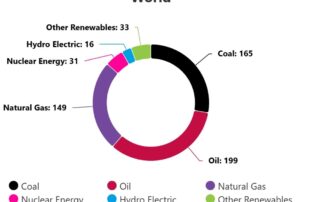
The Transition That Never Transitioned: Fossil Fuels Still Powered 86% of the World in 2024
What 2000–2024 energy history actually shows.