
New disastrous climate documentary on Netflix
The White House Effect is Netflix’s one-sided new climate documentary. It will surely go down well with many (young) Netflix viewers because, you see, (American) politicians did and do nothing about the climate problem, under the influence of ‘the oil industry’. If only that were true.


Source: Shutterstock
Peter Baeten
Date: 9 November 2025
Netflix is rather woke, so the chances of a balanced climate documentary are not very high. Nevertheless, The White House Effect describes the climate dilemma of the Bush Sr. administration (1989-1993), the central theme of the documentary, in a somewhat neutral manner. We see that the administration had completely understandable hesitations about the climate alarmism that manifested itself in the late 1980s. Even then, it was clear that rapidly reducing CO2 emissions would inevitably come at the expense of the economy. So the question was very justified: how certain and strong was the relationship between global warming, extreme weather, and CO2?
There was political pressure on the US because other countries, for example in Europe, were already fully committed to climate action. The battle between ‘climate’ and ‘economy’ focused on Chief of Staff John Sununu and EPA Director William Reilly. Sununu (economy) emerged as the ideological winner, and the US government took a cautious stance for the time being and was not (yet) joining in the climate hysteria.
The White House Effect argues that this was largely because the media (!), malicious and corrupt climate sceptics and the oil lobby suppressed the climate story around 1990, and that this is why US climate policy has never really recovered. The question is, of course, to what extent this is true, but it ís true that there was indeed more room for sceptical voices in the media, politics and science at that time. But in doing so, the documentary inadvertently undermines its own argument. Because when we see how freely sceptics could still operate around 1990, we experience the contrast with today. We realize all the more how much the position of sceptics has been marginalized in the decades since (at least until Trump). Anyone in the mainstream media (except FOX) or in science who proclaims a contrarian sceptical climate narrative these days, is immediately denounced. And a ‘suspicious’ oil company like Shell doesn’t even dare to align itself with Clintel’s position: there is some warming, CO2 probably contributes to it, but no, there is no climate crisis.
And there is much more to criticize. For example, the environment and climate are once again confused. Attention is paid to the environmental disaster involving the Exxon Valdez oil tanker in 1989. This obviously has nothing to do with the climate, but it is typical of the underlying sentiment in the documentary that the oil industry is simply terrible in every way. Nowhere do the filmmakers add any neutral consideration of the economic usefulness of fossil fuels. For that reason alone, this documentary cannot be taken seriously.
Source: Shutterstock
Source: Shutterstock
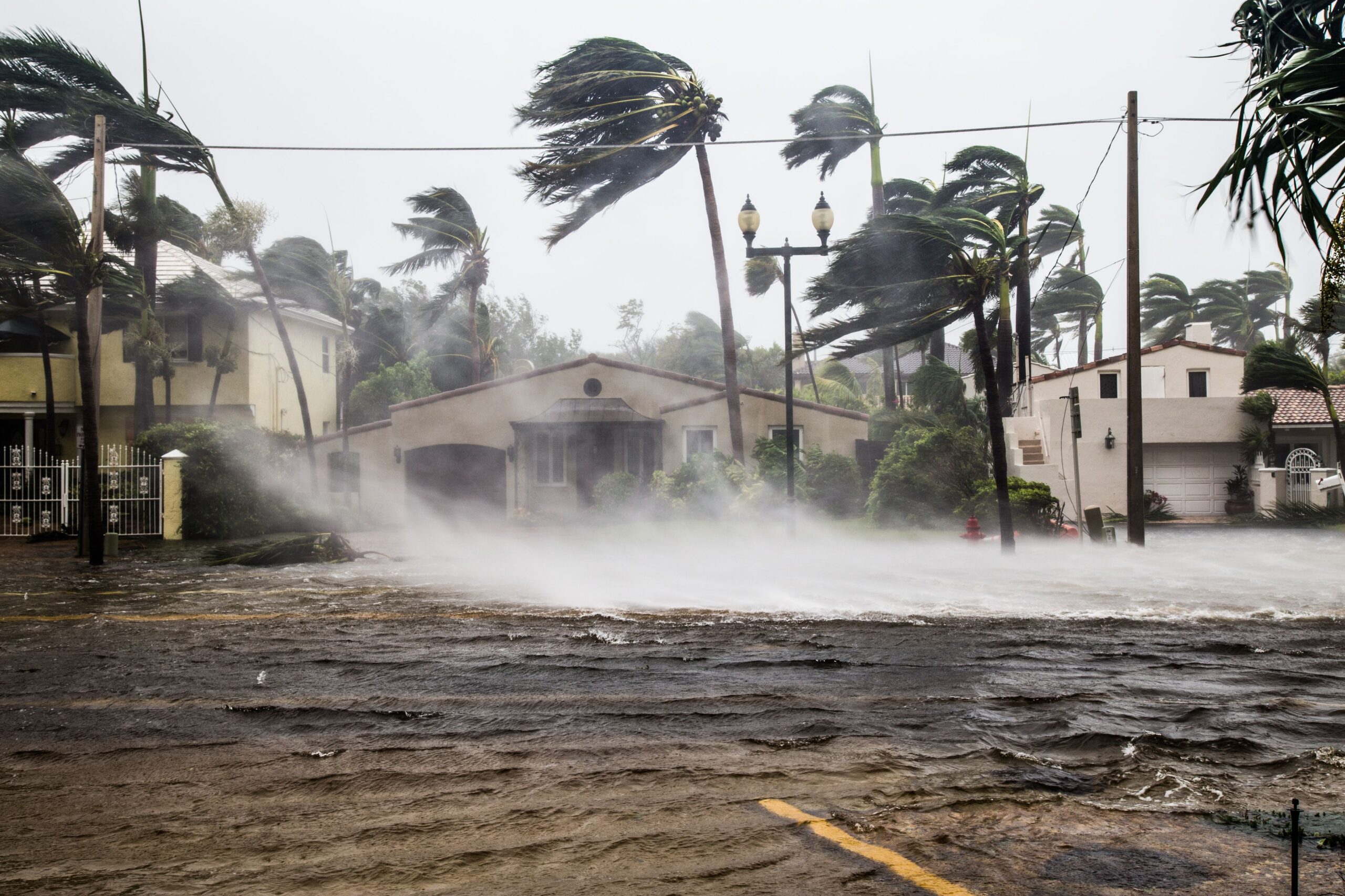
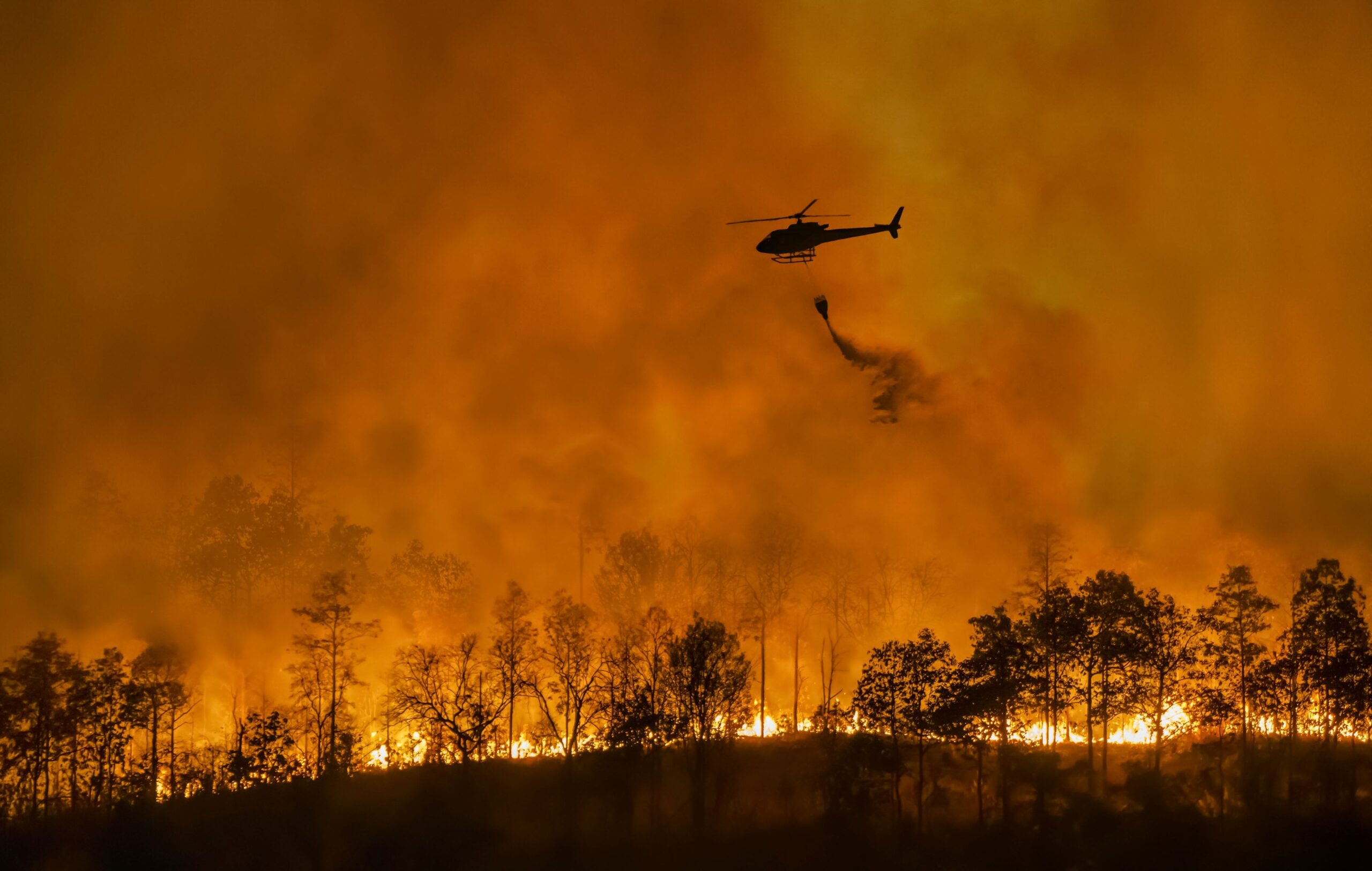
Furthermore, we are once again inundated with doom stories that do not come true. For example, Hurricane Hugo in 1989 is cited by alarmists in the documentary as undeniable proof of the disaster that is coming. Now, 36 years later, we know that hurricanes are not increasing in frequency at all. Forest fires are also mentioned, and these too have decreased in the decades that followed.
Nevertheless, The White House Effect will surely go down well with many (young) Netflix viewers because, you see, (American) politicians did and do nothing about the climate problem, under the influence of ‘the oil industry’. If only that were true.


more news
Yet Another Reason Why Wind And Solar Will Never Work
The idea that wind and solar power can easily replace fossil fuels sounds appealing. But behind this optimistic narrative lie complex technical challenges, such as intermittency, grid stability, and the crucial roles of synchronization and inertia in maintaining a reliable electricity system, concludes Francis Menton after a powerful presentation by Kathryn Porter.
CO₂ Can Cause Cooling Too? Climate Models Say Yes (Sometimes)
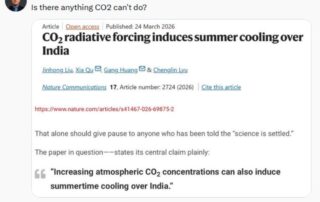
As Dr. Matthew Wielicki dryly put it: “Is there anything CO₂ can’t do?” The study behind that remark claims that rising CO₂ levels may even lead to regional cooling under certain conditions—highlighting just how flexible—and uncertain—climate model outcomes can be.
Press release GWPF: Event Attribution Studies are “a blot on science”, says Ralph B. Alexander
Extreme weather attribution studies are based on flawed logic and misleading statistical practices, according to a new report by The Global Warming Policy Foundation (GWPF). Author Ralph B. Alexander argues that these studies, which link individual weather events to climate change, are driven more by political and legal agendas than by robust scientific evidence.

