
The European Union and the UK increasingly resemble the late Soviet Union
Western Europe’s ancien régime will not endure very much longer. Populist-conservative parties have been gaining ground across the continent over the past several years precisely because the lived reality of the majority contradicts elite doctrine. Yet until voters enforce a return to economic literacy, rational energy policy and national sovereignty, Western Europe and Britain will continue its Soviet-style trajectory.

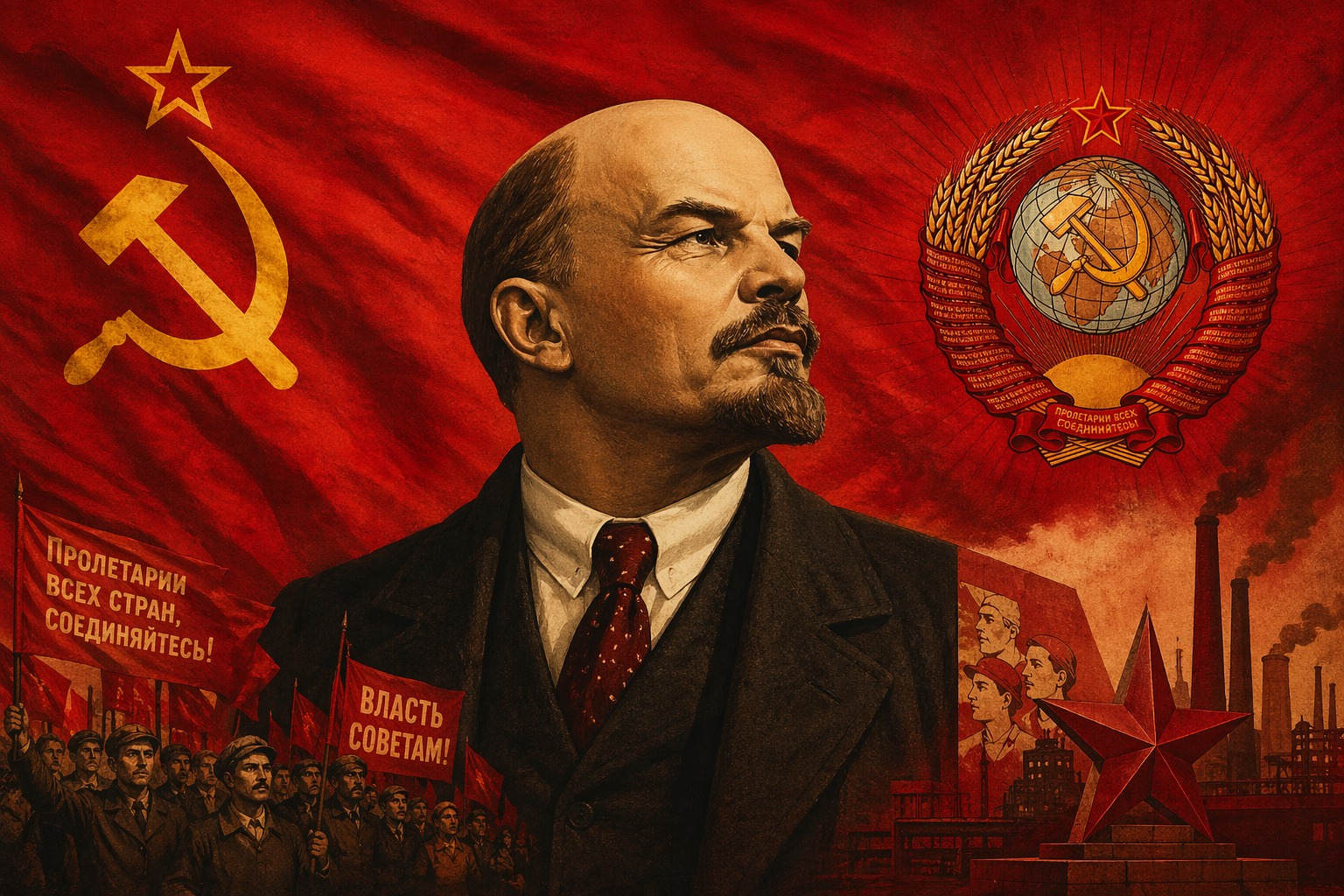
Image created with ChatGPT
Tilak Doshi
Date: 26 April 2026
After a week of mass protests, Ireland was brought to a standstill. Farmers, truckers and hauliers blockaded motorways, ports and the country’s only oil refinery, leaving a third of petrol stations dry. The immediate trigger was a sharp spike in global fuel prices caused by the US-Israel military operations against Iran and the resulting disruptions in the Strait of Hormuz. But the deeper grievances were plain. Protesters demanded not only a fuel-price cap but the suspension of planned carbon-tax increases — policies that had already turned energy into a luxury for many households.
Underlying the anger, as commentators at MCC Brussels and elsewhere noted, was the cumulative burden of aggressive green decarbonisation combined with rapid mass immigration, both of which have imposed unbearable costs on working people while delivering no tangible benefits. The Government’s eventual response — €505 million in tax cuts and a delay of the carbon-tax hike — was an admission that elite climate and migration policies had finally produced a social explosion on the streets. Yet, like their counterparts in the EU and UK, the Irish Government has for long depended on elite-managed integration deliberately insulated from democratic politics and genuine popular support.
Soviet Union
The European Union and the UK increasingly resemble the late Soviet Union in both institutional architecture and ideological rigidity. An unelected central bureaucracy sets the policy agenda while national parliaments and the European Parliament provide little more than democratic theatre. The Commission’s 32,000 civil servants, enjoying legal immunities and generous privileges, function as a modern nomenklatura insulated from accountability. As Finn Andreen documented in his February 2026 analysis for the Mises Institute, Brussels operates through a form of “democratic centralism”, steadily transferring sovereignty from member states upward during successive crises — globalisation, Covid, Ukraine, migration.
A parallel observation appears in Russian academic commentary describing the EU as a geopolitical entity based on ideology rather than organic national interests. The result is a state that fails at classical liberal functions — maintenance of infrastructure, law and order, price stability, national defence and facilitation of voluntary exchange — while excelling at narrative management and the suppression of dissent. This is not rhetorical exaggeration. It is the observable outcome of centralised planning dressed in progressive clothing.
Where the USSR promised the New Soviet Man dedicated to collective welfare, today’s EU model demands adherence to DEI, ESG, critical race theory, ‘environmental justice’ and an ever-expanding hierarchy of victimhood. The machinery of government is geared not towards delivering measurable results in living standards or security, but towards containing the discontent of populations subjected to policies imposed by metropolitan elites with luxury beliefs and groupthink. In a furious diatribe aired last week, a caller to the UK’s Talk TV named “Georgina” accused Sir Keir Starmer of “erasing national identity in favour of a globalist agenda”. To many of the listeners, her pointed criticisms of the UK Prime Minister hold equally for the likes of European Commission President Ursula Von Der Leyen and for the leaders of the Irish coalition Government of Fianna Fáil and Fine Gael.
Institutional echoes of the Soviet past
The structural parallels are precise. In the USSR the handpicked Politburo and Central Committee made real decisions; the Supreme Soviet rubber-stamped them. In the EU the unelected Commission dictates trade, energy, industrial and environmental policy while member states retain only the illusion of sovereignty. Even post-Brexit Britain exhibits the same symptoms. Labour’s 2024 victory, secured with 33.7% of the popular vote (and just 20% of the electorate), reflected not widespread enthusiasm but revulsion at 14 years of Conservative convergence toward the same cosmopolitan progressive consensus. The state’s performance on core functions continues to deteriorate.
Classical liberals from Adam Smith onward listed the legitimate tasks of government as ensuring external defence, security of property rights, enforcement of contracts, provision of public goods such as roads and bridges, maintenance of law and order and stable currency. Across Western Europe these basics are neglected while resources flow into narrative enforcement and regulatory overreach.
Britain offers a striking illustration of wage compression that exceeds even Soviet-era levels. The minimum wage now stands at approximately 66% of average earnings — higher than the Soviet peak of roughly 60%. After taxes, benefits and public services, the net income ratio between a £100,000 earner (top 5%) and a full-time minimum-wage worker shrinks to roughly 3:1. During the Soviet period the equivalent ratio never fell below 5:1 and usually hovered between 3.2 and 4.4. This is not egalitarian success; it is the stagnation produced by high marginal taxes, benefits traps and regulatory barriers to mobility.
Ideological reincarnation: from red to rainbow
The ideology has changed colour but not character. Soviet communism enforced conformity through class struggle; today’s progressive creed enforces it through identity, equity and climate eschatology. Opposition parties branded ‘far-Right’ — Germany’s AfD, France’s National Rally, Britain’s Restore Britain — face relentless media hostility, bureaucratic harassment and judicial activism.
In the UK, two-tier policing has become routine: online comments about mass immigration often draw swifter official attention than shoplifting, grooming gangs or Islamist radicalisation in local mosques. In a now-viral interview clip, Konstantin Kisin, the Russian-born co-host of the Triggernometry podcast, asked his host a question that still resonates: “In Russia last year, 400 people were arrested for things they said on social media. How many do you think were arrested in Britain?” The answer — 3,300 — drew gasps. Years later, the gap has only widened. In 2023 alone, UK police recorded 12,183 arrests for “offensive” online communications. A country that once lectured the world on liberty now polices speech with an enthusiasm that would have impressed the old Soviet censors.
In the EU, dissenters risk extra-judicial financial sanctions without charges in a court of law. Jacques Baud, a former Swiss colonel and intelligence analyst specialising in military and terrorism issues, had his EU assets frozen in December 2025 for expressing strategic analyses critical of Western policy on Ukraine; a humanitarian exemption was granted only after public outcry.
Groupthink
The groupthink is particularly evident in the rabid anti-Russia posture that now forms a core element of Western European and NATO self-identity, with the significant exception of President Trump’s America. Russia is cast as an inherently revisionist power poised to march on Paris and Berlin, rendering any form of negotiation ethically impermissible for moralising European diplomats. While China is identified as a longer-term systemic rival, the immediate obsession remains the imperative to balkanise Russia into smaller statelets — a theme repeatedly emphasised by senior EU figures such as Kaja Kallas.
Such incessant warmongering has fused seamlessly with the broader progressive ideology. Christian virtues — family, nation, traditional morality — are routinely dismissed as misogynistic or ethno-nationalist. The EU’s long campaign against Viktor Orbán’s Hungary, which has resisted open-border mandates and the LGBTQ agenda in schools, is emblematic. After Brussels’s initial jubilation at Prime Minister Orbán’s recent loss in the elections, a more sober realisation set in among EU bureaucrats when the winning candidate Péter Magyar (Tisza party) said clearly just a few days after when he said that “Hungary will not accept any [immigration] pact. In fact, I’m going to reinforce the border fence even more.”
Globalist governance that overrides national borders, demeans the West’s Judeo-Christian legacy, demonises fossil fuels and elevates renewables as moral imperatives has become the new orthodoxy. Europe’s ruling elites embody a style of governance that conflates emotional signalling with competent statecraft.
The security state and the suppression of dissent
Enforcement requires institutional muscle. Nato member states labour under secret ‘obligations’ or resilience objectives that can override domestic policy choices. A Dutch health minister publicly cited these commitments as the reason certain measures on pandemic preparedness could not be pursued. Strategic communication initiatives in the European Parliament are directed not by the communications directorate but by the security commissioner — evidence that defence and intelligence bureaucracies now sit upstream of politics. Migration, energy policy, public health and attitudes towards Russia are all primarily framed as security threats. Dissent is recast as cognitive warfare; access to alternative media becomes prima facie evidence of foreign influence. The West that once imported Soviet newspapers without fear now treats Russian outlets as vectors of mind control and bans RT, for example.
Energy rationing: the green path to Soviet-style decline
While the political elites in the EU, Canada and Australia decry the Hormuz closure as the cause of the energy crisis, this is merely the spark. The fuel for the conflagration in the West (with the significant exception of President Trump’s USA) has been piling up for at least the past two decades if not longer.
Net Zero targets, grounded in IPCC climate models ‘tuned’ to fit predetermined outcomes, function as a de facto rationing mechanism. Households and industry are nudged toward reduced consumption through taxes, mandates and price signals. The 2022 sanctions on Russia produced textbook boomerang effects: the EU and UK, having deliberately curtailed North Sea output, fracking, coal generation and nuclear capacity, found themselves price-takers in global LNG markets while the United States exported record volumes. Domestic energy abundance was sacrificed on the altar of emission ledgers; the result has been higher prices, industrial offshoring and geopolitical irrelevance.
A UK economist recently stated the quiet part aloud: high energy prices are “good for the climate” because they reduce demand. Citing research that a 10% rise in UK petrol prices can cut consumption by up to 5%, the analysis effectively endorses rationing by price as a tool of environmental policy. Energy bills already incorporate 40-50% taxes but cutting them to alleviate the burden on households and businesses is dismissed as unviable.
Belated admissions that premature nuclear closures were a “strategic mistake” by both the German Chancellor Friedrich Merz and Ursula von der Leyen have not produced any energy policy U-turn. The green religion, with the Commission as its priesthood, remains dominant. The economic verdict is unambiguous. From the fourth quarter of 2019 to the same period in 2025, US GDP rose 14.6% while Germany’s increased by only 0.5% — the weakest performance in the G7. UK GDP over the same period grew 5.3%; the Eurozone region managed 6.7%. IMF and OECD forecasts for 2026 project US growth near 2% while the EU and UK languish below 1.5% and 1% respectively.
Moralising
Europe has rendered itself a supplicant in global energy markets, dependent on suppliers it once sought to moralise into submission. Russia, for its part, has adapted. Sanctions hardened rather than broke its economy; domestic pride has replaced earlier infatuation with Western models. After the closure of tanker traffic through the Strait of Hormuz, sanctions on Russian oil exports have been stood down and oil prices are high – both redounding to the benefit of Russia’s economy.
Russians now generally view prolonged separation from a declining West as prudent insulation. Putin’s Russia remains fundamentally a status quo power — concerned with protecting ethnic Russians in the near abroad after the repeated failures of the Minsk process and Nato’s eastward expansion — but Europe’s ideological crusade has burned bridges for a generation.
Western Europe’s ancien régime will not endure very much longer. Populist-conservative parties have been gaining ground across the continent over the past several years precisely because the lived reality of the majority contradicts elite doctrine. Yet until voters enforce a return to economic literacy, rational energy policy and national sovereignty, Western Europe and Britain will continue its Soviet-style trajectory: central planning without the gulag, energy rationing without bread queues and narrative control without necessitating ‘nine grams of lead in the back of the head’ in the cellars of Stalin’s Lubyanka.
This article was first published in the Daily Sceptic on 21 April 2026
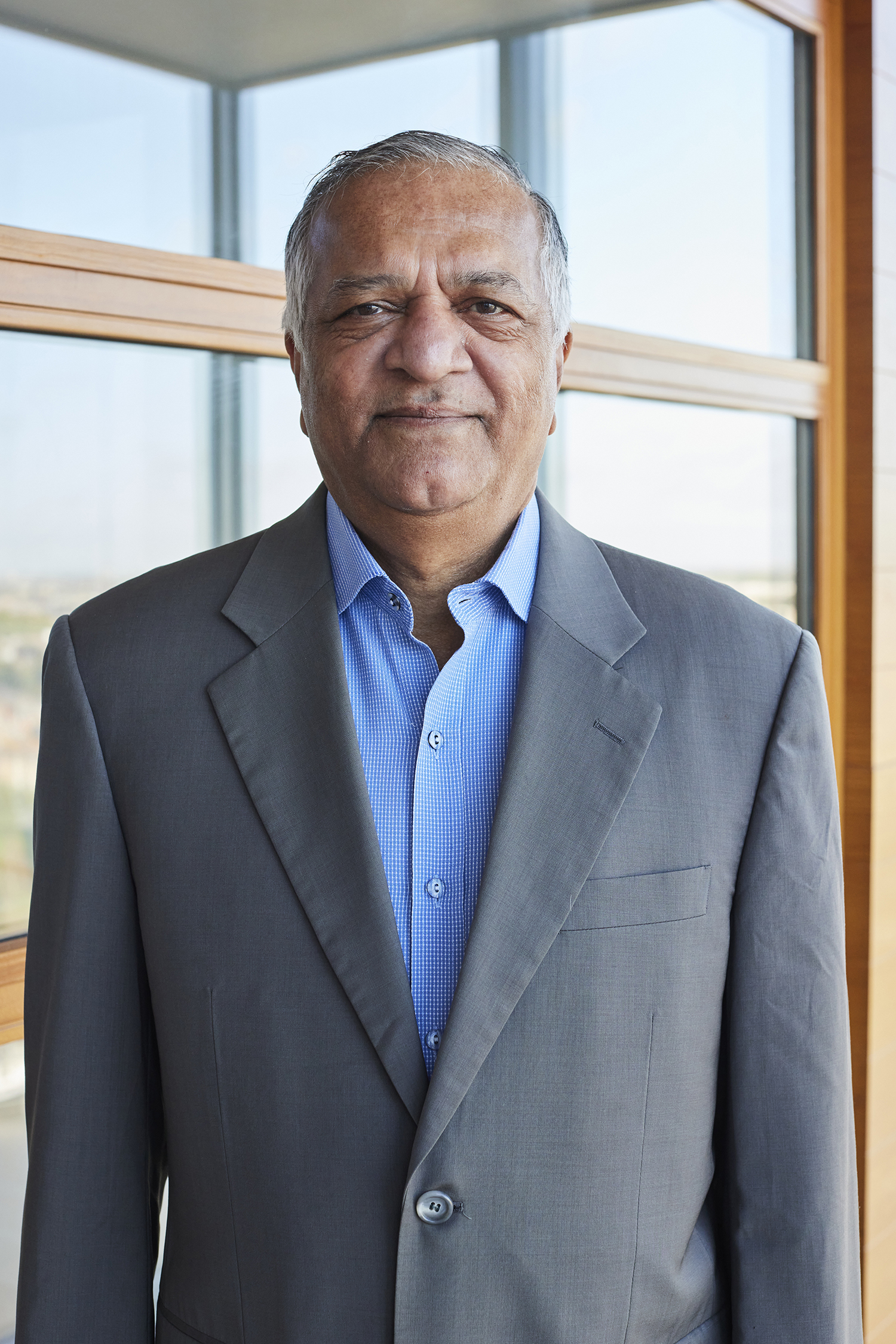
Dr Tilak K. Doshi
Dr Tilak K. Doshi is the Daily Sceptic‘s Energy Editor. He is an economist, a member of the CO2 Coalition and a former contributor to Forbes. Follow him on Substack and X.

more news
The launch of Clintel Korea: restoring science and defending energy freedom
On October 23rd, 2025, Clintel Korea was launched in a festive ceremony in Seoul, organised by Clintel ambassador Prof. Seok Park.
In the run-up to Belém: the climate circus COP has had its day
This book review looks at The Truth About the COPs, in which Samuel Furfari dissects the history, failures, and political theatre of the UN’s climate conferences.
Open letter to Bill Gates by Franco Battaglia
Franco Battaglia, wrote an open letter to Bill Gates in response to Gates’s note, “Three solid truths about climate.” In it, Battaglia challenges Gates’s views on climate change and energy policy, offering a contrasting perspective on the role of energy in human prosperity.

