
The EV experiment has become a bloodbath — $140 billion wasted — more to come
The push for electric vehicles was supposed to transform transport. Instead, mounting EV industry losses and collapsing share prices are raising serious questions about whether governments and manufacturers misread the market. What began as a bold industrial gamble now looks, to critics, like one of the most expensive policy experiments in modern automotive history.

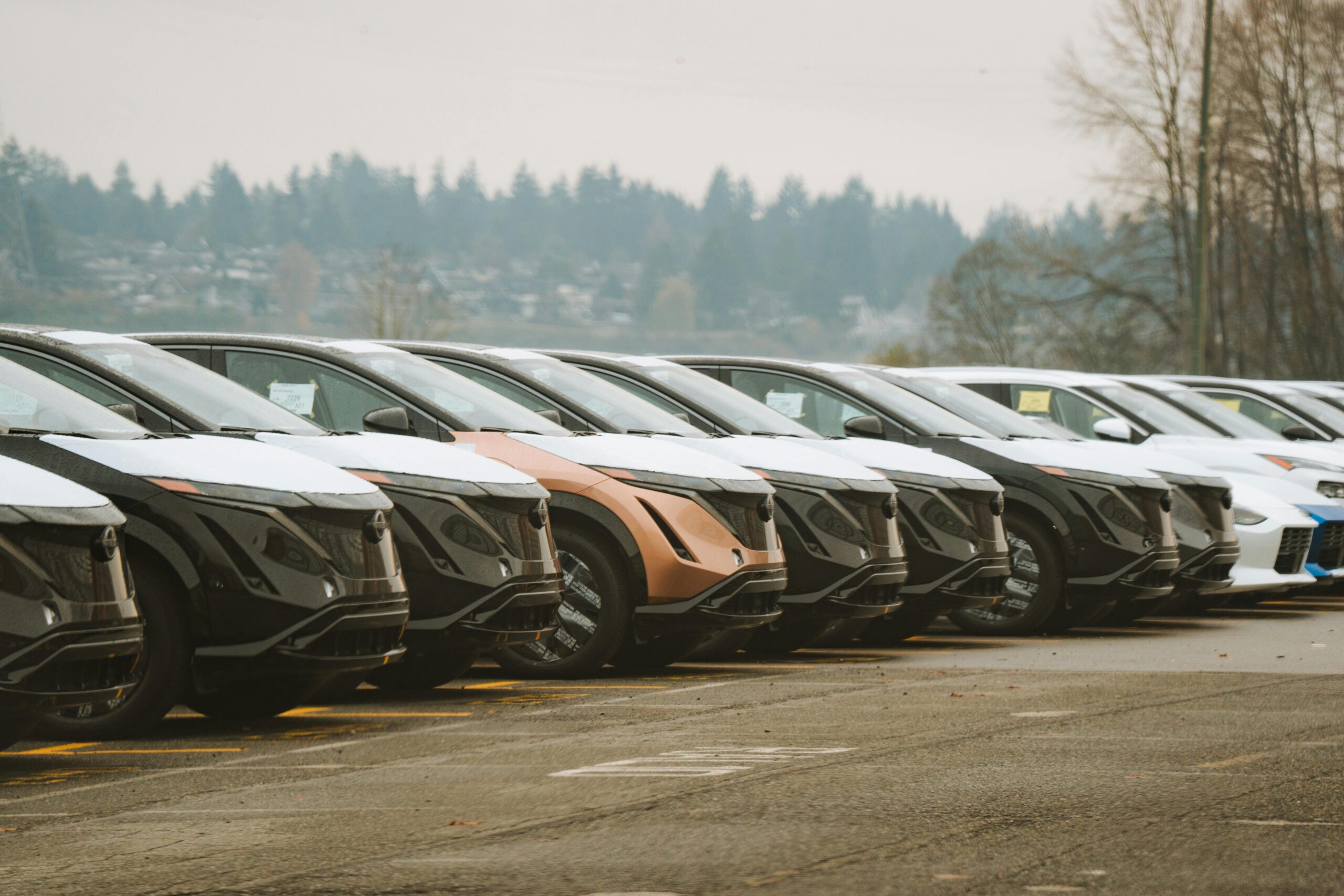
At some point, Western governments decided to pick winners, and set deadlines for inventions and discoveries and most car manufacturers clapped quietly. They didn’t speak up, presumably because they didn’t want to look like a climate denier. But it’s been a disastrous choice for the auto makers that jumped onto the EV bandwagon with both feet.
A few days ago the corporate mothership for Fiat Peugeot and Chrysler, announced a $26 billion US dollar loss and shares fell 27%. This ignominiously follows the brutal $20 billion dollar Ford write down. The CEO of Stellantis has announced a reset of the company and in a radical plan, decided to “make our customers and their preferences our guiding star.” Crikey — they will try making cars that customers actually want, rather than ones that change the weather.
Robert Bryce estimates the known losses add up to $140 billion in the last 4 years. And that’s only the money burned by Ford, Stellantis, GM, Mercedes, Volkswagon, Rivian, and Lucid.
Other companies have signed and bragged about big deals that they later backed away from. But they haven’t necessarily announced their EV specific losses. So who knows how much Honda, Renault, Mitsubishi, Volvo, and BMW have lost?
All up, Bryce estimates that the average loss per EV has been around $25,000.
The auto industry’s gamble on electric cars has turned into a catastrophe
By Matthew Lynn, The Telegraph
In reality, it turns out that electric cars are only a small part of the overall market and that, insofar as it exists, Chinese manufacturers will capture most of the sales.
There have been two major problems. First, EVs may only be a niche product. Next, where there is a market, the new breed of Chinese brands led by BYD is walking away with it.
The traditional auto giants thought the transition was just a matter of replacing an internal combustion engine with a big battery, but it turned out that an EV was a piece of electronics with wheels attached. It has much more in common with the mobile phone market than anything the petrolheads running the industry were familiar with.
It is far easier to create a new EV company from scratch than to convert one of the traditional giants.
The blunt truth is this: the massive bet that the auto giants took on EVs has backfired spectacularly.
If China had paid off Western politicians to force their own citizens to subsidize Chinese cars they could hardly have destroyed the Western car industry any faster.
If your country is home to legacy fossil fuel carmakers then schemes like the Zero Emission Vehicle (ZEV) work like an anti-tariff – It’s a ruling that punishes local industry and forces them and their customers to subsidize foreign car makers. The government sets an arbitrary target, and insists that, say, 22% of all cars sold must be EV’s. The public don’t want that many EV’s but the ZEV ruling contains the financial equalizer. If the fossil fuel car manufacturer doesn’t meet their target and sell enough EV’s they’ll have buy credits from a company that did.
Or if companies sell both kinds of cars they can raise the prices of their fossil fuel cars and use those super profits to make their own EVs cheaper. Either way, fossil fuel cars get more expensive and EVs get cheaper until the 22% target is reached.
Ultimately, the tradies and renters who buy the fossil fuel cars are subsidizing the electric cars bought by the rich.
Australias NVES (New Vehicle Emissions Standards) is very similar to the UK scheme.
This article as published previously on joannenova.com.au.

Jo Nova
Jo Nova is science presenter, writer, speaker & former TV host; author of The Skeptic’s Handbook.

more news

End of ‘Green’ Enslavement in Latin America
The green shackle is finally breaking as nations in Latin America choose prosperity and sovereign security over hollow promises of climate collectivists, says Vijay Jayaraj.

Cliff Mass: “Global Warming not an Existential Threat”
Human-caused global warming is a modest problem. It is not an existential threat to humanity, says popular American meteorologist Cliff Mass.

Tree from Morteratsch Glacier shows climate narrative is wrong
A larch trunk that began to grow over 10,000 years ago, was subsequently buried by a Swiss glacier and uncovered again in 2025. It shows that the official climate narrative is simply wrong.

