
Understanding the Psychology of Climate Doom
The persistence of ‘climate doom’ narratives isn’t mysterious—it follows recognizable psychological and social patterns, says Anthony Watts.

Source: Shutterstock
Anthony Watts
Date: 28 April 2026
Spend enough time watching the public discussion around climate, and a pattern emerges that has less to do with radiative physics and more to do with how people process information under uncertainty. The persistence of “climate doom” narratives isn’t mysterious—it follows recognizable psychological and social patterns.
Before digging into the details, here’s the short list of what drives it:
- Humans are wired to prioritize alarming information over neutral data
- Media coverage amplifies extreme events while downplaying context
- “Consensus” messaging substitutes for deeper understanding
- Scientific uncertainty gets compressed into false precision
- Moral framing turns disagreement into a social risk
- Worst-case scenarios are treated as baseline expectations
Keep those in mind—they show up repeatedly.
Start with a basic feature of cognition: humans are highly sensitive to perceived threats. Psychologists call this negativity bias, and it ensures that alarming language—“catastrophic,” “irreversible,” “tipping points”—carries more weight than measured descriptions of gradual change with uncertainty ranges. That bias interacts with the availability heuristic, where people judge reality based on what they can easily recall. If media coverage repeatedly highlights wildfires, hurricanes, or heatwaves and links them to climate change, those events become intuitive proof, even when long-term datasets show more complexity or variability. Vivid imagery tends to override statistical context.
Relying on institutions
Most people don’t engage directly with technical literature, so they rely on institutional signals. Phrases like “scientific consensus” act as shortcuts, conveying that the issue is settled and discouraging further scrutiny. While there is broad agreement on some fundamentals, that agreement often gets extended in the public mind to areas where uncertainty remains—such as climate sensitivity, feedback mechanisms, and long-term projections. The complexity of climate modeling adds to this disconnect. Models depend on assumptions about emissions, cloud dynamics, and ocean behavior, and the literature routinely acknowledges uncertainty: “Climate projections are subject to uncertainties arising from internal variability, model structure, and future emissions scenarios.” Yet in public communication, those uncertainties are frequently compressed into precise-sounding forecasts, where ranges become single numbers and scenarios are treated as expectations.
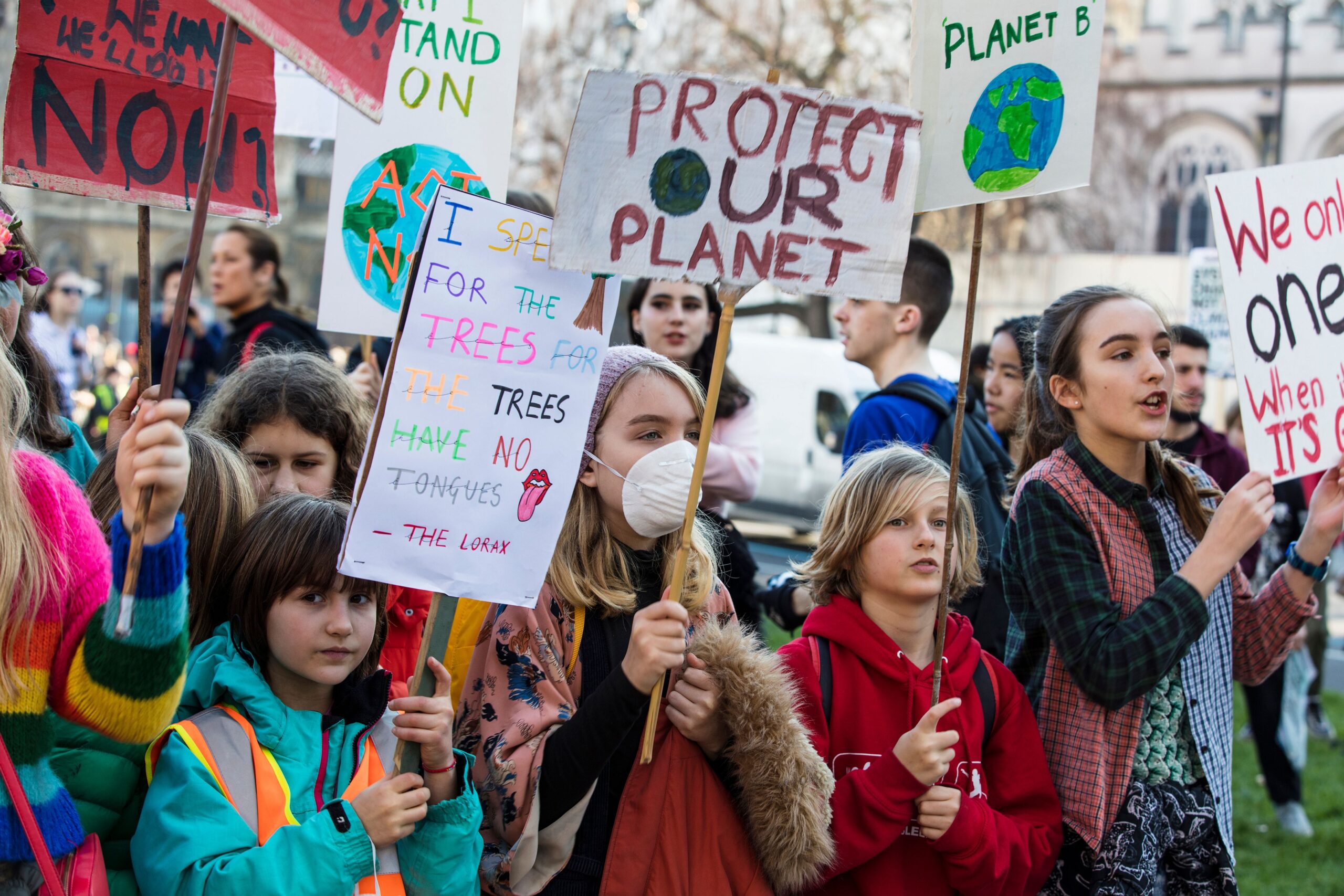
At the same time, climate has increasingly been framed in moral terms—“saving the planet,” “protecting future generations”—which shifts the discussion from technical analysis into ethical territory. Once that shift occurs, disagreement carries social consequences. Skepticism can be interpreted as irresponsibility, and nuance can be viewed as obstruction. Media ecosystems reinforce this dynamic by amplifying emotionally engaging content, often favoring the most dramatic interpretations. Over time, users encounter a narrower range of perspectives, creating a perception of unanimity and reinforcing confidence in more extreme conclusions.
Scenarios
Another important factor is the treatment of scenarios. In scientific work, a range of possibilities is explored, including worst-case outcomes. These are useful for testing models, but in public discourse they often become the default narrative. High-end emissions pathways or upper-bound sensitivity estimates are presented as likely futures rather than conditional ones, anchoring perception around extreme outcomes. There’s also a broader psychological appeal here—large-scale crisis narratives provide structure, clarity, and a sense of purpose in a complex world, making them particularly compelling.
None of this means there is no signal in the data. Temperatures have risen, and atmospheric CO₂ has increased. The complexity lies in interpretation: how sensitive the system is, how reliable long-term projections are, and how specific events should be attributed. Those questions remain open to varying degrees, even if public messaging often implies otherwise. Where this becomes consequential is in policy. Decisions based on high-confidence, worst-case framing can prioritize urgency over reliability, with real implications for energy systems, economic stability, and access to resources.
Skepticism plays a necessary role in keeping those assumptions in check. It involves testing models against observations, questioning inputs, and maintaining visibility of uncertainty. When that process is sidelined, the feedback loop that refines scientific understanding weakens.
Bottom Line
The persistence of climate doom narratives follows a predictable pattern:
- Human cognition amplifies threats
- Media systems favor dramatic framing
- Social dynamics reinforce consensus signals
- Scientific uncertainty gets compressed or omitted
By the time the message reaches the public, it reflects more than the data—it reflects the filters it passed through. Understanding those filters doesn’t resolve every question in climate science. It does make it easier to see why the conversation so often leans toward certainty and urgency, even when the underlying evidence remains probabilistic and open to interpretation.
This article was published first on wattsupwiththat.com on 25 April 2026.

Anthony Watts
Anthony Watts is a senior fellow for environment and climate at The Heartland Institute. Watts has been in the weather business both in front of, and behind the camera as an on-air television meteorologist since 1978, and currently does daily radio forecasts. He has created weather graphics presentation systems for television, specialized weather instrumentation, as well as co-authored peer-reviewed papers on climate issues. He operates the most viewed website in the world on climate, the award-winning website wattsupwiththat.com.

more news

No Evidence That Weather Extremes Becoming More Frequent or Intense: (1) Heat Waves
In a series of articles on extreme weather attribution, physicist Ralph B. Alexander examines whether observational evidence supports claims that weather extremes are becoming more frequent or intense. Following his previous article on the methodology behind attribution studies, this installment focuses on heat waves and the historical temperature record.

Professor Seok Soon Park: Climate Models Are Fear-Mongering Machines
During a lecture in Oslo on June 30, 2026, Professor Seok Soon Park, a leading South Korean environmental scientist and Clintel Ambassador for South Korea, presented a comprehensive critique of the climate models used by the IPCC. Drawing on decades of experience in environmental modeling, he argued that these models have fundamental scientific limitations and function more as "fear-mongering machines" than reliable tools for predicting future climate.

Henrik Svensmark fired by his university
Danish scientist Henrik Svensmark, known for his controversial research on cosmic rays and cloud formation, has been dismissed by his university in Copenhagen after years of internal conflict. In an interview with the Danish newspaper Berlingske, he described the decision as “a death blow” to his research.

