
COP30 miente para justificar su existencia
COP30 está construyendo su defensa sobre desinformación climática que reescribe el pasado para reclamar una victoria que nunca logró.

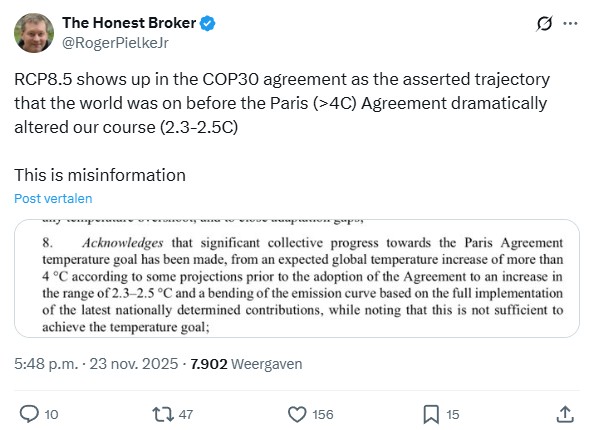
El acuerdo de la COP30 afirma que el mundo iba camino de superar los 4 °C de calentamiento hasta que el Acuerdo de París corrigió heroicamente esa trayectoria hacia los 2,3–2,5 °C.

Sin embargo, “esto es desinformación”, asegura Roger Pielke Jr., profesor de Estudios Ambientales en la Universidad de Colorado en Boulder. Es una ficción construida sobre el cadáver del RCP8.5, el escenario extremo que los científicos abandonaron discretamente hace años porque requería un uso imposible de carbón, una demografía inverosímil y un colapso económico que jamás ocurrió.
COP30 está resucitando un escenario irreal y descartado para afirmar que París salvó al mundo. El problema son los datos. Las emisiones reales no muestran ninguna curva descendente, ninguna desaceleración y ningún “efecto París”.
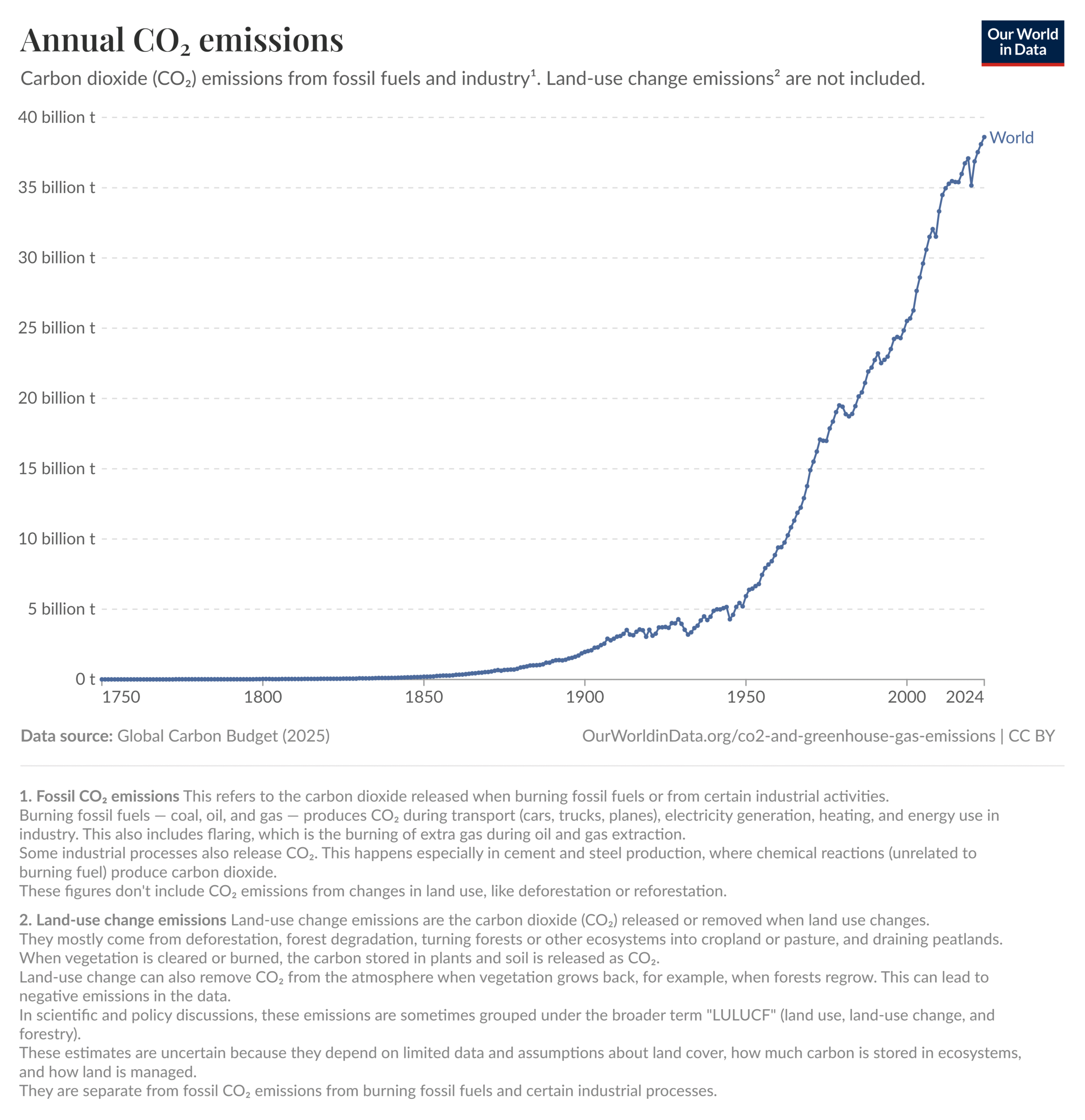
París no cambió las emisiones, pero sí desbloqueó una justificación permanente para los impuestos climáticos, el racionamiento energético y el desmantelamiento de energía barata y confiable: la base de la prosperidad económica.
COP30 necesita una victoria para justificar su existencia. Así que ha reescrito la historia: inventa una trayectoria de 4 °C, finge que París la redujo y se felicita por haber salvado a la humanidad.
El mundo nunca se dirigió hacia el RCP8.5. París no cambió las emisiones.
Mentiras.

Traducido al español para Clintel Foundation por Tom van Leeuwen.
Fuente original: Electroverse Substack.

more news

Advancing Freedom With Data: Debunking Catastrophic Greenhouse Warming
CO2’s greenhouse effect is the result of its interaction with the infrared of the electromagnetic spectrum, which is now largely saturated at today’s CO2 concentration of about 420 parts per million (ppm), say William Happer and Richard Lindzen. With so little unaffected infrared radiation left to interact with CO2 molecules, adding more of the gas is having a trivial effect and will produce even less warming in the future.

Europe’s weather losses are not rising (once adjusted for growth)
One of the most persistent claims in (European) climate politics is that weather disasters are becoming increasingly expensive because climate change is making extreme weather worse. But a new analysis by Roger Pielke Jr. shows that once economic growth is properly accounted for, Europe’s weather-related disaster losses have remained essentially flat since 1990.

Renewables still provided only 6% of global primary energy in 2025
The highly touted renewables provided only 6% of the world’s primary energy supply last year, according to the Statistical Review of World Energy, released earlier this week. Robert Lyman analyses the important overall statistical trends for the Friends of Science Society.

