
Europe’s weather losses are not rising (once adjusted for growth)
One of the most persistent claims in (European) climate politics is that weather disasters are becoming increasingly expensive because climate change is making extreme weather worse. But a new analysis by Roger Pielke Jr. shows that once economic growth is properly accounted for, Europe’s weather-related disaster losses have remained essentially flat since 1990.


One of the most persistent claims in climate politics is that weather disasters are becoming increasingly expensive because climate change is making extreme weather worse. The assertion has been repeated so often by politicians and echoed so faithfully by much of the media that it has taken on the appearance of established fact. Recently, Dr. Roger Pielke Jr. wrote up a revealing post on substack titled: Europe’s Weather Losses Keep Climbing – But a new loss normalization finds no trend after accounting for economic growth.
Some excerpts and analysis follow.
European Climate Commissioner Wopke Hoekstra recently declared, “The reality is that as climate change continues, the pattern of more heat waves, more droughts, more heavy weather, and of course also more floods is going up… you will see more damage… the ever-larger economic damage that climate change… is bringing to our societies.”
It sounds convincing
It certainly sounds convincing. Unfortunately for that narrative, Roger Pielke Jr. has once again done what too few economists bother to do: examine the data before accepting the conclusion. Pielke’s latest analysis, based on newly updated catastrophe loss data from the European Environment Agency (EEA), finds that once economic growth is properly accounted for, Europe’s weather-related disaster losses have remained essentially flat since 1990.
At first glance, the raw numbers appear to support the alarmist storyline. Inflation-adjusted disaster losses have increased substantially over the past three decades, and the chart certainly gives the impression that weather is becoming dramatically more expensive. That is precisely the statistic routinely cited in speeches, reports, and headlines.

The problem is that the comparison is fundamentally misleading, if not flat out false.
More wealth
Europe today bears little resemblance to Europe in 1990. The continent has accumulated vastly more wealth. Cities have expanded. Infrastructure has multiplied. Homes have become larger and more valuable. Businesses own more equipment, governments own more infrastructure, and insurers cover far more expensive property than they did thirty-five years ago. In simple terms, there is much more to damage today than there was a generation ago.
If the exact same flood or windstorm struck Europe in 2024 as occurred in 1990, common sense tells us the economic losses would almost certainly be higher simply because society has accumulated far more assets in harm’s way. Rising monetary losses, by themselves, therefore tell us very little about whether the weather itself has become more destructive.
This is precisely why disaster researchers normalize loss data.
Pielke adjusts reported losses to account for the growth of Europe’s economy by expressing disaster costs relative to GDP. The methodology is straightforward: reported losses are scaled by the ratio of 2024 GDP to the GDP of the year in which the event occurred. In effect, the calculation asks a simple question: what would that historical disaster cost if it happened in today’s economy?
Far from being an unconventional approach, measuring disaster losses relative to GDP has become standard practice in disaster economics. The United Nations Sendai Framework for Disaster Risk Reduction even uses losses as a percentage of GDP as one of its official indicators.
Upward trend disappears
Once this adjustment is made, the dramatic upward trend mostly disappears.

The updated EEA data covering 1990 through 2024 show year-to-year variability, as one would expect from weather, but essentially no long-term increase in normalized losses. Pielke summarizes the finding succinctly: “Once you account for economic growth, the normalized cost of weather and climate extremes in Europe has not increased over 1990–2024. The overall trend is flat.”
That conclusion is particularly noteworthy because the updated dataset includes the catastrophic floods that struck Germany and Belgium in 2021, events that generated some of the largest insured and uninsured losses in recent European history. Yet even after including those disasters, the long-term normalized trend remains essentially unchanged. In fact, once exposure is held constant, years such as 1990, 1999, and 2002 emerge as equally, or even more economically significant than some of the recent headline events.
Recognizing that critics might question using aggregate European GDP, Pielke also performed a robustness check by normalizing each country’s losses against its own GDP before combining the results. The outcome differed by only about 1.5 percent from the aggregate calculation. In other words, the conclusion proved remarkably insensitive to the methodology employed.
This distinction between hazard and exposure has been understood within disaster research for decades. Economic losses are determined not only by the severity of the weather event itself, but also by how many people, buildings, roads, factories, and other assets lie in its path. As societies become wealthier, losses naturally increase even if the physical hazard remains unchanged. Ignoring that reality inevitably produces misleading conclusions.
Ironic
Ironically, this has long been recognized by the IPCC itself. Previous assessment reports have repeatedly concluded that observed increases in disaster losses are dominated by increases in exposure and wealth, with little evidence that the monetary trends themselves demonstrate worsening weather. Yet that important caveat frequently disappears somewhere between the technical report and the press release.
The result is a steady stream of headlines pointing to ever-rising billion-dollar disasters as proof of a “climate crisis” while failing to mention that today’s world simply contains far more billion-dollar assets than it once did. Comparing raw disaster losses across decades without accounting for economic growth is no more meaningful than comparing housing prices across generations without adjusting for inflation.
None of this demonstrates that climate has no influence on weather extremes, nor does it suggest future trends cannot change. It does, however, show that one of the most commonly cited indicators of an escalating climate crisis, the apparent explosion in economic disaster losses, largely disappears once exposure is properly accounted for.
That is precisely why normalization exists. It separates changes in the weather from changes in society.
In the current political climate, however, raw numbers often generate better headlines than normalized ones. Unfortunately, science isn’t supposed to be driven by headlines. It is supposed to be driven by evidence, and the latest evidence from the European Environment Agency suggests that Europe’s weather disaster losses tell a much more nuanced story than the one being repeated by policymakers.
This article was published first on wattsupwiththat.com on 3 July 2026.

Anthony Watts
Anthony Watts is a senior fellow for environment and climate at The Heartland Institute. Watts has been in the weather business both in front of, and behind the camera as an on-air television meteorologist since 1978, and currently does daily radio forecasts. He has created weather graphics presentation systems for television, specialized weather instrumentation, as well as co-authored peer-reviewed papers on climate issues. He operates the most viewed website in the world on climate, the award-winning website wattsupwiththat.com.
The article you have just read was made possible by our donors.
Every day, Clintel publishes articles on climate, energy and science. We also translate and share international analyses in multiple languages, produce videos, publish reports and organize conferences and events around the world.
We receive no government funding and rely entirely on the support of our donors. Your support helps us promote independent research and contribute to a more open and balanced debate on climate and energy issues.
Would you like to support our work? Choose the option that suits you best:
• Become a Friend of Clintel – support us with an annual contribution
• Make a recurring donation – provide ongoing support and help us plan ahead
• Make a one-time donation – every contribution helps
Thank you for your support.

more news
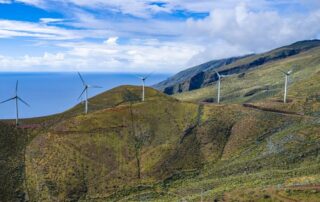
Ideologues try a grid powered only by “renewables”
The island of El Hierro only has about 11,000 people, but in 2008 it set out to show the world how to do a full transition to an electric system powered only by wind turbines backed up by a hydro-electric energy storage system. Francis Menton wonders what has happened since.

The analogy between Chairman Mao and current Western leaders
It is impossible not to notice the analogy between the events that led to China’s Great Famine in 1958-1962 and the ongoing energy disaster being imposed on various U.S. states and other Western countries by an equally ignorant clique of political ideologues, says Francis Menton.

Climate Splits Voters by 51 Points, but Economy Ranks Higher
Among voters backing Democratic House candidates, 66% still call environment and climate policy very important. Among Republican backers, 15% do, says Charles Rotter.

