
Six Impossible Things to Believe
Like Alice’s White Queen, European and Spanish authorities want us to believe six impossible things about climate change and the energy transition.

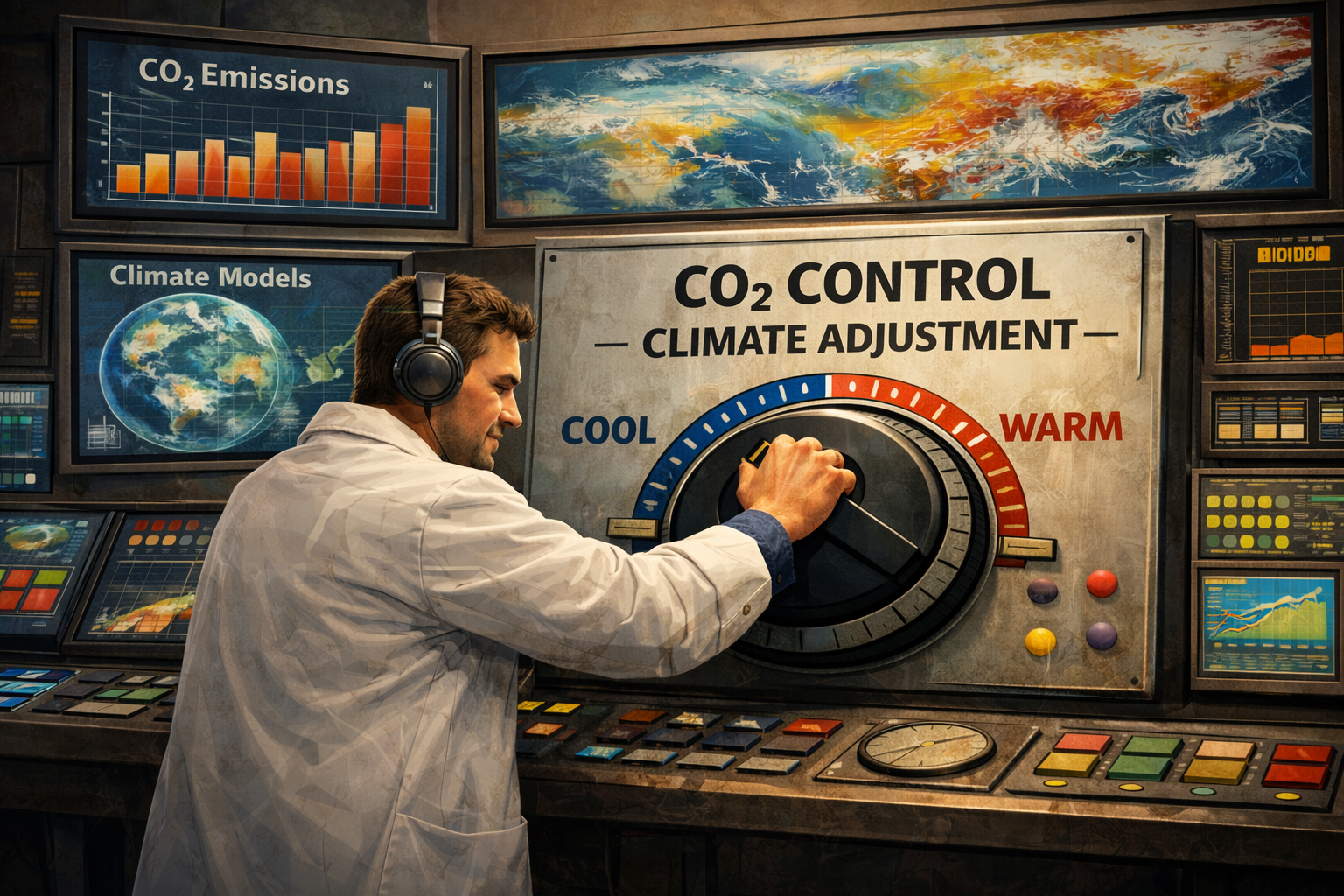
Image created with ChatGPT.
Javier Vinós
Date: 29 December 2025
In Alice Through the Looking-Glass, a character by Lewis Carroll says, “One can’t believe impossible things,” to which the White Queen replies, “When I was your age, I sometimes believed as many as six impossible things before breakfast.”
Like Alice’s White Queen, European and Spanish authorities want us to believe six impossible things about climate change and the energy transition, before and after breakfast. These six impossible things to believe — and yet many people, like the White Queen, do believe them — are as follows:
The first is believing that humans have — or could have in the near future — some degree of control over the climate and the weather, and that through our actions we can reduce the frequency and intensity of hurricanes, floods, droughts, or sea-level rise. Anyone who believes this is capable of believing anything.
The second is believing that the climate, in its extraordinary complexity with hundreds — perhaps thousands — of variables, is controlled by just one: changes in the concentration of greenhouse gases. The theory and models that propose this are based on a good understanding of the properties of CO₂, but a poor understanding of the other climatic variables. And the fact that no solid evidence for this theory has emerged, despite decades of intensive searching, makes it very difficult to believe.
The third is believing that an energy transition is taking place or will take place. There are no examples of energy transitions. We use more biomass, coal, oil, natural gas, and uranium than at any other time in history, and we are simply adding the so-called renewable energies, which are installed, maintained, and replaced thanks to hydrocarbon fuels. Our energy use is growing faster than our capacity to install renewable energy. The transition is a myth, and anyone who claims to believe in it is either lying or poorly informed.
The fourth is believing that the use of hydrocarbon fuels is going to be abandoned. At the recent climate conference in Brazil, a group of countries, including Spain, pushed for the agreement to include a roadmap for abandoning those fuels. They were forced to back down, and hydrocarbon fuels are not even mentioned in the final agreement. Eighty-three governments supported that roadmap, but together they represent only 13.6% of the world’s population. The remaining 86.4% shows no intention of abandoning the source from which the human species obtains 85% of its external energy.
It is impossible to believe that such an abandonment will take place because, 33 years after the United Nations Framework Convention on Climate Change and 10 years after the Paris Agreement, support among nations for abandoning hydrocarbon fuels has decreased rather than increased.
The fifth is believing that a reduction in global CO₂ emissions will occur. These emissions are linked to human development and population growth. Many regions of the planet remain underdeveloped, and the world’s population will continue to grow in the coming decades. Since the first climate conference in Berlin in 1995, where strict emission-reduction commitments were adopted — but only for “developed” nations — global CO₂ emissions have increased by 70%. These 30 years should be enough to convince anyone that they are not going to stop rising.
The sixth is believing that energy can be decarbonized. Only 23% of the EU’s final energy consumption is electricity, and only 70% of that electricity comes from carbon-free sources. One third of it comes from nuclear energy, which Spain rejects and which was installed in the last century. So far this century, the EU has managed to decarbonize less than 10% of the energy it uses. Most of the planet is not even trying.
These six things are impossible to believe, but if we refuse to believe even just one of them, the entire climate and energy strategy of the European Union and the Spanish government is revealed as a tragic farce. Based on these impossibilities, our national and European governments have committed themselves to a transition whose consequences we are already suffering: more expensive energy, declining industrial production and competitiveness, increased risk to the power grid, environmental policies with tragic consequences, greater indebtedness, and, ultimately, an accelerated decline of Europe relative to the rest of the world.

This article was published on 23 December 2025 at libertaddigital.com.
(Translated from Spanish for Clintel Foundation by Tom van Leeuwen.)
Javier Vinós
Javier Vinós holds a PhD in science, is a scientist, an independent climate researcher, and president of the Asociación de Realistas Climáticos (Association of Climate Realists).

more news

EU’s Pretense of ‘Transition’ Leadership Is an Economic Loser
The European effort to advance renewables is incinerated almost instantly by the combustion of fossil fuels elsewhere, says Samuel Furfari. It also leads to economic decline.

Is Britain’s New Energy Secretary Even Crazier than Mad Ed?
The new Energy secretary of the UK, Miatta Fahnbulleh, wants full Net Zero by 2030.

Trump is Right to Take On the Climate Litigation Complex
In this opinion piece, energy analyst Tilak Doshi argues that President Trump was right to challenge a new National Academy of Sciences report claiming to support climate litigation based on extreme weather attribution. According to Doshi, the report blurs the line between independent scientific advice and advocacy for climate lawsuits.

