
Why the CO₂ theory can’t be allowed to fall down
Director Martin Durkin and producer and podcaster Tom Nelson, both known for the award-winning documentary “Climate: The Movie“, launched the initiative GorillaScience last year. On their YouTube channel, they expose the many lies being told about the climate.

Clintel Foundation
Date: 2 July 2025
In their latest video, “3 Cheers for CO₂!”, they discuss what may be the biggest climate lie of all: the role of CO₂. The main points made by the creators are:
-
CO₂ is wrongly labeled as a problem
It is a natural and essential gas for plant growth, unjustly portrayed as a “polluting enemy” misunderstood by alarmists. -
Carbon dioxide promotes plant growth and food production
Increased CO₂ levels lead to better crop growth and higher food production — a positive effect that, according to the video, receives little attention in the public climate debate. -
Climate policy is ideologically driven
The demonization of CO₂ is not based on scientific consensus but motivated by political and anti-capitalist beliefs. -
Overestimation of risks and underestimation of benefits
The creators argue that climate scientists and policymakers catastrophically exaggerate the negative impact of CO₂, while the agricultural and ecological benefits (such as “CO₂ fertilization”) are hardly acknowledged. -
A call to revalue CO₂ in policy
The central argument is for a reassessment of climate policy. CO₂ should not be penalized or restricted but rather appreciated for its role in sustaining the planet and agriculture.
As Martin Durkin states in this short clip:
“This is a theory too much depends on. It must not be allowed to fall.”
You can watch the Complete Guide to CO₂ by GorillaSchience here.


more news
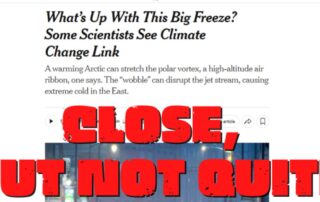
Right, New York Times, Scientists Do Disagree on The Polar Vortex
A recent New York Times article explores claims that climate change may be worsening winter cold extremes. While some scientists argue that Arctic warming destabilizes the polar vortex, long-term data show a clear decline in extreme cold events, challenging that narrative.
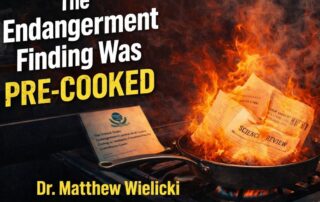
The Endangerment Finding Was Pre-Cooked
In this analysis, Dr. Matthew Wielicki examines the EPA’s 2009 Endangerment Finding, contending that the ruling was effectively decided in advance and later justified through a structured scientific review, with far-reaching consequences for climate regulation.

Why Climate Science Is Not Settled
Claims that climate science is “settled” are frequently used to justify far-reaching policy decisions. In this article, Vijay Jayaraj examines how model uncertainties, conflicting evidence and real-world observations challenge the idea of certainty in the climate debate.

