
Why the CO₂ theory can’t be allowed to fall down
Director Martin Durkin and producer and podcaster Tom Nelson, both known for the award-winning documentary “Climate: The Movie“, launched the initiative GorillaScience last year. On their YouTube channel, they expose the many lies being told about the climate.

Clintel Foundation
Date: 2 July 2025
In their latest video, “3 Cheers for CO₂!”, they discuss what may be the biggest climate lie of all: the role of CO₂. The main points made by the creators are:
-
CO₂ is wrongly labeled as a problem
It is a natural and essential gas for plant growth, unjustly portrayed as a “polluting enemy” misunderstood by alarmists. -
Carbon dioxide promotes plant growth and food production
Increased CO₂ levels lead to better crop growth and higher food production — a positive effect that, according to the video, receives little attention in the public climate debate. -
Climate policy is ideologically driven
The demonization of CO₂ is not based on scientific consensus but motivated by political and anti-capitalist beliefs. -
Overestimation of risks and underestimation of benefits
The creators argue that climate scientists and policymakers catastrophically exaggerate the negative impact of CO₂, while the agricultural and ecological benefits (such as “CO₂ fertilization”) are hardly acknowledged. -
A call to revalue CO₂ in policy
The central argument is for a reassessment of climate policy. CO₂ should not be penalized or restricted but rather appreciated for its role in sustaining the planet and agriculture.
As Martin Durkin states in this short clip:
“This is a theory too much depends on. It must not be allowed to fall.”
You can watch the Complete Guide to CO₂ by GorillaSchience here.

more news
Climate.us: A Sign That the Climate Debate Is Far From Over
Many commentators have suggested that recent political changes represent some sort of permanent turning point in the climate debate. That would be a mistake, says Anthony Watts. The Climate.us project for instance, demonstrates that there remains a substantial network committed to maintaining the climate narrative.
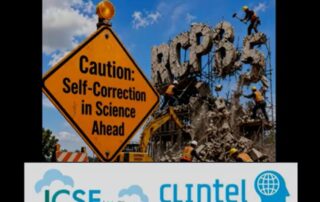
ICSF/Clintel lecture by Roger Pielke Jr.: RCP8.5 is Retired – What Now?
In his recent ICSF/Clintel Lecture, Roger Pielke Jr. acknowledges that the scientific community is now correcting a long-standing problem regarding extreme climate scenarios like RCP8.5. But he warns that the consequences of past reliance on these scenarios will continue for many years.

Judith Curry declares victory against climate stupidity; RIP Climate Etc.
According to prominent climate realist Judith Curry, the climate issue has lost its political relevance. It’s the main reason she is closing her successful blog Climate Etc.

