
“Climate Policy Ignores Nature” – Interview with New WCD Signatory Enrique Ortega
Spanish geologist and new World Climate Declaration signatory Enrique Ortega brings decades of experience in earth sciences to the climate debate, emphasizing the importance of geological history in understanding present-day climate change.

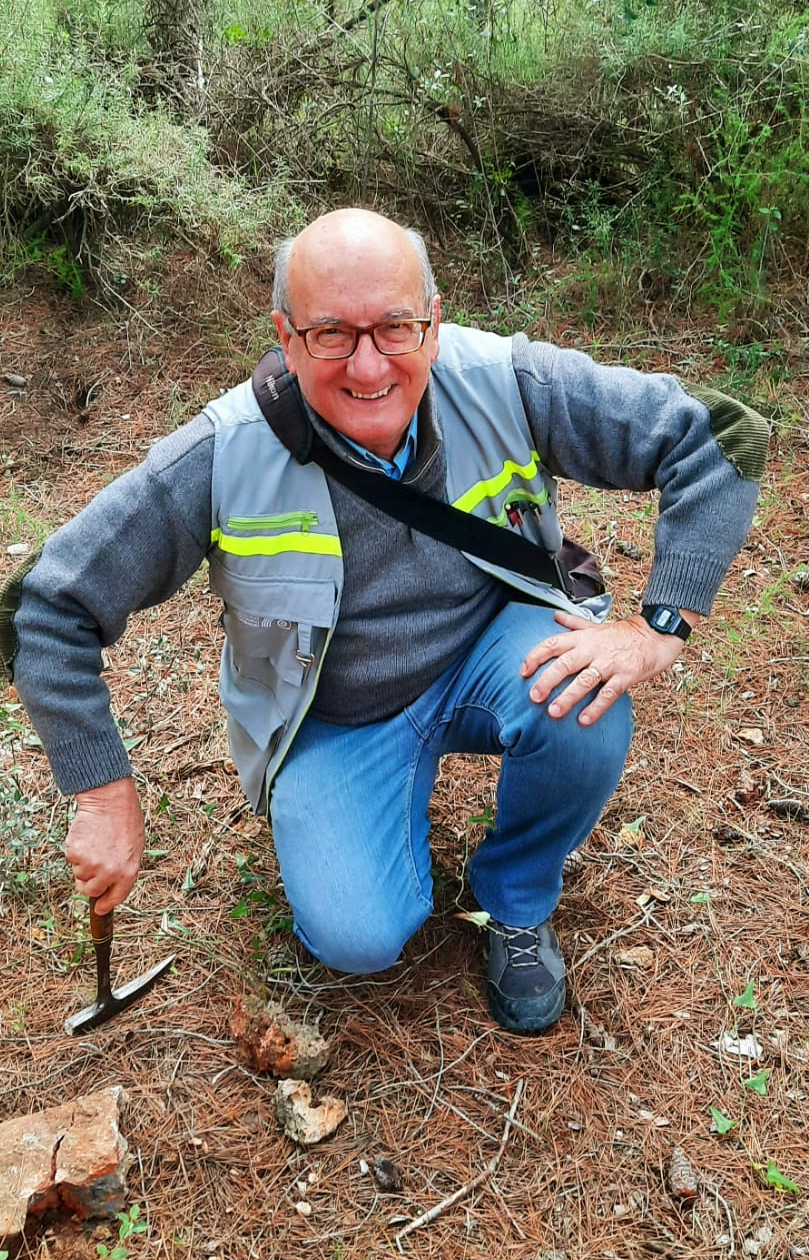
Enrique Ortega
Clintel Foundation
Date: 2 April 2026
NAME: Enrique Ortega
COUNTRY: Spain
What is your background?
I have a University Degree in Geological Sciences from the Oviedo University (Spain). In the early part of my career (1976–1981), I served as a professor and researcher in the Department of Geotectonics at that university. After that, I worked in mineral exploration at the company Minas de Almadén (1982–1996), where I acceded to the position of Head of the Geology Department. Since then and until the present, I worked as institutional consultant focused on the mining sector, collaborating with international organizations such as the World Bank, the International Agency for Atomic Energy or the Inter-American Development Bank, at a worldwide scale.
Since when and why are you interested in climate change and how did your views on climate change evolve?
I have been interested for decades now. Ever since I realized the discrepancies between the overwhelming and alarming climate news appearing in the media and the reality observed in rocks, sediments, and ice throughout the planet’s geological and climatic history. This interest led me to begin compiling information published in scientific journals and to start writing articles to disseminate that information in simple language accessible to non-specialist readers. Later, in collaboration with my colleagues Jose Antonio Saénz de Santamaría and Stefan Uhlig, also geologists, this information was compiled into the book titled Cambios Climáticos (Climatic Changes, in English: https://editorialaulamagna.lantia.com/libro/cambios-climaticos).
Is climate change a big issue in your country and how do you notice this?
Yes, it is a big and very serious issue because the environmental policy is based on false premises, where ideological considerations take precedence over scientific evidence. This situation has led to serious problems—or even major disasters—due to the adoption of misguided measures. This is the case, for example, with the floods in the fall of 2024 (adequate water infrastructure was not built and cleaning of the river channels was not executed because of supposed environmental reasons), the extremely severe summer wildfires of 2025 (forests are not properly maintained, again following supposed environmental reasons), or the collapse of the power network due to an excess of renewable energy in the grid. In all these cases, climate change has become a wild card, a flimsy excuse for politicians to hide from their responsibilities.
What would climate policy ideally look like in your view?
The main problem with present climate policies—which have a major influence on environmental and energy policies as a whole—is that they are based on false premises and do not take into account the real behavior of nature. More attention is being paid to the predictions of computer models that are incapable of either reproducing the past or predicting the future (as demonstrated by the repeated failures of their prophecies), while the messages that nature sends us through its evolution, following ancestral rhythms, are being overlooked. If you look at the natural behavior, as demonstrated by the geologic history, the climate can never be stable, and the changes we are observing are part of natural evolution. And that is what climate policies are overlooking. Therefore, climate policies must be adapted to natural rhythms, rather than attempting to stop or to invert processes caused by cosmic forces that are beyond our control.
What is your motivation to sign the CLINTEL World Climate Declaration?
To help and to support:
- To demonstrate that it is completely false that there is a scientific consensus on the anthropogenic origin of global warming—that great lie with which the global public is being deceived, with the complicity of political leaders and the media.
- To alleviate the unfounded panic being instilled in the population to achieve political and economic objectives.
What question did we forget?
In my opinion, maybe due to the professional perspective, it would be important to pay more attention to the geologic history of the planet. Our present climatic situation is not rare, strange or critical, because something similar already happened hundreds (probably thousands) of times during geological times. Hundreds of millions of years ago, the atmospheric content of CO2 was several times higher than today, also in very cold glaciations periods. Consequently, there is no correlation between CO2 and warming. Also, during long periods, the Earth’s temperatures were much higher than the present ones. In fact, the present climatic situation represents one of the coldest periods in the history of the Earth, with two frozen poles, something that happened only during less than 10% of the planet’s history, that started billions of years ago. This geological perspective would make the understanding of the present climatic evolution easier and would help to eliminate the climatic drama.


more news
Interview with Dr. Guus Berkhout: A Different Perspective on Climate Science and Energy Policy
The big problem today is that climate models are not fit-for-purpose, says Clintel co-founder dr. Guus Berkhout. They do not reflect the real world. That is the reason why the Net Zero policy does not work. We need fundamental changes in climate science and climate policies. We now see that this message gets more and more support.
Judge Rejects Climate Dogma, Begins to Restore Integrity
In a significant move for scientific accountability, a U.S. federal judge has removed a controversial climate change chapter from a key judicial reference manual. The decision challenges the dominance of model-based climate narratives in the courts and signals a renewed emphasis on empirical evidence and institutional integrity.
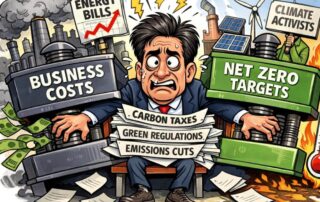
Ed Miliband is the last fool standing on Net Zero
As the United States moves to reconsider key climate regulations, Britain’s aggressive push toward Net Zero is drawing increasing scrutiny. In this commentary, Matt Ridley argues that unilateral decarbonisation risks leaving the UK economically isolated while much of the world shifts course.

