
COP30 Is Lying To Justify Its Existence
COP30 is building its case on climate misinformation that rewrites the past to claim a victory it never earned.

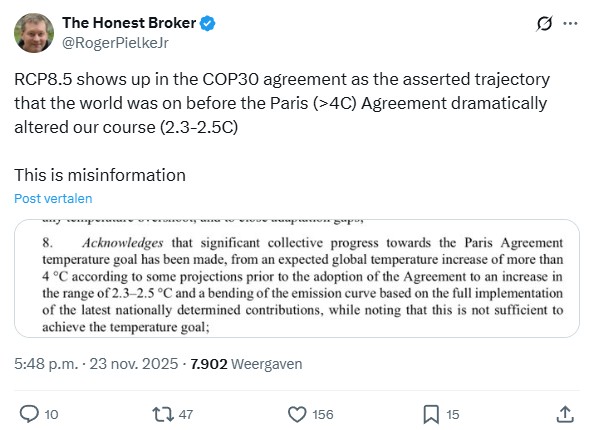
The COP30 agreement claims the world was previously on track for more than 4C of warming until the Paris Agreement heroically “bent” that trajectory down to 2.3–2.5C:

However, “this is misinformation,” says Roger Pielke Jr., Professor of Environmental Studies at the University of Colorado Boulder. It is a fiction built on the carcass of RCP8.5 — the extreme scenario that scientists quietly abandoned years ago because it required impossible coal use, implausible demographics and an economic collapse that never happened.
COP30 is resurrecting an unrealistic, disowned scenario in order to claim that Paris saved the world. The problem is the data. Real-world emissions show no curve bending, no slowdown and no “Paris effect”.
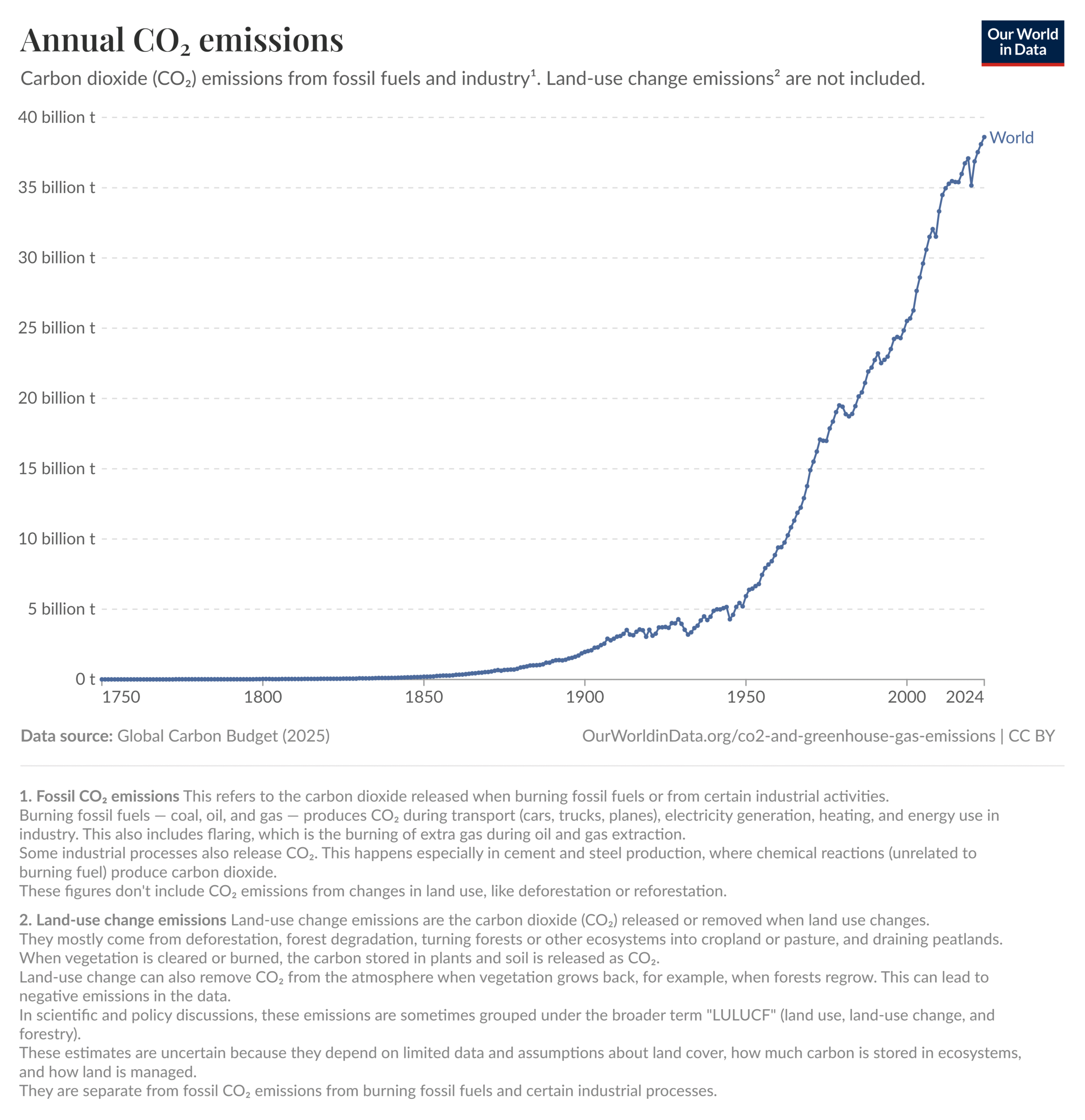
Paris didn’t change emissions, but it did unlock a permanent justification for climate taxation, energy rationing and the dismantling of cheap, reliable power — the foundation of economic prosperity.
COP30 needs a victory to justify its existence. So it has rewritten history: invent a 4C trajectory, pretend Paris knocked it down, and congratulate itself for saving humanity.
The world was never heading for RCP8.5. Paris didn’t change emissions.
Lies.


more news

Clearing up some misconceptions about the DoE report
After environmental groups sued to halt a critical Department of Energy climate report, accusations of secrecy and political bias quickly followed. Ross McKitrick responds by challenging what he calls widespread misconceptions about the project, defending its transparency, scientific grounding and editorial independence.

India Builds a ‘Fossil Future’
While Western governments continue to speak the language of net zero, India is rapidly expanding coal, oil and natural gas production to secure long-term energy security and economic growth. By strengthening hydrocarbon trade with the United States and other partners, India is building what the author calls a “fossil future,” prioritizing reliable and affordable energy over climate pledges.
Interview with Dr. Guus Berkhout: A Different Perspective on Climate Science and Energy Policy
The big problem today is that climate models are not fit-for-purpose, says Clintel co-founder dr. Guus Berkhout. They do not reflect the real world. That is the reason why the Net Zero policy does not work. We need fundamental changes in climate science and climate policies. We now see that this message gets more and more support.

