
COP30 Is Lying To Justify Its Existence
COP30 is building its case on climate misinformation that rewrites the past to claim a victory it never earned.

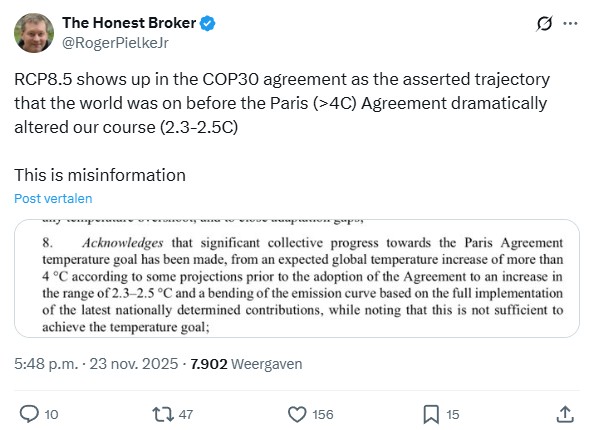
The COP30 agreement claims the world was previously on track for more than 4C of warming until the Paris Agreement heroically “bent” that trajectory down to 2.3–2.5C:

However, “this is misinformation,” says Roger Pielke Jr., Professor of Environmental Studies at the University of Colorado Boulder. It is a fiction built on the carcass of RCP8.5 — the extreme scenario that scientists quietly abandoned years ago because it required impossible coal use, implausible demographics and an economic collapse that never happened.
COP30 is resurrecting an unrealistic, disowned scenario in order to claim that Paris saved the world. The problem is the data. Real-world emissions show no curve bending, no slowdown and no “Paris effect”.
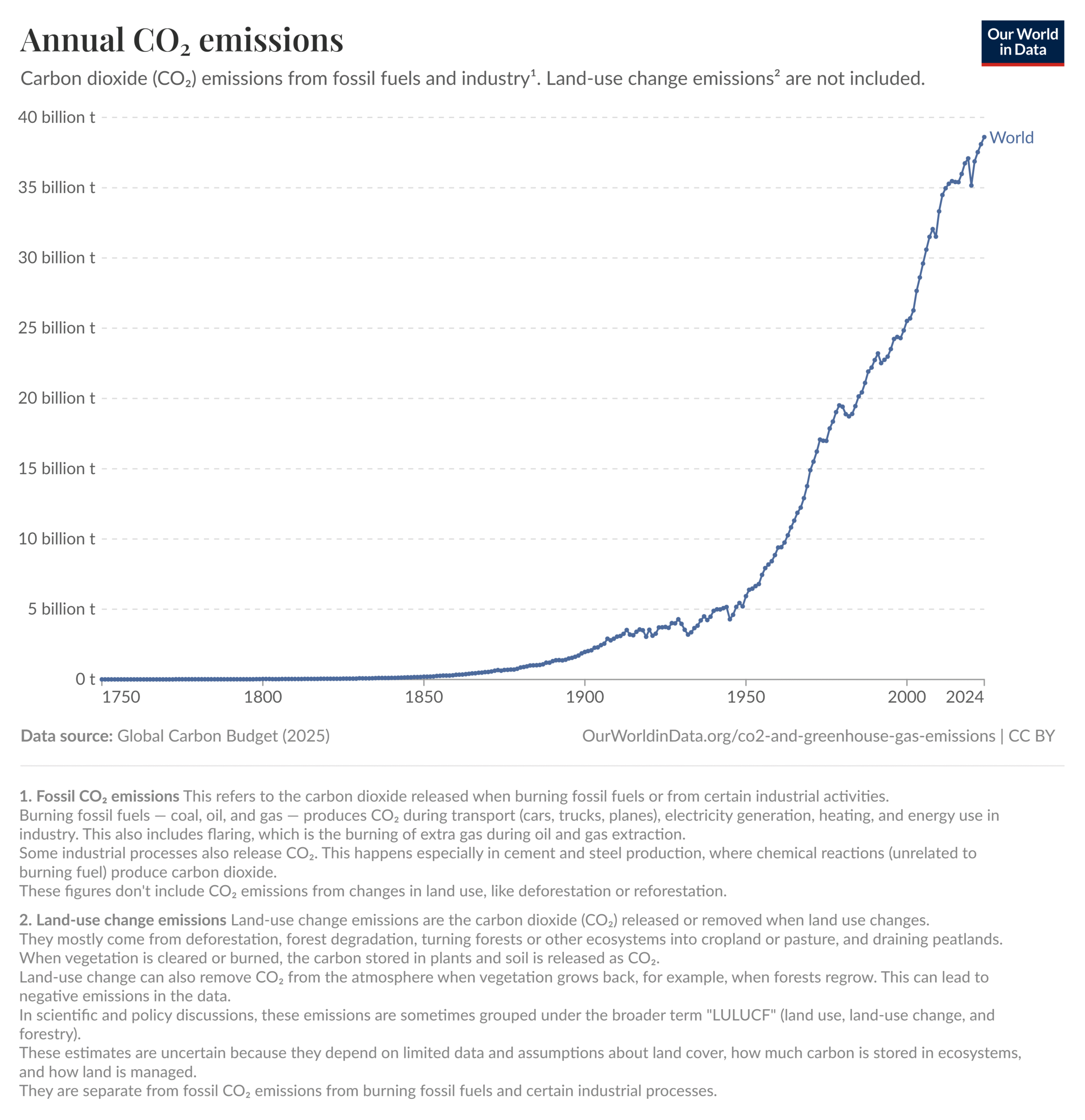
Paris didn’t change emissions, but it did unlock a permanent justification for climate taxation, energy rationing and the dismantling of cheap, reliable power — the foundation of economic prosperity.
COP30 needs a victory to justify its existence. So it has rewritten history: invent a 4C trajectory, pretend Paris knocked it down, and congratulate itself for saving humanity.
The world was never heading for RCP8.5. Paris didn’t change emissions.
Lies.


more news

ICSF/Clintel lecture by Roger Pielke Jr.: RCP8.5 is Retired – What Now?
In his recent ICSF/Clintel Lecture, Roger Pielke Jr. acknowledges that the scientific community is now correcting a long-standing problem regarding extreme climate scenarios like RCP8.5. But he warns that the consequences of past reliance on these scenarios will continue for many years.

Judith Curry declares victory against climate stupidity; RIP Climate Etc.
According to prominent climate realist Judith Curry, the climate issue has lost its political relevance. It’s the main reason she is closing her successful blog Climate Etc.

What Climate Crisis? Indonesia Taps Fossil Fuels
Indonesia is engineering a spectacular revival, rejecting the economic suicide of Western climate mandates to reclaim its energy sovereignty and resurrect its historical blueprint for prosperity, says Vijay Jayaraj.

