
COP30 Is Lying To Justify Its Existence
COP30 is building its case on climate misinformation that rewrites the past to claim a victory it never earned.

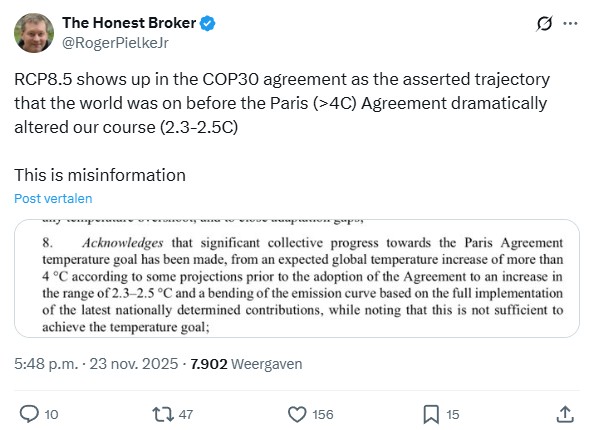
The COP30 agreement claims the world was previously on track for more than 4C of warming until the Paris Agreement heroically “bent” that trajectory down to 2.3–2.5C:

However, “this is misinformation,” says Roger Pielke Jr., Professor of Environmental Studies at the University of Colorado Boulder. It is a fiction built on the carcass of RCP8.5 — the extreme scenario that scientists quietly abandoned years ago because it required impossible coal use, implausible demographics and an economic collapse that never happened.
COP30 is resurrecting an unrealistic, disowned scenario in order to claim that Paris saved the world. The problem is the data. Real-world emissions show no curve bending, no slowdown and no “Paris effect”.
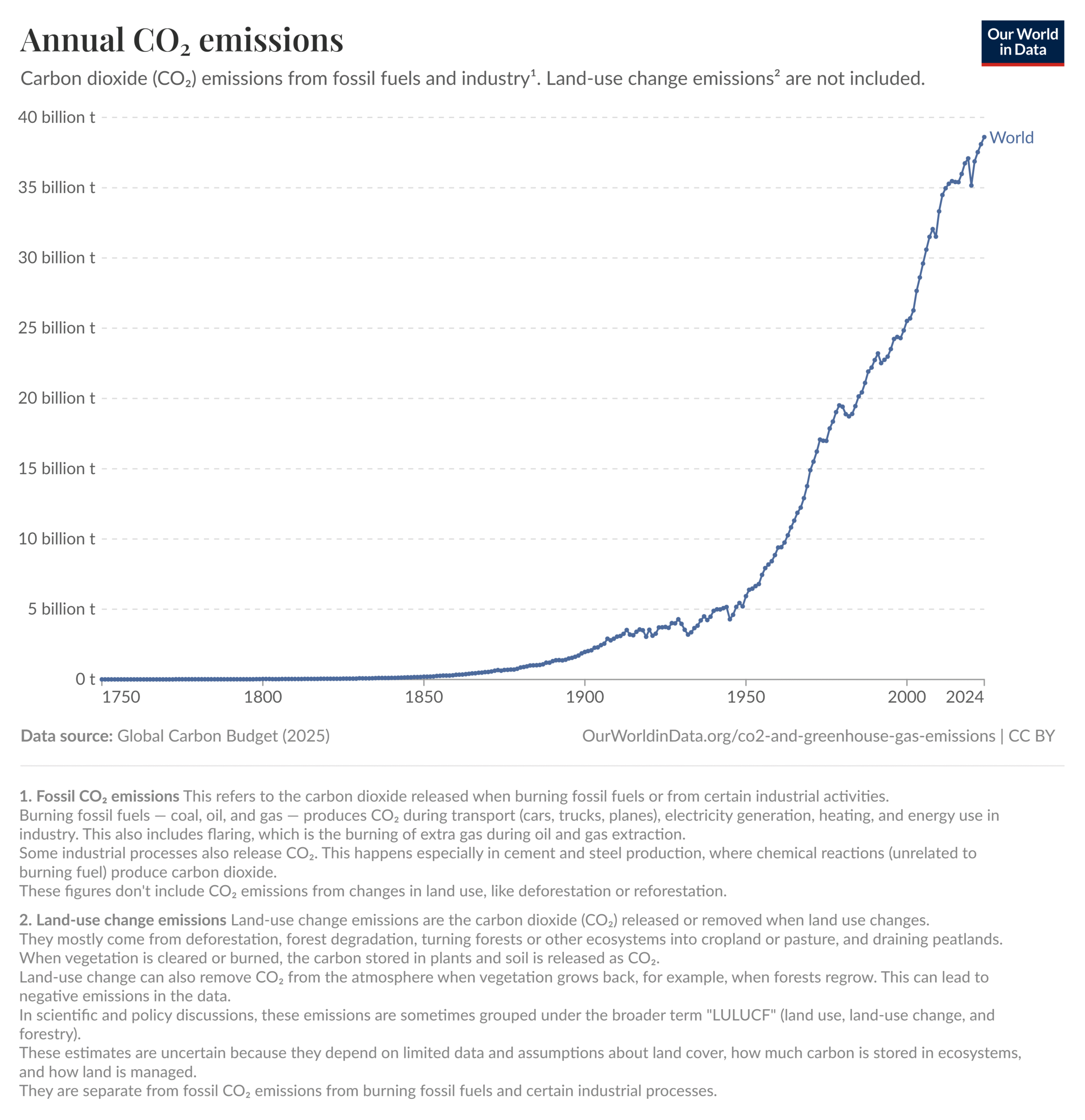
Paris didn’t change emissions, but it did unlock a permanent justification for climate taxation, energy rationing and the dismantling of cheap, reliable power — the foundation of economic prosperity.
COP30 needs a victory to justify its existence. So it has rewritten history: invent a 4C trajectory, pretend Paris knocked it down, and congratulate itself for saving humanity.
The world was never heading for RCP8.5. Paris didn’t change emissions.
Lies.

more news
The World Cup Is About Soccer Not Climate Guilt
The attempt to transform the World Cup into a climate morality tale ignores context, comparative scale and common sense, says Anthony Watts. It’s a perfect example of modern climate journalism’s tendency to shoehorn climate change into virtually every subject imaginable.

Global Warning, a genuine attempt to be objective about climate
Canadian filmmaker Mathew Embry (Painkiller: Inside the Opioid Crisis) has released a remastered edition of his 2019 climate documentary Global Warning. It is more relevant than ever and is one of the few genuine attempts by the media to take a truly objective look at the climate debate.

Do Los Niños cause climatic cooling?
The upcoming El Niño will affect our weather for a year or two, but what is the climatic effect of this weather feature, if any?

