
COP30 Is Lying To Justify Its Existence
COP30 is building its case on climate misinformation that rewrites the past to claim a victory it never earned.

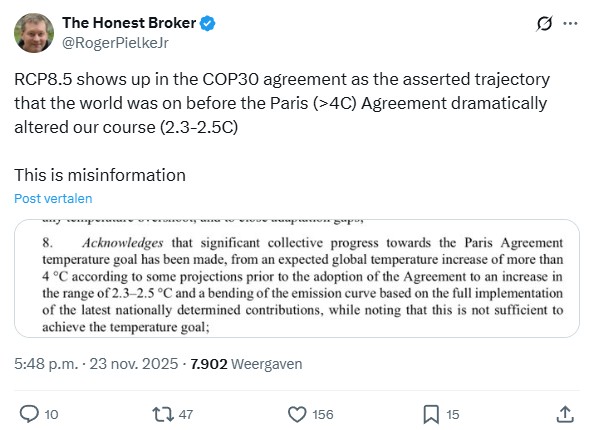
The COP30 agreement claims the world was previously on track for more than 4C of warming until the Paris Agreement heroically “bent” that trajectory down to 2.3–2.5C:

However, “this is misinformation,” says Roger Pielke Jr., Professor of Environmental Studies at the University of Colorado Boulder. It is a fiction built on the carcass of RCP8.5 — the extreme scenario that scientists quietly abandoned years ago because it required impossible coal use, implausible demographics and an economic collapse that never happened.
COP30 is resurrecting an unrealistic, disowned scenario in order to claim that Paris saved the world. The problem is the data. Real-world emissions show no curve bending, no slowdown and no “Paris effect”.
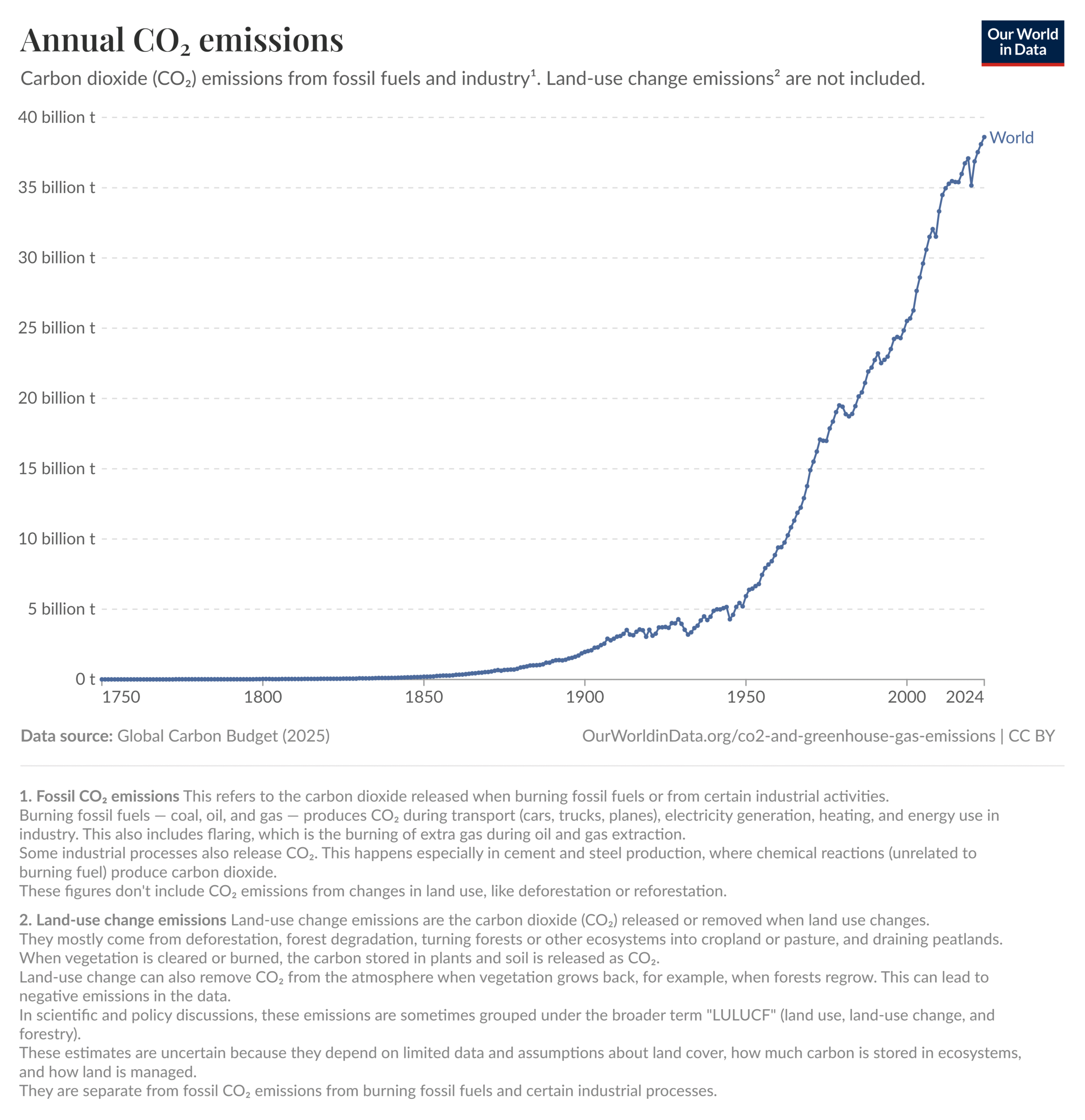
Paris didn’t change emissions, but it did unlock a permanent justification for climate taxation, energy rationing and the dismantling of cheap, reliable power — the foundation of economic prosperity.
COP30 needs a victory to justify its existence. So it has rewritten history: invent a 4C trajectory, pretend Paris knocked it down, and congratulate itself for saving humanity.
The world was never heading for RCP8.5. Paris didn’t change emissions.
Lies.


more news

Why are the media encouraging parents to make their children anxious about climate change?
The dominant mode of climate journalism in the mainstream Western press: a seamless fusion of advocacy, emotional appeal and selective empiricism in which no counterevidence need intrude and no sceptical voice need apply. Our children pay the price, says Tilak Doshi.

Sea Level ‘Acceleration’ Isn’t What the Measured Data Show
Direct, long-term tide gauge measurements around the world do not show the dramatic acceleration of the sea level implied in the satellite-based narrative, says Anthony Watts.

Global rice production has nearly doubled over 50 years despite climate change
Global rice production nearly doubled between the 1960s and the 2010s and rising atmospheric CO2 was the primary environmental factor contributing to increased production.

