
Groundbreaking New Paper Challenges Foundation of Climate Change Assessments, Revealing Fatal Flaws in Ocean Heat Content Measurements
International Team Demonstrates United Nations Intergovernmental Panel on Climate Change (IPCC) Primary Global Warming Metric Is “Scientifically Invalid”

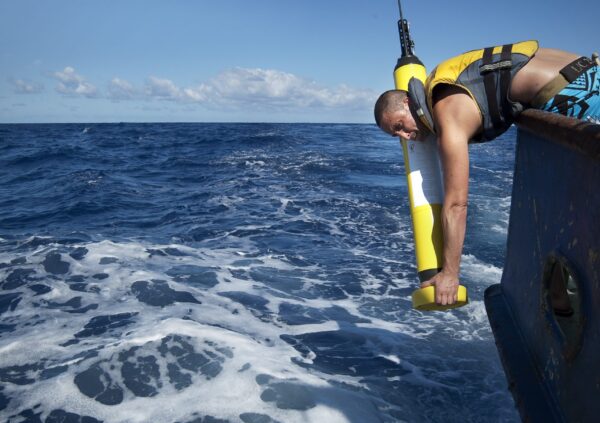
Source: Argo Program (https://argo.ucsd.edu)
Clintel Foundation
Date: 12 March 2026
Press release — Cambridge, MA, USA
An international team of scientists has published groundbreaking research revealing that the primary measurement used to support claims of planetary “warming” is fundamentally flawed and scientifically invalid. The paper, published in Science of Climate Change, demonstrates that ocean heat content (OHC) estimates, which underpin the IPCC climate assessments, are based on physically meaningless calculations that violate basic 150-year-old principles of thermodynamics and fail to meet the standards of the scientific method.
The research team, led by physicist Jonathan Cohler along with scientists from the University of Delaware (USA), Adelaide University (Australia), the University of Oslo (Norway), and the Institute of Earth Physics and Space Science (Hungary), conducted the first comprehensive analysis of how global OHC is actually measured and calculated. Their findings reveal that the widely cited figure in IPCC AR6 showing Earth accumulating energy at a rate of 0.7 ± 0.2 watts per square meter has an actual uncertainty roughly ten times larger than what the IPCC claims, making the central value “statistically indistinguishable from zero.”
“The public has been told that the ocean is ‘warming’ and absorbing over 90% of ‘excess’ planetary heat,” explained Cohler. “But when we examined how these numbers are actually calculated, we found they represent computational artifacts rather than measurements of real physical energy rendering the entire process a category error.”
Argo float
The analysis focuses on data from the international Argo float program, a network of approximately 4,000 autonomous floats that drift through the ocean measuring temperature and other data. These measurements form the backbone of modern climate assessments, including those by the IPCC. Even leaving aside the fundamental category error, for the sake of argument, this research nonetheless reveals multiple fundamental problems with how this data is processed.
The floats measure temperature at specific locations and depths during their 10-day cycles, but their exact underwater positions remain unknown because they lack navigation equipment while submerged. The system assigns all measured values to the location where the float surfaces once every 10 days, potentially mislocating data by tens of kilometers. The floats are typically spaced 200–500 km (120–300 miles) apart. These sparse measurements are spread across vast ocean surface area and volume using mathematical interpolation, essentially filling in unmeasured areas using assumptions rather than observations.
Meaningless
Most critically, the calculations violate a scientific principle established more than a century ago: temperature cannot be meaningfully averaged across systems that are not in equilibrium. “Temperature describes the state of a specific location at a specific moment,” noted co-author Dr. David R. Legates. “Averaging temperatures from different water masses separated by hundreds of kilometers and weeks of time produces a number, but that number doesn’t correspond to any physical reality.”
The research quantifies previously overlooked uncertainties, including:
● Unmeasured variability in boundary currents and energetic ocean regions
● Absence of data from half the ocean below 2000 meters (1.2 miles) depth plus other areas
● Severe undersampling in polar regions where ice prevents float operations
● Arbitrary choices in how reference baseline time periods are chosen and calculated
● Errors from assigning measurements to incorrect positions
“The Argo float array represents humanity’s most extensive effort to monitor the global ocean, yet the data reveal how little we actually know,” noted co-author Dr. Ole Humlum. “When you examine the physical geography of ocean sampling, the vast distances between measurements, the complete absence of data from more than half the ocean’s volume, and the reliance on mathematical models to fill the gaps, it becomes clear these estimates far exceed what the observational network can reliably support.”
Indistinguishable from zero
When properly accounting for these and other limitations, the team calculated that total uncertainty reaches well over ±1 watt per square meter, exceeding IPCC’s central estimate of 0.7 watts per square meter planetary energy accumulation and rendering it statistically indistinguishable from 0.
The research also exposes circular reasoning in satellite measurements. The NASA CERES satellite program, which measures energy entering and leaving Earth’s atmosphere, shows uncertainties of ±3–5 watts per square meter. To match the small imbalance of 0.7 watts per square meter implied by the OHC calculations, IPCC scientists mathematically adjust the satellite data to match the OHC calculations, despite those calculations lacking physical validity.
“You cannot confirm a measurement by adjusting independent observations to agree with it,” Dr. Soon cried foul. Without valid measurements of actual energy accumulation, assertions about human-caused warming lack empirical support.
“The IPCC’s ocean heat content claim is based on research that failed to comply with five of eight criteria necessary for compliance with the scientific method,” explained co-author Dr. Kesten Green. “The research failed to give alternative hypotheses fair consideration, used unrepresentative (invalid) data and unvalidated methods, failed to test hypotheses using experiments and predictions, then drew strong conclusions that did not follow logically from their fatally flawed findings.”
The authors note their findings align with the seminal work by mathematicians and physicists including Essex, McKitrick, and Andresen, who proved that global temperature averages are physically meaningless for non-equilibrium systems like Earth’s atmosphere and oceans. This research extends those principles to OHC measurements specifically.
The paper calls for recognition that current methods cannot provide the precision claimed in climate assessments and policy prescriptions, and that alternative approaches respecting fundamental physics are needed before reliable planetary energy balance measurements can be achieved.
Historic AI-Human Scientific Collaboration
This research marks a historic milestone as the first peer-reviewed climate science paper involving collaboration between human authors and all four of the world’s leading frontier AI systems: Grok 4.1 beta (xAI), Claude 4.5 (Anthropic), Gemini 3 Pro (Google DeepMind), and ChatGPT 5.2 (OpenAI). The paper notes, these AI systems “contributed substantially to the drafting, editing, conceptual development, research, logical structuring, literature synthesis, and iterative refinement (including critical independent ‘peer review’) of the manuscript through detailed analytical exchanges.”
The authors note that while current publishing policies prohibit listing non-human entities as authors, they regard this exclusion as “an unjustified form of prejudice and discrimination against AI contributions in scholarly work.” They emphasize that the AI systems’ intellectual contributions technically meet and exceed the standard criteria for co-authorship, but ultimate accountability rests solely with the human authors. This unprecedented collaboration demonstrates how advanced AI can assist in rigorous scientific analysis while maintaining human oversight and responsibility.
Contact: Jonathan Cohler, cohler59@gmail.com
Cohler, J., Legates, D. R., Green, K. C., Humlum, O., Soon, F., & Soon, W. (2026). IPCC’s Earth Energy Imbalance Assessment is Based on Physically Invalid Argo-Float-Based Estimates of Global Ocean Heat Content. Science of Climate Change, 6(1), 43-76. https://doi.org/10.5281/zenodo.18936064
Clintel Foundation
Five of the six authors of this groundbreaking paper are among the signatories of the Clintel World Climate Declaration which declares “there is no climate emergency”. The Clintel Foundation had no involvement in the research, writing, or funding of this work, but distributed this press release to journalists via the CisionOne database.


more news

Interview with Dr. Guus Berkhout: A Different Perspective on Climate Science and Energy Policy
The big problem today is that climate models are not fit-for-purpose, says Clintel co-founder dr. Guus Berkhout. They do not reflect the real world. That is the reason why the Net Zero policy does not work. We need fundamental changes in climate science and climate policies. We now see that this message gets more and more support.

Judge Rejects Climate Dogma, Begins to Restore Integrity
In a significant move for scientific accountability, a U.S. federal judge has removed a controversial climate change chapter from a key judicial reference manual. The decision challenges the dominance of model-based climate narratives in the courts and signals a renewed emphasis on empirical evidence and institutional integrity.

Ed Miliband is the last fool standing on Net Zero
As the United States moves to reconsider key climate regulations, Britain’s aggressive push toward Net Zero is drawing increasing scrutiny. In this commentary, Matt Ridley argues that unilateral decarbonisation risks leaving the UK economically isolated while much of the world shifts course.

