
Marc Morano: the best time for climate realism in the last 50 years
At the 16th ICCC in Washington, D.C., Marc Morano argues that the global climate agenda is weakening, calling this the most promising moment for climate realism in the past 50 years.

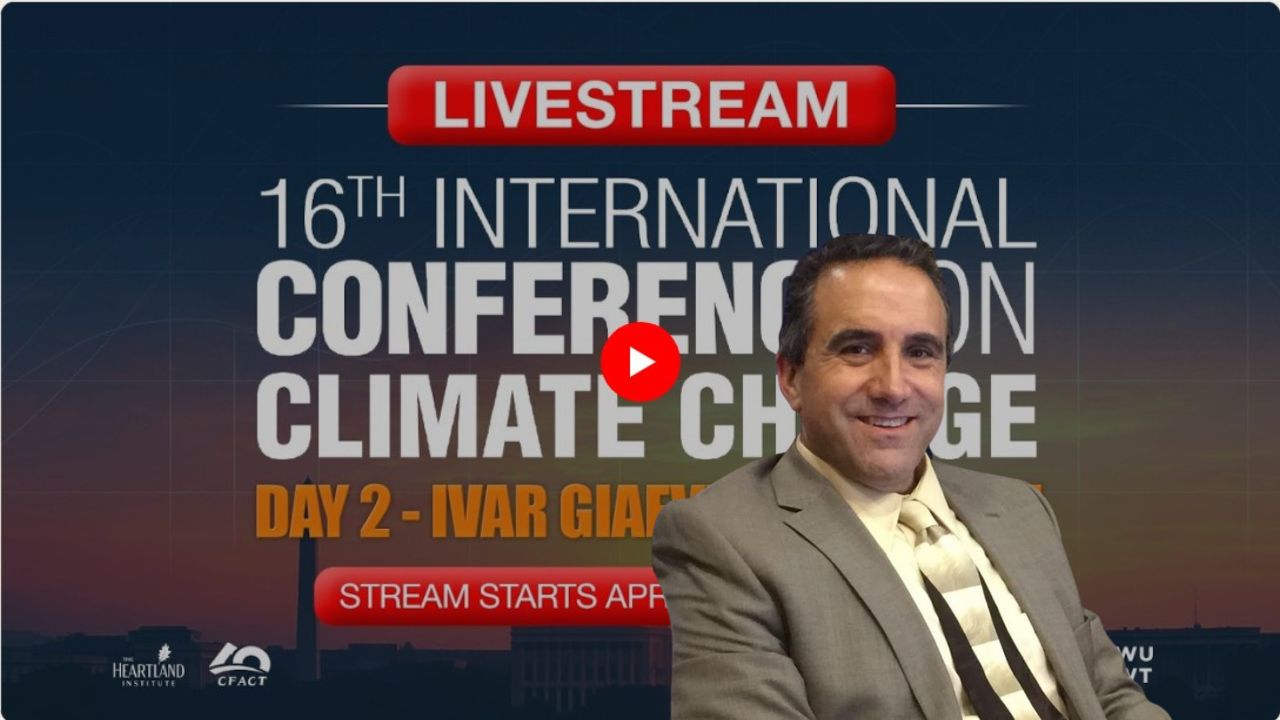
Marc Morano
Marcel Crok
Date: 12 April 2026
The final talk of the 16th International Conference on Climate Conference in Washington DC (8 and 9 April) was given by Marc Morano of the website climatedepot.com. Morano is a longtime follower of the climate agenda (he visited close to all the yearly Conference of the Parties, COP’s). He gave a fascinating overview of how the climate agenda has been crumbling down in the past year or so, not only in the US but around the globe (although Europeans maybe notice this less). He concluded with the remark that we live in the best times for climate realism in the last 50 years.
That’s all good news, but Morano also warned that we aren’t there yet and that the forces behind the climate agenda can or will pop up again, for example these days in the form of energy lockdowns because of the crisis in the Strait of Hormuz. So we have to be very vigilant. But the fact of the matter is that Trump, Chris Wright and administrator Lee Zeldin (who spoke at the Conference) are punching big holes in the climate agenda currently and that the other side is not fighting back at all. They seem to have given up, maybe because of a lack of funding (Bill Gates, Jeff Bezos, Larry Fink all moved away from the climate agenda, partly or mainly because of their interests in AI for which you need dispatchable energy).
The Conference in Washington is organised every year by the Heartland Institute. Clintel and The Heartland Institute (and maybe other organisations) have serious plans to organise next year’s conference in The Netherlands.
The complete recordings of both days (in both rooms) are available on the conference website. You can see the presentation by Clintel Director Marcel Crok: here.
Watch Marc Morano’s lecture below:


more news

The Pseudoscience behind Extreme Weather Attribution
Extreme weather attribution studies claim to determine how much human-caused climate change influences individual events such as hurricanes, floods and heatwaves. In this article, Ralph B. Alexander examines the scientific methods behind these studies and questions whether their conclusions are supported by reliable evidence.

Great Barrier Reef escapes UNESCO ‘In Danger’ listing again
UNESCO has once again decided not to place the Great Barrier Reef on its "In Danger" World Heritage List. Yet much of the international coverage continues to focus on climate warnings rather than on the broader picture of coral recovery. In this opinion article, Australian commentator Jo Nova argues that political narratives increasingly overshadow the underlying monitoring data. Drawing on Peter Ridd's analysis of Australian Institute of Marine Science (AIMS) data, she contends that the Great Barrier Reef remains in far better condition than is commonly portrayed.

Europe’s Crisis Is Energy Poverty, not a Heat Wave
As Europe experiences another summer heat wave, climate change is once again blamed for extreme temperatures. In this article, Vijay Jayaraj argues that the real crisis is not the heat itself, but energy poverty caused by misguided climate policies. He explains how a natural Omega Block weather pattern drove the recent heat wave and why affordable, reliable energy remains the most effective protection against extreme weather.

