
Marc Morano: the best time for climate realism in the last 50 years
At the 16th ICCC in Washington, D.C., Marc Morano argues that the global climate agenda is weakening, calling this the most promising moment for climate realism in the past 50 years.

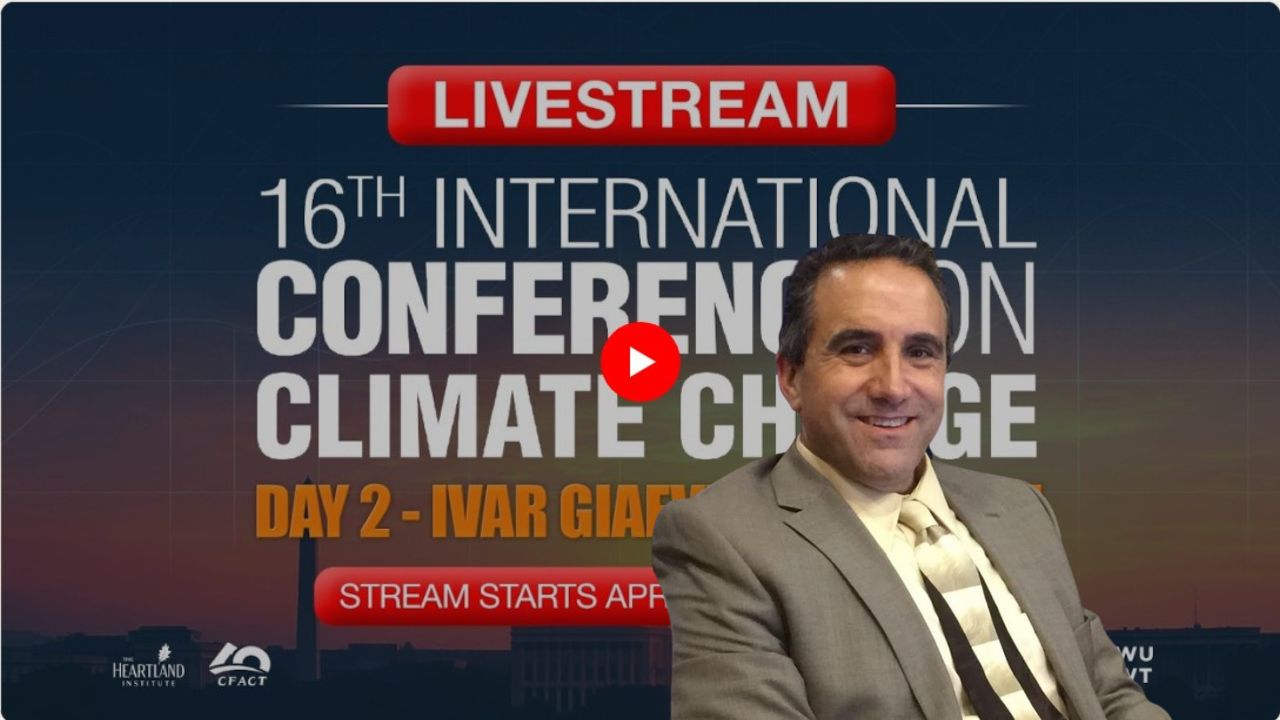
Marc Morano
Marcel Crok
Date: 12 April 2026
The final talk of the 16th International Conference on Climate Conference in Washington DC (8 and 9 April) was given by Marc Morano of the website climatedepot.com. Morano is a longtime follower of the climate agenda (he visited close to all the yearly Conference of the Parties, COP’s). He gave a fascinating overview of how the climate agenda has been crumbling down in the past year or so, not only in the US but around the globe (although Europeans maybe notice this less). He concluded with the remark that we live in the best times for climate realism in the last 50 years.
That’s all good news, but Morano also warned that we aren’t there yet and that the forces behind the climate agenda can or will pop up again, for example these days in the form of energy lockdowns because of the crisis in the Strait of Hormuz. So we have to be very vigilant. But the fact of the matter is that Trump, Chris Wright and administrator Lee Zeldin (who spoke at the Conference) are punching big holes in the climate agenda currently and that the other side is not fighting back at all. They seem to have given up, maybe because of a lack of funding (Bill Gates, Jeff Bezos, Larry Fink all moved away from the climate agenda, partly or mainly because of their interests in AI for which you need dispatchable energy).
The Conference in Washington is organised every year by the Heartland Institute. Clintel and The Heartland Institute (and maybe other organisations) have serious plans to organise next year’s conference in The Netherlands.
The complete recordings of both days (in both rooms) are available on the conference website. You can see the presentation by Clintel Director Marcel Crok: here.
Watch Marc Morano’s lecture below:

more news

The dark green lobby that nobody talks about
There is a highly influential lobbying group in Europe, founded and based in The Hague, which you have never heard of: the European Climate Foundation. With an annual budget of hundreds of millions of euros, funded by American billionaires, it successfully lobbies for climate neutrality in Europe. Yet the media remains deafeningly silent on this group

Nicola Scafetta on Tom Nelson’s podcast: the limitations of global climate models
Nicola Scafetta recently talked about his new book Frontiers of Climate Science: Solar Variability, Cycles and Model Uncertainty on Tom Nelson’s podcast. The book is an attempt to encourage a broader discussion about the uncertainties that remain in climate science and the limitations of contemporary global climate models.

The Case for Abolishing the EU Emissions Trading System
For two decades, the EU Emissions Trading System (EU ETS) has been at the heart of the European Union's climate policy. Yet Samuel Furfari, former senior official at the European Commission's Directorate-General for Energy and emeritus professor of energy geopolitics, argues that the system rests on shaky legal foundations, undermines Europe's competitiveness and has evolved into an expensive political instrument. His conclusion is clear: the EU Emissions Trading System should be abolished.

