Portugal’s Largest Flagship Solar Park Insolvent
Pierre Gosselin reflects on the insolvency of Portugal’s largest flagship solar park. “Europe’s green energy revolution is going the way of communism: lots of rosy promises turning into an economic debacle. Collapse is inevitable.”

Image by NoTricksZone using Grok AI
Pierre Gosselin
7 October 2026
Germany’s online Report24 recently discussed the insolvency of Solara4. This park (at Alcoutim in the Algarve) was once celebrated as Portugal’s largest flagship solar park (~219 MW), built without traditional state-backed feed-in tariffs. A major problem was the high solar expansion across the Iberian Peninsula, which today means thousands of megawatts of solar power hit the grid simultaneously during peak sunny hours. This oversupply causes wholesale electricity prices to drop to zero or into negative territory precisely when the plant’s production is highest, drastically reducing expected revenue.
Moreover, the solar park consistently produced less electricity than originally calculated in initial forecasts, which undermined the project’s financial projections despite having a long-term Power Purchase Agreement (PPA).
The huge solar park also suffered several technical failures, including inverter fires within the 12 months leading up to insolvency. A major fire in late May 2026 knocked out roughly 10% of the facility, taking an estimated 8 to 14 weeks to repair and leading to costly downtime and maintenance fees.
As a capital-intensive project, the solar park carried significant remaining debt (tens of millions of euros) owed to primary lenders like Investec and Kommunalkredit Austria. Ongoing fixed costs (maintenance, insurance, interest) became unmanageable as refinancing deadlines approached.
Another factor is that the operating company faces an ongoing arbitration dispute with Chinese contractor CTIEC (China Triumph International Engineering), which claims approximately €143 million from a cancelled construction contract.
The holding company, WElink Energy Portugal 2 (UK) Limited, entered insolvency administration on June 11, 2026, though the solar plant itself continues to generate electricity.
To survive the price collapses, WElink planned to transform the site into a hybrid facility with wind power and a 100 MW battery storage system. Ironically, while the original solar park was touted as subsidy-free, the new battery system is backed by €16.45 million in public funding from Portugal’s Recovery and Resilience Plan (PRR).
Report24 argues that “free solar energy” does not equal economically viable power. Capital costs, timing of generation, grid stability, and price cannibalization pose severe financial risks for massive, un-subsidized solar installations.
In summary, Europe’s green energy revolution is going the way of communism: lots of rosy promises turning into an economic debacle. Collapse is inevitable.
The article you have just read was made possible by our donors.
Every day, Clintel publishes articles on climate, energy and science. We also translate and share international analyses in multiple languages, produce videos, publish reports and organize conferences and events around the world.
We receive no government funding and rely entirely on the support of our donors. Your support helps us promote independent research and contribute to a more open and balanced debate on climate and energy issues.
Would you like to support our work? Choose the option that suits you best:
• Become a Friend of Clintel – support us with an annual contribution
• Make a recurring donation – provide ongoing support and help us plan ahead
• Make a one-time donation – every contribution helps
Thank you for your support.
more news
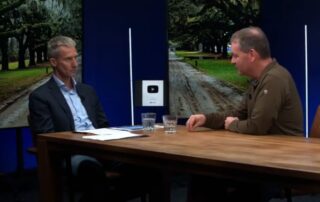
Roger Pielke Jr.: “I would scrap the temperature targets”
The international community, and especially the EU, should abandon the Paris Agreement’s temperature targets of limiting global warming to well below 2°C, says independent researcher Roger Pielke Jr, in an interview by Clintel Director Marcel Crok. This would open the door to a more pragmatic approach that would avoid sacrificing economic prosperity.
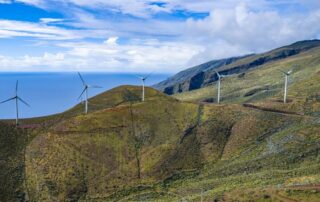
Ideologues try a grid powered only by “renewables”
The island of El Hierro only has about 11,000 people, but in 2008 it set out to show the world how to do a full transition to an electric system powered only by wind turbines backed up by a hydro-electric energy storage system. Francis Menton wonders what has happened since.

The analogy between Chairman Mao and current Western leaders
It is impossible not to notice the analogy between the events that led to China’s Great Famine in 1958-1962 and the ongoing energy disaster being imposed on various U.S. states and other Western countries by an equally ignorant clique of political ideologues, says Francis Menton.