
COP30 Is Lying To Justify Its Existence
COP30 is building its case on climate misinformation that rewrites the past to claim a victory it never earned.

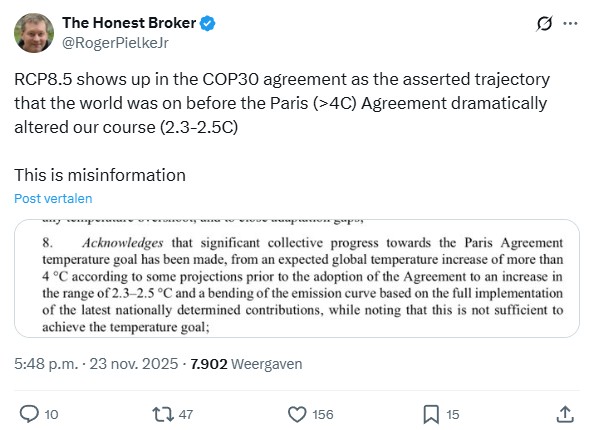
The COP30 agreement claims the world was previously on track for more than 4C of warming until the Paris Agreement heroically “bent” that trajectory down to 2.3–2.5C:

However, “this is misinformation,” says Roger Pielke Jr., Professor of Environmental Studies at the University of Colorado Boulder. It is a fiction built on the carcass of RCP8.5 — the extreme scenario that scientists quietly abandoned years ago because it required impossible coal use, implausible demographics and an economic collapse that never happened.
COP30 is resurrecting an unrealistic, disowned scenario in order to claim that Paris saved the world. The problem is the data. Real-world emissions show no curve bending, no slowdown and no “Paris effect”.
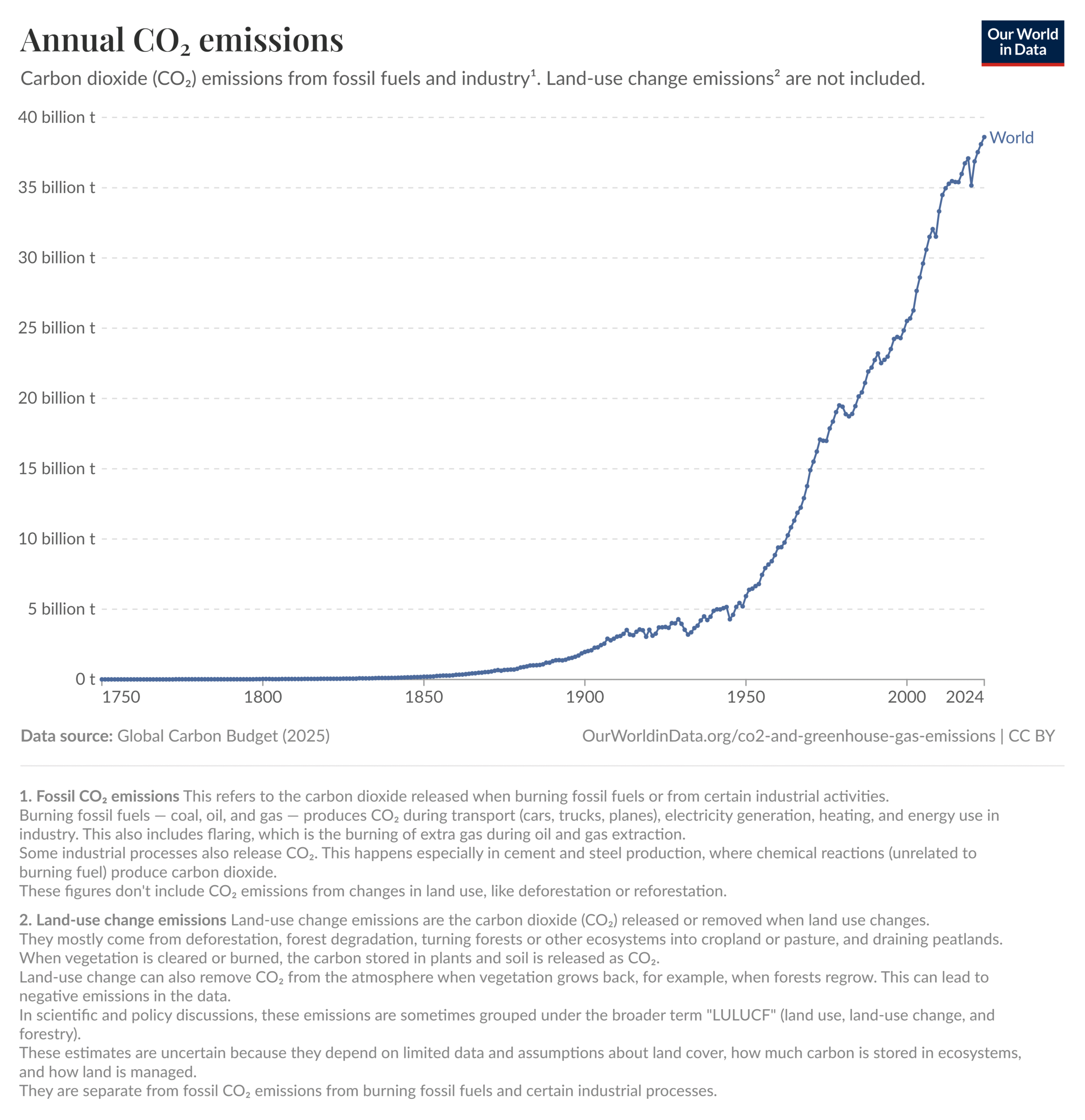
Paris didn’t change emissions, but it did unlock a permanent justification for climate taxation, energy rationing and the dismantling of cheap, reliable power — the foundation of economic prosperity.
COP30 needs a victory to justify its existence. So it has rewritten history: invent a 4C trajectory, pretend Paris knocked it down, and congratulate itself for saving humanity.
The world was never heading for RCP8.5. Paris didn’t change emissions.
Lies.


more news
Intellectual Yet Idiot: Ed Miliband and Britain’s Energy Crisis
“There are some ideas so absurd that only an intellectual could believe them,” said George Orwell. This seems to be the case with Ed Miliband who is now doubling down on the very climate policies built atop a now-discredited foundation.

Jacob Nordangård: From the Polycrisis to a World Government
Climate Alarmism is part of a much bigger agenda driven by the UN, says Swedish scientist, author, and musician Jacob Nordangård. What is the real plan behind all this? The Swiss news outlet Transition News spoke with Nordangård.
Microsoft Pauses Its Carbon Indulgence Spending. The Usual Suspects Are Upset.
Reports have emerged that Microsoft has quietly paused future carbon removal purchases, sending shockwaves through a market it effectively dominates. What might appear as a routine financial decision has instead exposed the fragility of an industry built around a single buyer—and triggered a swift, organized backlash from climate advocates.

