
COP30 Is Lying To Justify Its Existence
COP30 is building its case on climate misinformation that rewrites the past to claim a victory it never earned.

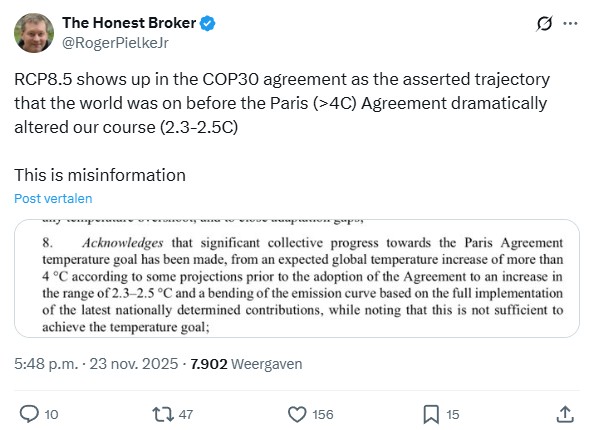
The COP30 agreement claims the world was previously on track for more than 4C of warming until the Paris Agreement heroically “bent” that trajectory down to 2.3–2.5C:

However, “this is misinformation,” says Roger Pielke Jr., Professor of Environmental Studies at the University of Colorado Boulder. It is a fiction built on the carcass of RCP8.5 — the extreme scenario that scientists quietly abandoned years ago because it required impossible coal use, implausible demographics and an economic collapse that never happened.
COP30 is resurrecting an unrealistic, disowned scenario in order to claim that Paris saved the world. The problem is the data. Real-world emissions show no curve bending, no slowdown and no “Paris effect”.
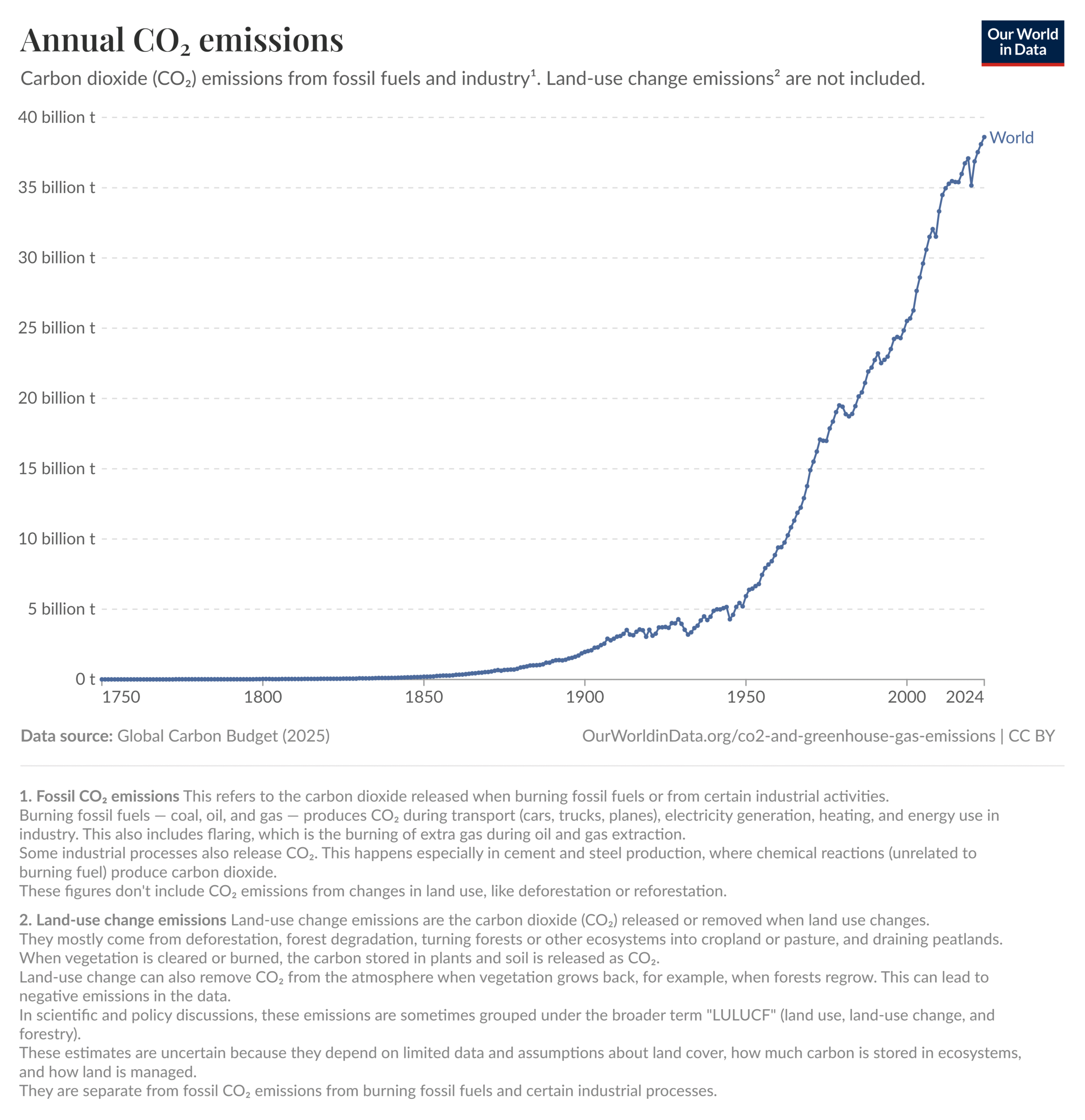
Paris didn’t change emissions, but it did unlock a permanent justification for climate taxation, energy rationing and the dismantling of cheap, reliable power — the foundation of economic prosperity.
COP30 needs a victory to justify its existence. So it has rewritten history: invent a 4C trajectory, pretend Paris knocked it down, and congratulate itself for saving humanity.
The world was never heading for RCP8.5. Paris didn’t change emissions.
Lies.


more news

No, Washington Post, ‘Carbon Pollution’ Isn’t Making Food Less Healthy
Carbon dioxide is not a toxin to crops, as The Washington Post recently claimed. Demonizing it as the “invisible force” behind nutritional decline ignores the broader picture, says Anthony Watts. “The Washington Post has taken a modest statistical decline in select minerals and inflated it into a planetary health crisis.”
Thomas Kurz: Why there is no climate crisis
There is no climate emergency, says Clintel’s World Climate Declaration signatory. Thomas Kurz is the author of an upcoming book with that very theme. Recently he spoke about it on Tom Nelson’s podcast.

Why solar is much more expensive than coal in Germany
The more solar and wind energy is deployed, the more it reshapes the system around it and the more costs shift into areas that are often not immediately visible but should be considered, says energy expert Lars Schernikau.

