COP30 Is Lying To Justify Its Existence
COP30 is building its case on climate misinformation that rewrites the past to claim a victory it never earned.
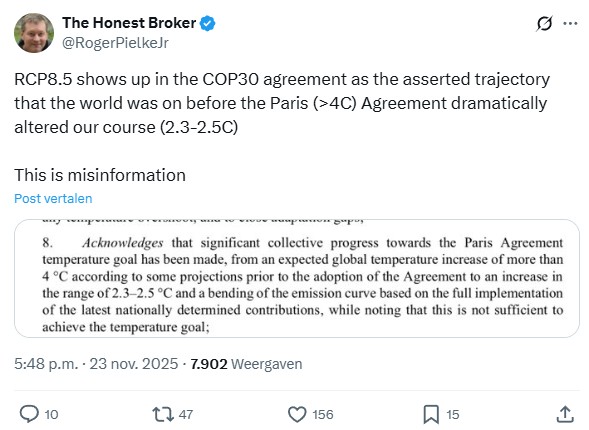
The COP30 agreement claims the world was previously on track for more than 4C of warming until the Paris Agreement heroically “bent” that trajectory down to 2.3–2.5C:

However, “this is misinformation,” says Roger Pielke Jr., Professor of Environmental Studies at the University of Colorado Boulder. It is a fiction built on the carcass of RCP8.5 — the extreme scenario that scientists quietly abandoned years ago because it required impossible coal use, implausible demographics and an economic collapse that never happened.
COP30 is resurrecting an unrealistic, disowned scenario in order to claim that Paris saved the world. The problem is the data. Real-world emissions show no curve bending, no slowdown and no “Paris effect”.
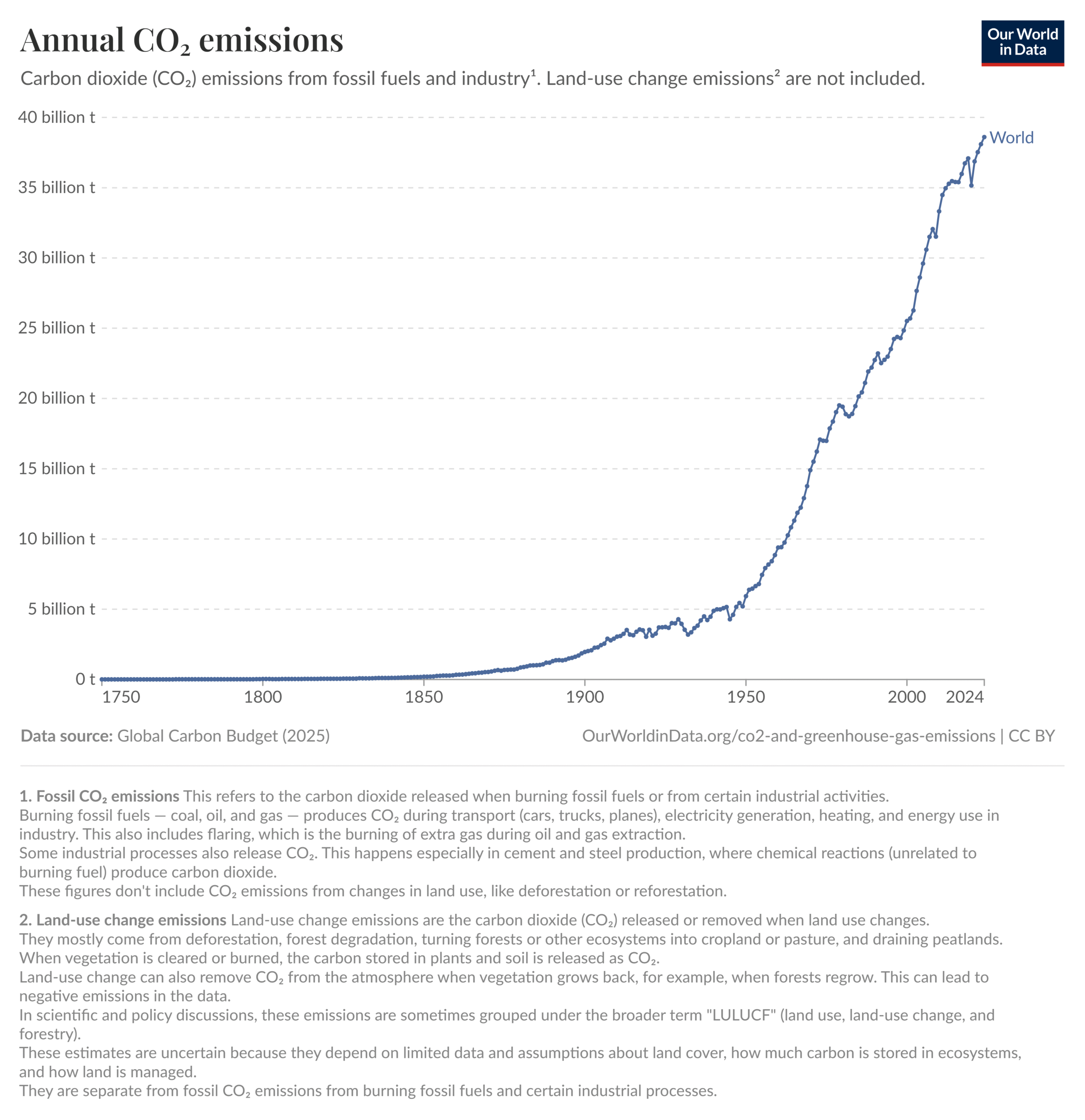
Paris didn’t change emissions, but it did unlock a permanent justification for climate taxation, energy rationing and the dismantling of cheap, reliable power — the foundation of economic prosperity.
COP30 needs a victory to justify its existence. So it has rewritten history: invent a 4C trajectory, pretend Paris knocked it down, and congratulate itself for saving humanity.
The world was never heading for RCP8.5. Paris didn’t change emissions.
Lies.

more news

“There Is No Such Thing as Renewable Energy”
Geologist, energy expert and educator Scott Tinker challenged some of the central assumptions behind the modern energy transition in his recent appearance on the popular podcast Triggernometry: “There’s no such thing as renewable energy.”

October 11, 2026: Roger Pielke Jr. to Speak at Clintel Event in Driebergen
The American scientist Roger Pielke Jr. is one of the most interesting and outspoken voices in the international climate debate. On Sunday afternoon, October 11, he will come to Driebergen, the Netherlands, at Clintel’s invitation for an extensive lecture on extreme weather, climate-related damages, climate scenarios, and the politicization of climate science.

The Climate Policy Trap: Why Failure So Often Leads to More of the Same
Group identity, social status, and a credential-dominated policy establishment make the climate narrative increasingly immune to disappointing results, argues Evert Doornhof of Clintel. The result is a climate policy trap in which failure doesn't lead to reconsideration, but to even more climate policy.