
Green Depression: German Companies Fight For Survival – Insolvencies Reach Peak In October!
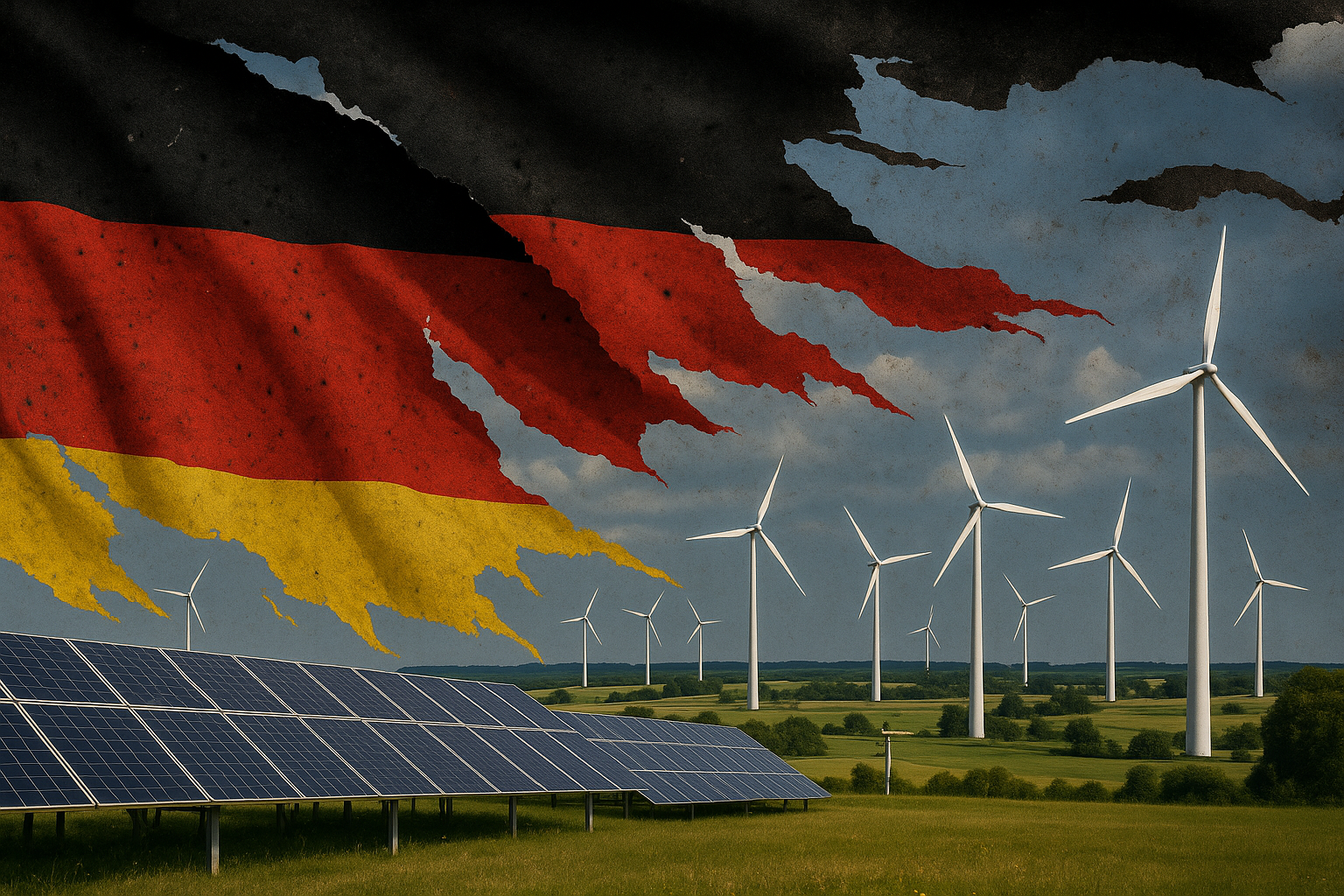
With corporate bankruptcies surging to an October peak, German businesses are struggling to survive amid escalating energy costs and the pressures of the green transition.

Pierre L. Gosselin
Date: 20 November 2025
BlackoutNews here reports that the German economy is currently battling massive turbulence as the latest figures on corporate insolvencies reached peaked in October 2025.
The German middle class, in particular, is increasingly coming under pressure amid the ongoing slump.
The wave of insolvencies is not hitting all sectors equally. Particularly hard hit: tranport, construction and restaurants and catering services.
In early August 2025, authorities reported 1,979 corporate insolvency applications, which corresponds to an increase of over twelve percent compared to the previous year. At the same time, creditor claims surged to a staggering €5.4 billion. Adding to the burden on society: With 6,132 consumer insolvencies, this figure is also rising significantly.
High energy prices
According to Blackout News, the reasons for this dramatic increase are multifaceted and reinforce each other. No.1 are the painfully high energy costs and rising raw material prices. Green energy has made energy among the most expensive in the world.
The economic woes has led to low domestic demand which particularly affects retail and service providers.
Crippling bureaucracy and slow approval procedures are also to blame as they hinder urgently needed investments.
Future looks bleak
Experts expect around 24,500 corporate failures for the entire year 2025, the highest value since 2015.
A rapid recovery is nowhere in sight. Allianz Trade has dampened expectations and forecasts a possible improvement starting only in 2027 at the earliest, contingent on state stimuli and geopolitical stabilization.
Without fundamental changes—such as investments in location attractiveness, a more stable energy supply, and tax simplification—the German economy faces a permanent loss of substance. The current development is an urgent wake-up call for politicians and businesses alike.
Germany serves as an example of how not to manage energy supply and economics in a country.


more news
AI accurately reconstructs temperatures across Antarctica
Artificial intelligence is increasingly being applied in climate science, with mixed results so far. A new study, however, suggests that deep learning can successfully reconstruct Antarctic surface temperatures despite limited observational data. By combining sparse measurements with reanalysis datasets, the researchers claim to achieve high accuracy—offering new insights into long-term temperature trends across the continent.
Clintel President Václav Klaus warns: “No radical change in Europe in the near future”
We must not be naïve optimists about climate policy and should not overestimate the recent positive signals, like those from President Trump. This is the view of Clintel President Václav Klaus: “Nothing has changed in the European Union. We, with a background in the social sciences, cannot imagine that any radical change will take place in Europe in the near future.” Klaus made these remarks in his speech at the annual meeting of the Norwegian Klimarealistene in Oslo on March 15.

New study finds low CO2-sensitivity again
A new paper by Frank Stefani compares solar variability and CO₂ emissions as drivers of global sea surface temperatures. Using the solar aa geomagnetic index alongside CO₂ data, the study estimates a transient climate response (TCR) of about 1.1–1.4 K, near the lower end of the IPCC range. The results align closely with other observation-based estimates and highlight the continuing scientific debate about the relative roles of solar activity and greenhouse gases in recent climate change.

