
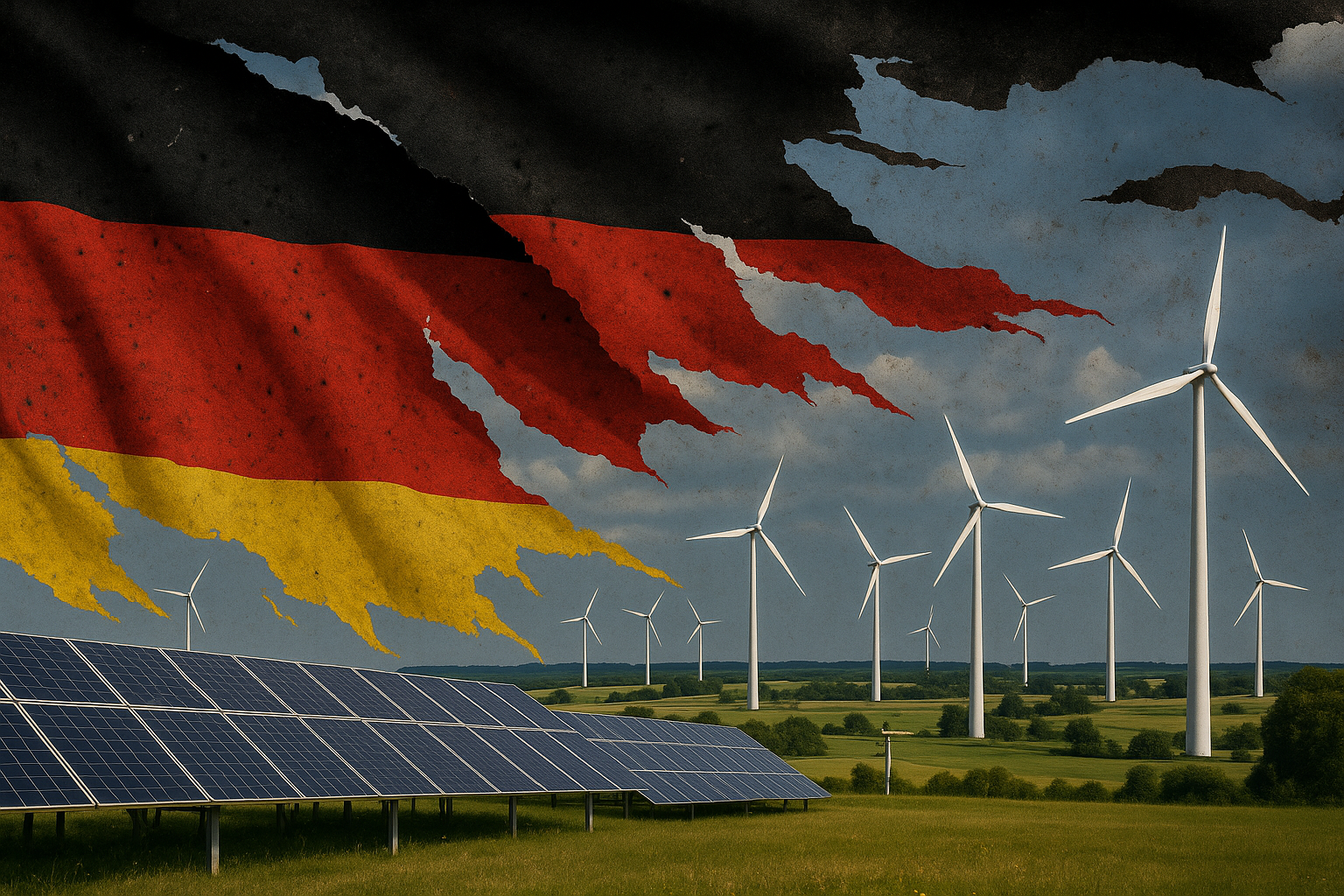
Green Depression: German Companies Fight For Survival – Insolvencies Reach Peak In October!
With corporate bankruptcies surging to an October peak, German businesses are struggling to survive amid escalating energy costs and the pressures of the green transition.

Pierre L. Gosselin
Date: 20 November 2025
BlackoutNews here reports that the German economy is currently battling massive turbulence as the latest figures on corporate insolvencies reached peaked in October 2025.
The German middle class, in particular, is increasingly coming under pressure amid the ongoing slump.
The wave of insolvencies is not hitting all sectors equally. Particularly hard hit: tranport, construction and restaurants and catering services.
In early August 2025, authorities reported 1,979 corporate insolvency applications, which corresponds to an increase of over twelve percent compared to the previous year. At the same time, creditor claims surged to a staggering €5.4 billion. Adding to the burden on society: With 6,132 consumer insolvencies, this figure is also rising significantly.
High energy prices
According to Blackout News, the reasons for this dramatic increase are multifaceted and reinforce each other. No.1 are the painfully high energy costs and rising raw material prices. Green energy has made energy among the most expensive in the world.
The economic woes has led to low domestic demand which particularly affects retail and service providers.
Crippling bureaucracy and slow approval procedures are also to blame as they hinder urgently needed investments.
Future looks bleak
Experts expect around 24,500 corporate failures for the entire year 2025, the highest value since 2015.
A rapid recovery is nowhere in sight. Allianz Trade has dampened expectations and forecasts a possible improvement starting only in 2027 at the earliest, contingent on state stimuli and geopolitical stabilization.
Without fundamental changes—such as investments in location attractiveness, a more stable energy supply, and tax simplification—the German economy faces a permanent loss of substance. The current development is an urgent wake-up call for politicians and businesses alike.
Germany serves as an example of how not to manage energy supply and economics in a country.


more news
What Climate Crisis? Indonesia Taps Fossil Fuels
Indonesia is engineering a spectacular revival, rejecting the economic suicide of Western climate mandates to reclaim its energy sovereignty and resurrect its historical blueprint for prosperity, says Vijay Jayaraj.
A Good Article About the AMOC, Just in Time for the El Niño
The El Niño will arrive, the thermometers will spike, and the AMOC-on-the-brink stories will spike along with them, says Charles Rotter. But even Science recently concluded that “the Atlantic’s vital circulation may withstand climate warming better than feared”.

Winning the war on LCOE: wind and solar were never the cheapest power sources
Many organizations now acknowledge that generating electricity is not the same as building an affordable and reliable electricity system. Isaac Orr and Mitch Rolling explain that this is an admission that wind and solar were never the cheapest electricity sources — the hidden costs were simply being ignored by using the LCOE metric.

