
Interview Dietmar Hildebrand
Germany Physicist
with a focus on Bio- and Nuclear Physics

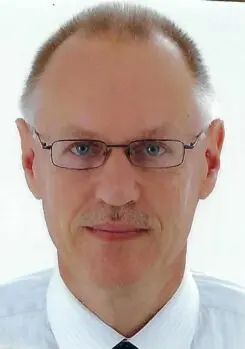
What is your background?
My background is physics with a focus on biophysics and nuclear physics. Prof. Horst Bücker got me involved in the NASA Biostack Program, which studied the biological effects of cosmic radiation. We flew experiments in Apollo 16, 17 and ASTP. My work on the nuclear track detectors was sufficient for a diploma and a PhD-thesis.
After my post-doc position at the University of San Francisco, I had to choose between an academic carrier and industry, which was made easy by an irresistible offer from Digital Equipment Corporation. So I spent most of my life in the IT industry (DEC, Apollo, Sony, Silicon Graphics, BMC Software), studied computer science autodidactically and achieved a patent (US 7853538) for Fuzzy Logic based Surveillance. My motto was: “It’s never too late to teach an old dog new tricks”.
Since when and why are you interested in climate change?
In 2007, I went to Africa for two years as a volunteer and built and managed a bush clinic for a German NGO. I realized that in Kenya nature can sustain a population of about 6 million humans. But already then, there were 27 million Kenyans. I realized the deadly spiral of population growth, deforestation and climate changes.
I learned about the CO2-hypothesis, but already then I had serious doubts about it, because to build biomass (growing trees and other plants) in the Sahel zone, you need more, not less CO2 in the atmosphere, just as it was when evolution began.
How did your views on climate change evolve?
In 2018, I had the honor to meet Nir Shaviv (from the Hebrew University of Jerusalem) during an EIKE meeting in Munich, Germany. Based on my background knowledge on cosmic radiation, I realized: he is right! Wikipedia says about him: (he) “disagrees with the scientific consensus on human-caused climate change”. But science is not politics. Consensus was that the Earth is flat, until some individuals disagreed. Very frequently in science it was an outsider, who was right. For example, Albert Einstein was working as a patent examiner, when he realized, that c+c=c (everybody knows E= mc2, that is why I prefer the Lorentz Transformation Extremum).
Is climate change a big issue in your country and how do you notice this?
It has become a new religion in Germany and the leaders of this religion (the Green Party) have started to destroy the German economy. The fanatics of this religion (calling themselves the ‘Last Generation’) have started to disrupt traffic and are now threatening with various forms of violence and destruction.
This religion leads us straight back to the Middle Ages (Earth is flat = CO2 is the cause). I wonder when the first person will be burned for not believing the new dogmas.
What would climate policy ideally look like in your view?
As climate minister, I would make sure that birth control pills (and other methods) are free and all products grown on recently deforested land, will be taxed extremely high. My goal is obvious. We have to stop the primary cause for deforestation, which is the proliferation of humans.
Already around 1970, prof. Bernhard Grzimek (famous for his Serengeti project) stamped under all his letters: “Ceterum censeo progeniem hominum esse deminuendam”. Translated: By the way, I think the proliferation of humans must be diminished.
What is your motivation to sign the Clintel World Climate Declaration?
The Internet is the factor that makes our time different from the Middle Ages. Now there is a chance that ‘deviant’ opinions can be made heard. The Clintel World Climate Declaration is a way to get heard.


more news

From “Demon” to “Dinner”: Willie Soon’s Case for CO2 and Fossil Fuels
“CO2 is not a satanic gas, nor a demon. It is simply dinner for plants”, said Willie Soon at the recent EIKE Conference.

Late summer Arctic sea ice stable in the last 20 years!
Why are the climate ambulance chasers now way out in Nepal? The reason is that there’s little weather action anywhere else that would support the alarmist climate narrative – not even in the Arctic, says Pierre Gosselin.

What does it take to stop landslides in Nepal (especially terrible ones 800 years ago?)
Already the Climate Porn industry is using the ghastly death and destruction in Nepal to sell Net Zero and Socialism, even though landslides have always happened, and there was a far worse one in 1190 AD, says Jo Nova.

