
Global Warming Sustained a Naval Power That Dwarfed Vikings
Which civilization flourished during this warm medieval period, and what enabled it to rise and thrive—becoming even more successful than the Norse seafarers? In this article, Vijay Jayaraj examines the evidence and reveals the answers.

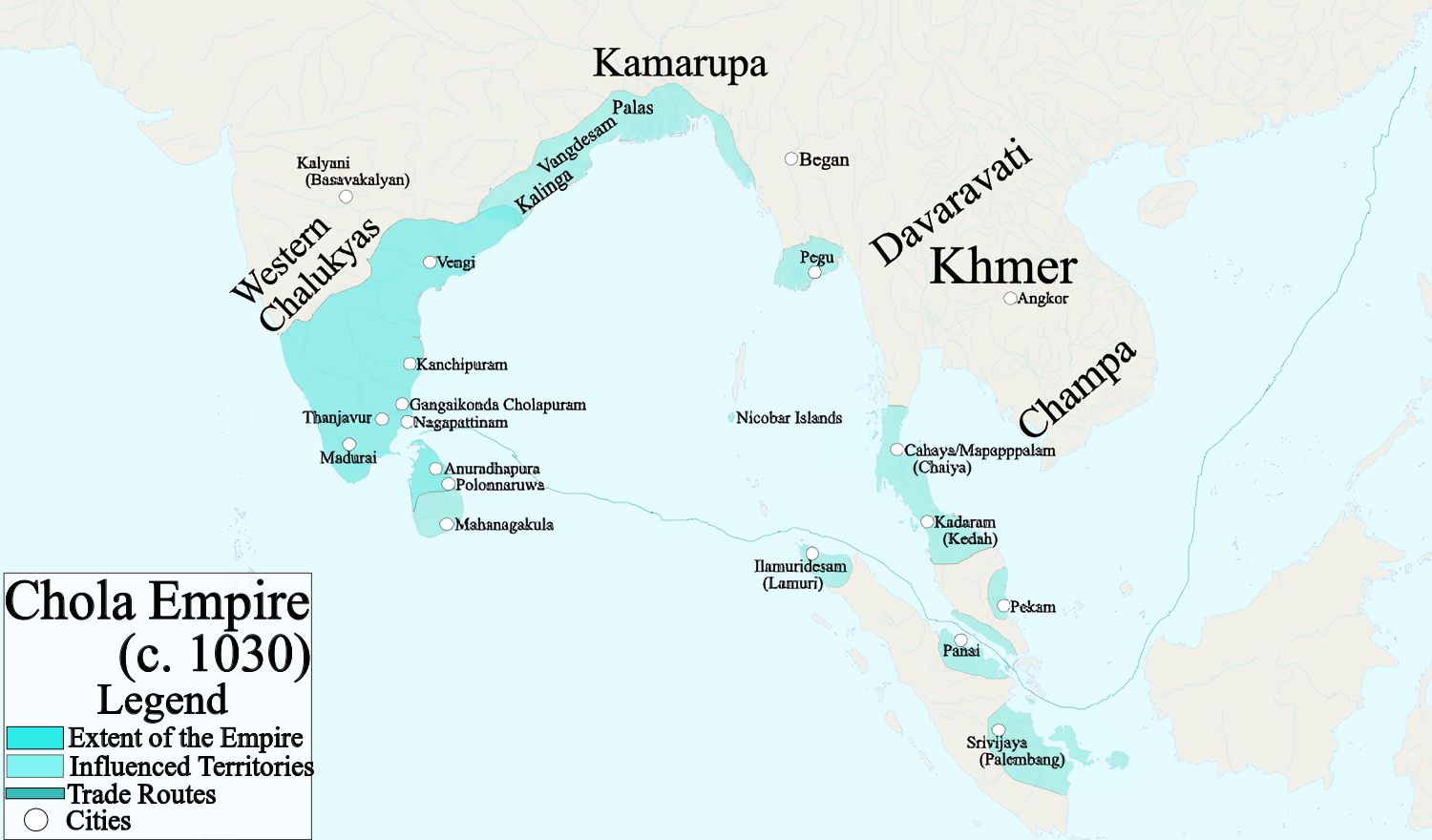
Popular culture is full of gritty dramas about Norsemen shivering in fur pelts, launching raids on British monasteries, and navigating the icy fringes of the North Atlantic. Yet, while the Vikings were struggling to eke out a subsistence living on the thawing margins of Greenland, a far more sophisticated, wealthy and powerful maritime colossus arose in the tropical warmth of Southern India.
This was the Chola Empire.
At its peak between A.D. 985 and 1044, this dynasty projected power on a scale that made the forays of Viking longships look like backyard skirmishers. The Chola ships were technological marvels of their time. These floating fortresses transported cavalry, infantry and weeks of provisions over thousands of miles.
Cholas launched a naval expedition against the Srivijaya Empire – a dominant maritime power based in what became modern Indonesia and the Malay Peninsula. This was an amphibious assault thousands of miles from home ports, a feat of logistics that rivals today’s naval operations. They toppled kings, secured the key trade artery of the Malacca Strait, and ensured that merchant guilds could trade safely from the Middle East to China. On land, they maintained a standing army with thousands of elephants.
The Cholas built the majestic Great Living Chola Temples that stretched over all of south India and neighboring islands and are now on the UNESCO World Heritage list. Without the aid of modern machinery, elephants moved huge rocks from as far away as 60 miles.
Chola society was blessed with excess labor, food and wealth. But how?
What enabled a civilization to acquire the immense caloric and economic surplus needed to build huge stone monuments and launch armadas across the Indian Ocean? Much of the credit goes to global warming.
The ascension of the Chola Empire coincides perfectly with a climatic phenomenon known as the Medieval Warm Period – from approximately A.D. 900 to 1300.
This cause-and-effect relationship between warmth and thriving populations is one that the climate industrial complex chooses to ignore because it disrupts their narrative of “doom.” However, warmth fuels the tropical monsoons on which an agrarian economy like the Chola’s depended, as confirmed by recent scientific research.
Fluctuations in the Indian summer monsoon influenced agriculture and the rise of major dynasties. Civilization in India flourished during the Roman Warm Period, struggled during the Dark Ages Cold (a period of political fragmentation), and rose to new heights under the Chola and others during the Medieval Warm Period.
The Chola empire was fueled by the very global warming that modern activists describe as an existential threat. In the Cauvery Delta, the heartland of the Cholas, this climatic gift turned the region into the “Rice Bowl of the South.” Three harvests a year became the norm rather than the exception.
With overflowing granaries and a treasury flush with revenues, Chola emperors could afford to divert labor from subsistence farming to imperial ambition. The Chola’s innovative trade guilds prospered with surplus goods – textiles, spices and grains – to sell to the Chinese Song Dynasty, another empire that thrived during this warm epoch.
Now, we are in the midst of another warming trend – a recovery from the brutal depths of the Little Ice Age that ended in the middle of the 19th century. Global crop production has repeatedly hit record highs over the last few decades. India is once again a major exporter of grain. The Earth is experiencing a “greening” effect, as higher levels of atmospheric carbon dioxide fertilize plants and warmer temperatures open new latitudes for cultivation.
Yet we are told to feel guilty. Coal, oil and natural gas – fuels that protect us from the elements and power economies – are demonized. Environmental extremists suggest that the ideal climate is colder, like ones that brought plague and hunger in between warm periods.
The story of the Chola Empire is a record of what human ingenuity can achieve when the climate cooperates. Their ships sailed on prosperity sustained by a warm, fertile planet. Their temples were built by a society rich in calories and confidence. Their civilization was the envy of the world.
Likewise, we today have before us a “golden age” provided we do not shackle ourselves with fear of the very conditions that engender our prosperity.

This commentary was first published at The Blaze January 7.

Vijay Jayaraj
Vijay Jayaraj is a Science and Research Associate at the CO2 Coalition, Fairfax, Virginia. He holds an M.S. in environmental sciences from the University of East Anglia and a postgraduate degree in energy management from Robert Gordon University, both in the U.K., and a bachelor’s in engineering from Anna University, India. He served as a research associate with the Changing Oceans Research Unit at University of British Columbia, Canada.

more news
Peak Oil By Any Other Name
Tilak Doshi reviews “The Energy Trap” by Richard Lyon and thinks it is too pessimistic. “It treats present constraints as fixed limits rather than as problems that markets, technology and human creativity have repeatedly transformed for the better.”

Jacob Nordangård: The Capture of Academia
In his recent presentation The Capture of Academia – The Case of Climate Change, for the Omniwar Symposium, Swedish researcher Jacob Nordangård argues that the rise of anthropogenic global warming as the dominant explanation for climate change, was shaped by influential philanthropic foundations, research institutions and political networks.
Roger Pielke Jr.: A Report from the Netherlands
In this article Roger Pielke reflects on his recent presentations for Clintel and his trip to the Netherlands. “Why engagement matters to me.”

