The Climate Narrative is Collapsing
The climate house of cards is collapsing, as became clear last week at the IPCC meeting in Ethiopia. The climate narrative has never had any substance, and now that the flow of funding is being cut off, there will soon be nothing left, says Wim Röst, Chair of the Clintel Board.

Image created with ChatGPT
Wim Röst
Date: 20 October 2026
What exactly did we just see happening in Ethiopia? The IPCC, the UN Climate Panel (a self-appointed organisation), was meeting there with representatives from 195 countries to prepare for what was supposed to be a major UN climate summit in 2028. In principle, a new IPCC assessment report (the seventh) was to be produced prior to that summit, but there was no funding and no agreement, not even on the report’s publication date.
Google AI Mode described the conclusion of the summit in Addis Ababa, the capital of Ethiopia, as follows:
“An unprecedentedly fierce political battle raged throughout the week over the timeline for the seventh major climate report (AR7).
- Proponents of urgency (including European countries and island states): Want the report to be fully completed by 2028 at the latest. This is crucial to serve as the scientific basis for the important UN climate summit (Global Stocktake) in that same year.
- Opponents (including Saudi Arabia, China, India and Russia): Called for a delay until 2029. Officially, they argue that poorer countries need more time to contribute, but behind the scenes it is believed that this is an attempt to reduce the political pressure on the fossil fuel industry.
As IPCC decisions must be taken by full consensus, the outstanding issues regarding the timeline and the budget could not be resolved. The meeting will resume at a yet-to-be-determined date, as soon as possible, to continue the discussion.”
As long as there is still some money left, there will undoubtedly be a follow-up, and 195 delegations will once again fly to a central location to solve ‘the enormous climate problem’ that is ‘entirely caused by fossil fuels’.
This year’s Gulf crisis demonstrated that we cannot do without ‘fossil fuels’. Iran’s blocking of shipping lanes brought the supply of oil and gas ‘to a standstill’, resulting in massive price rises and shortages. Countries such as India, Pakistan and Bangladesh had to use their scarce energy supplies for purposes other than fertiliser production. Their urea plants use natural gas as a raw material to produce the nitrogen-based fertiliser that is indispensable to their agriculture. Without this fertiliser, their agricultural production collapses, with immediate consequences for food prices and food security for tens, if not hundreds, of millions of people.
Numerous other factories that rely on ‘fossil fuels’ to produce essential goods also ran into difficulties, and the least of the consequences was massive price rises. In such a situation, the poorest countries and the poorest populations are left behind, and this quickly amounts to a few billion people.
The Gulf War brought to light the utter impossibility of ‘Net Zero’. This is the deeper context of the current conflict within the IPCC. What was being pursued is completely impossible, quite apart from the widespread doubts about its necessity. No one can ignore it any longer: actually, stopping the production of all fossil fuels means nothing other than a ‘Zero Economy’.
And that is why the climate house of cards is now collapsing.
This article has been written in a personal capacity. It was first published on Clintel.nl. Dutch publications that served as a primary source can be found here and here.
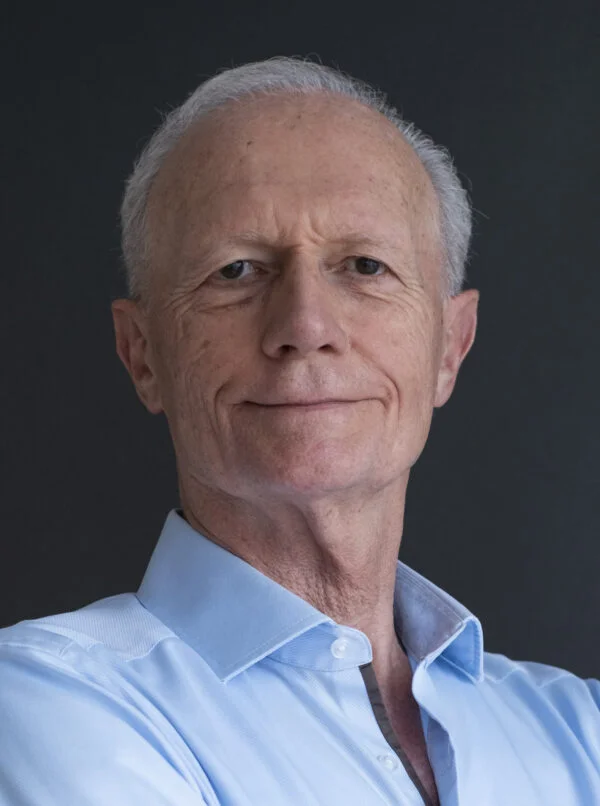
Wim Röst
Drs. Wim Röst is a geographer with a wide range of interests. Because Clintel advocates an accurate understanding of weather and climate and maintains that only the truth about the climate should guide policy, he became involved with this foundation. He is Chair of the Board of Clintel.
The article you have just read was made possible by our donors.
Every day, Clintel publishes articles on climate, energy and science. We also translate and share international analyses in multiple languages, produce videos, publish reports and organize conferences and events around the world.
We receive no government funding and rely entirely on the support of our donors. Your support helps us promote independent research and contribute to a more open and balanced debate on climate and energy issues.
Would you like to support our work? Choose the option that suits you best:
• Become a Friend of Clintel – support us with an annual contribution
• Make a recurring donation – provide ongoing support and help us plan ahead
• Make a one-time donation – every contribution helps
Thank you for your support.
more news
Global Burned Area 18% Below Average
Global burned area was 18% below average this past season and has been falling for two decades. Why is that only one sentence in the annual State of Wildfires report, Charles Rotter asks.
Peak Oil By Any Other Name
Tilak Doshi reviews “The Energy Trap” by Richard Lyon and thinks it is too pessimistic. “It treats present constraints as fixed limits rather than as problems that markets, technology and human creativity have repeatedly transformed for the better.”

Jacob Nordangård: The Capture of Academia
In his recent presentation The Capture of Academia – The Case of Climate Change, for the Omniwar Symposium, Swedish researcher Jacob Nordangård argues that the rise of anthropogenic global warming as the dominant explanation for climate change, was shaped by influential philanthropic foundations, research institutions and political networks.