
Clintel/ICSF Lecture: The Pseudoscience behind Extreme Weather Attribution
Attribution Science is being used to justify lawsuits and media narratives about a climate catastrophe rather than to advance scientific understanding, said Ralph Alexander in his recent Clintel/ICSF Lecture.

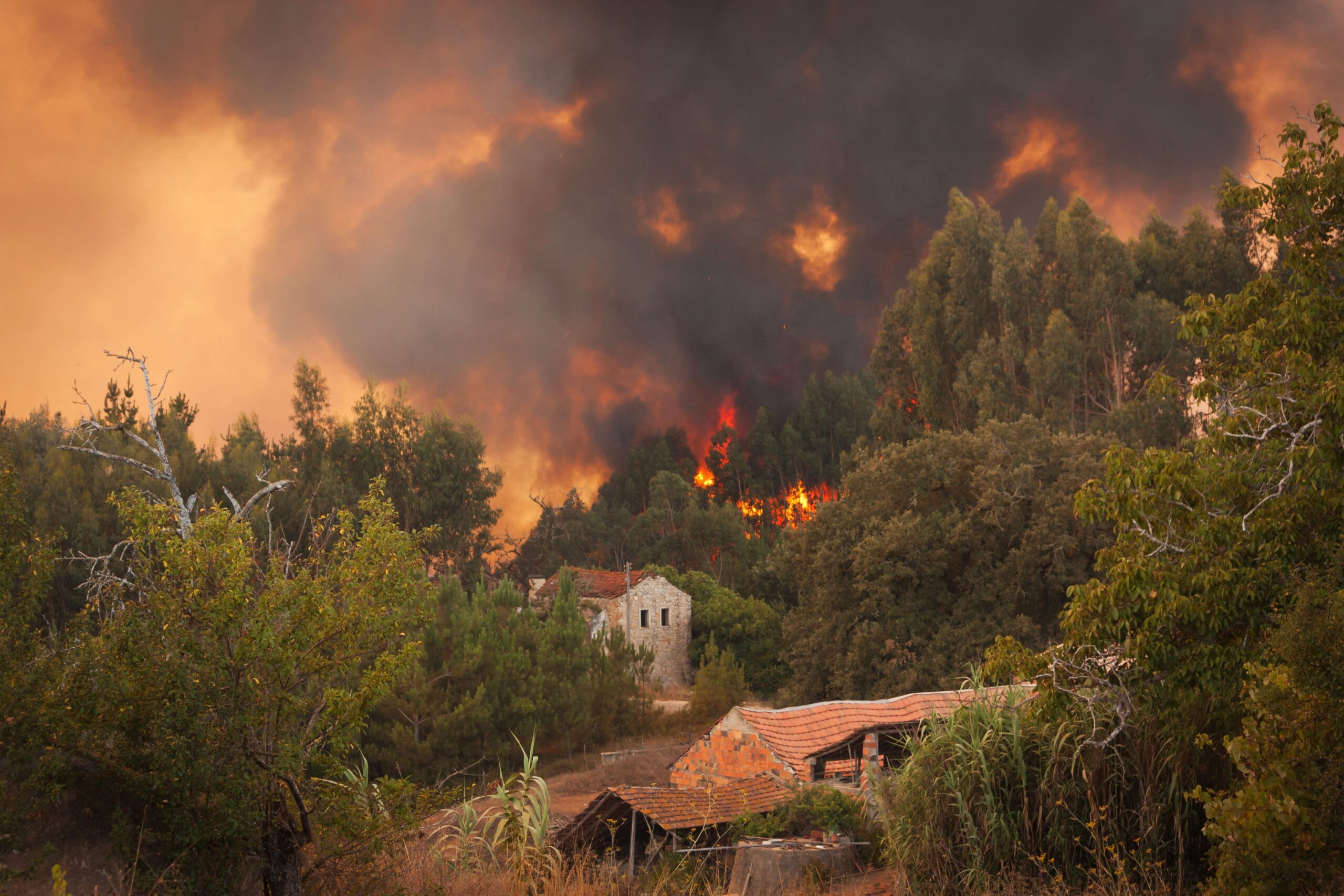
In most cases extreme weather, like wildfires, are not increasing. (Source: Shutterstock)
Clintel Foundation
24 May 2026
In his presentation to ICSF/Clintel, retired physicist and author Ralph B. Alexander argued that the growing field of “extreme event attribution” is scientifically weak and politically motivated. Alexander authored the recent GWPF publication Contorted Science: The Flawed Logic of Extreme Event Attribution. He graduated with a PhD in physics from the University of Oxford and has been a researcher at major laboratories in Europe and Australia.
You can his full presentation here:
Scam
Alexander focused on studies that attempt to link individual weather disasters—such as floods, heat waves, hurricanes, and wildfires—to human-caused climate change. According to Alexander, these studies exaggerate the role of greenhouse gas emissions and create a misleading public perception that extreme weather is becoming more common and severe. He opened by calling the field “a scam called extreme event weather attribution,” and claimed that many such studies are designed more for legal and political purposes than for objective science.
A major theme of the talk was Alexander’s contention that observed long-term data do not support claims of worsening extreme weather. He presented a series of graphs and historical examples that showed little or no upward trend in heat waves, droughts, floods, hurricanes, tornadoes, or wildfires. Discussing heat waves in the United States, he stated: “there’s no question that if there’s any trend, it’s downward.” He pointed to the severe heat of the 1930s in the United States and argued that more recent decades have not exceeded those conditions. He made similar claims about droughts in California and Europe, floods in Germany, Atlantic hurricanes, Pacific typhoons, tornadoes in the United States, and global wildfire activity, repeatedly asserting that the historical record does not show a statistically meaningful increase in extreme weather events.
IPCC
Alexander also criticized the evolving stance of the Intergovernmental Panel on Climate Change. He argued that earlier IPCC reports were relatively cautious about attributing extreme weather to human influence, but that the organization shifted in its 2021 Sixth Assessment Report toward stronger attribution claims. He maintained that this shift was not justified by the evidence and contradicted the observational trends he had just presented. In his words, “the whole basis for extreme weather event attribution really is that there is no basis.”
A substantial portion of the presentation focused on climate models, which Alexander described as unreliable foundations for attribution studies. He argued that many models overestimate warming trends, fail to reproduce important atmospheric and oceanic patterns, and cannot accurately reconstruct past climates. He highlighted what he considered a major flaw: the inability of climate models to “hindcast” earlier climate conditions accurately. Since attribution studies compare current weather with hypothetical pre-industrial climates, he argued that uncertainty in reconstructing those earlier climates undermines the conclusions of attribution research. He cited discrepancies between model projections and observed warming rates, as well as the inability of models to reproduce certain atmospheric features, such as the predicted tropical “hot spot.”
Case studies
The presentation then moved into detailed case studies. One involved a 2024 heat wave in the southwestern United States and Central America. Alexander criticized an attribution study that concluded the event had become “35 times more likely” because of climate change. He argued that the study relied on incomplete temperature records, uncertain data sets, and climate models with known weaknesses. He emphasized that when measurement uncertainty is included, the estimated increase in likelihood could fall dramatically. He claimed the event might only have been “2.6 to 3.2 times more likely than in the past, not 35 times.”
Another case study examined devastating floods in Texas in 2025. Alexander disputed claims that climate change played a decisive role, arguing that floods have historically occurred in the region and that factors such as landscape, rainfall duration, and river basin characteristics matter more than small changes in precipitation averages. He also criticized the baseline periods chosen in the study, saying they exaggerated warming trends by including decades of mid-20th century cooling.
He devoted special attention to two Irish attribution studies carried out by researchers at Maynooth University. One study concluded that an Irish heat wave was roughly two and a half times more likely because of climate change, while another linked recent flooding events to increased rainfall probabilities. Alexander argued that both studies relied too heavily on uncertain climate models and failed to account properly for measurement uncertainty. Referring to the Irish heat wave, he remarked that “the heat wave really wasn’t any big deal,” noting that the recorded temperatures were below historical national records and within what he considered normal variability.
Litigation
Toward the end of the presentation, Alexander argued that extreme event attribution developed primarily to support climate litigation against fossil fuel companies. He traced this trend back to meetings between activists and scientists in 2012 that, according to him, sought to emulate anti-tobacco legal campaigns. He claimed that attribution science was increasingly being used to justify lawsuits and media narratives about a climate catastrophe rather than to advance scientific understanding. He also blamed modern media and digital technology for amplifying public perceptions of worsening weather disasters, arguing that smartphones, satellite observations, and online news coverage simply make events more visible today than in the past.

more news

Europe’s Crisis Is Energy Poverty, not a Heat Wave
As Europe experiences another summer heat wave, climate change is once again blamed for extreme temperatures. In this article, Vijay Jayaraj argues that the real crisis is not the heat itself, but energy poverty caused by misguided climate policies. He explains how a natural Omega Block weather pattern drove the recent heat wave and why affordable, reliable energy remains the most effective protection against extreme weather.

Death of Climate Alarmism Has Been Greatly Exaggerated
The Climate Establishment is now pivoting from overt apocalypticism to what might be called ‘non-alarmist alarmism’, says Tilak Doshi. This is a posture that formally disowns the discredited scenario RCP8.5 while preserving every policy conclusion that scenario was used to support.

Advancing Freedom With Data: Debunking Catastrophic Greenhouse Warming
CO2’s greenhouse effect is the result of its interaction with the infrared of the electromagnetic spectrum, which is now largely saturated at today’s CO2 concentration of about 420 parts per million (ppm), say William Happer and Richard Lindzen. With so little unaffected infrared radiation left to interact with CO2 molecules, adding more of the gas is having a trivial effect and will produce even less warming in the future.

