
COP30 miente para justificar su existencia
COP30 está construyendo su defensa sobre desinformación climática que reescribe el pasado para reclamar una victoria que nunca logró.

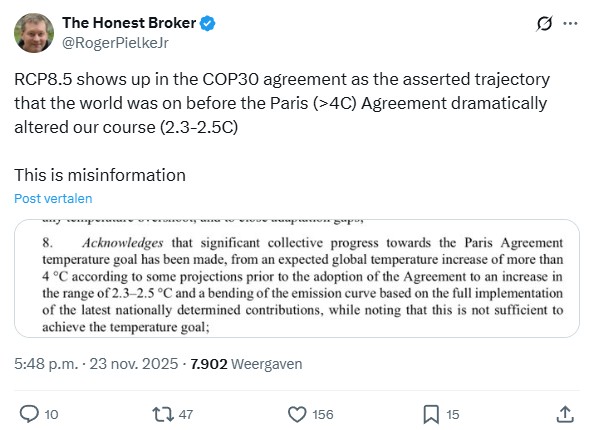
El acuerdo de la COP30 afirma que el mundo iba camino de superar los 4 °C de calentamiento hasta que el Acuerdo de París corrigió heroicamente esa trayectoria hacia los 2,3–2,5 °C.

Sin embargo, “esto es desinformación”, asegura Roger Pielke Jr., profesor de Estudios Ambientales en la Universidad de Colorado en Boulder. Es una ficción construida sobre el cadáver del RCP8.5, el escenario extremo que los científicos abandonaron discretamente hace años porque requería un uso imposible de carbón, una demografía inverosímil y un colapso económico que jamás ocurrió.
COP30 está resucitando un escenario irreal y descartado para afirmar que París salvó al mundo. El problema son los datos. Las emisiones reales no muestran ninguna curva descendente, ninguna desaceleración y ningún “efecto París”.
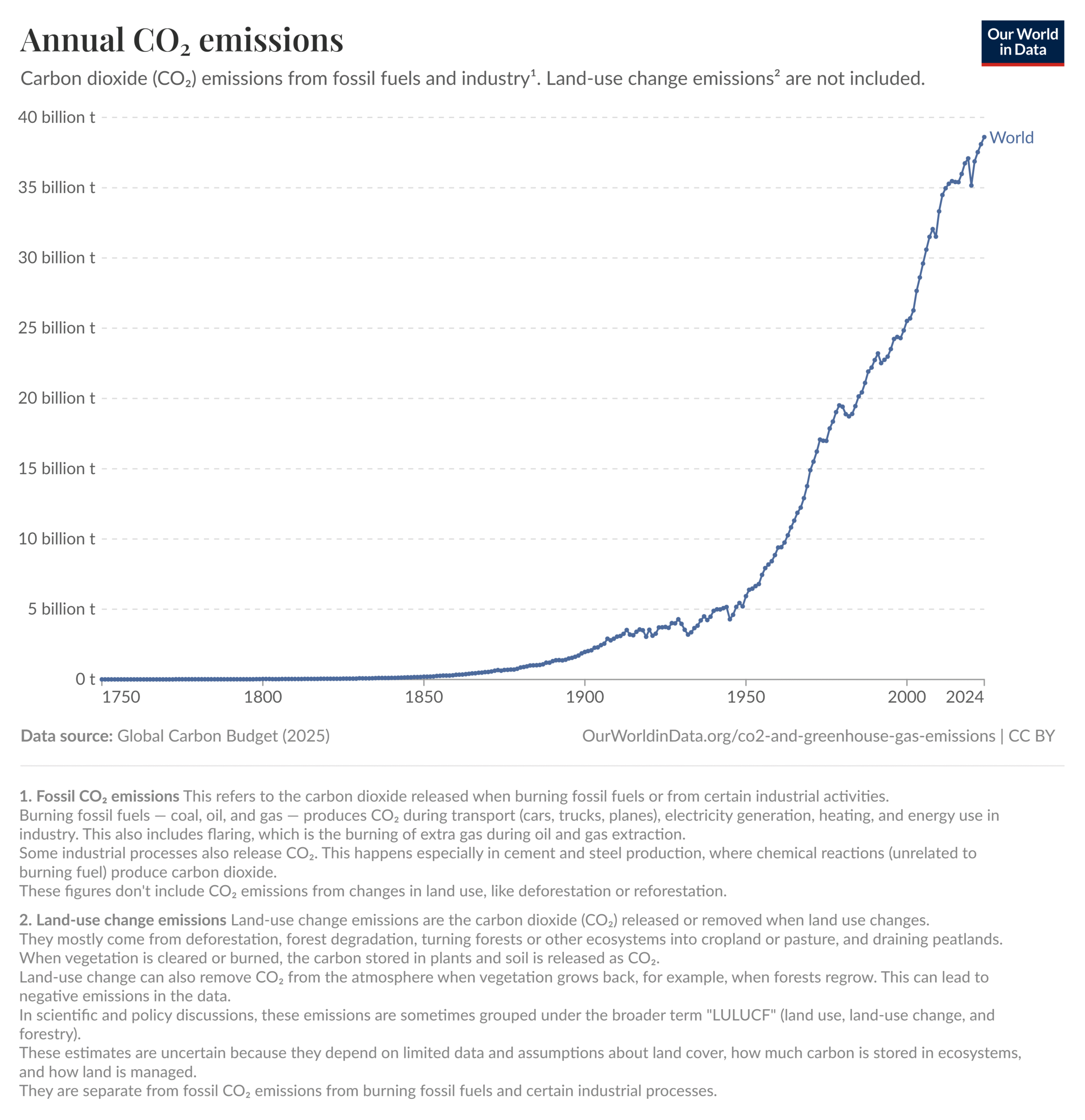
París no cambió las emisiones, pero sí desbloqueó una justificación permanente para los impuestos climáticos, el racionamiento energético y el desmantelamiento de energía barata y confiable: la base de la prosperidad económica.
COP30 necesita una victoria para justificar su existencia. Así que ha reescrito la historia: inventa una trayectoria de 4 °C, finge que París la redujo y se felicita por haber salvado a la humanidad.
El mundo nunca se dirigió hacia el RCP8.5. París no cambió las emisiones.
Mentiras.

Traducido al español para Clintel Foundation por Tom van Leeuwen.
Fuente original: Electroverse Substack.

more news
ASEAN nations return to fossil fuels, back away from net zero plans
The speed at which ASEAN nations abandoned their net-zero pledges should tell you everything you need to know about the viability of the climate agenda. The moment a real threat emerged, the green energy transition was exposed as a luxury belief, says Vijay Jayaraj.
Clintel/ICSF Lecture: The Pseudoscience behind Extreme Weather Attribution
Attribution Science is being used to justify lawsuits and media narratives about a climate catastrophe rather than to advance scientific understanding, said Ralph Alexander in his recent Clintel/ICSF Lecture.
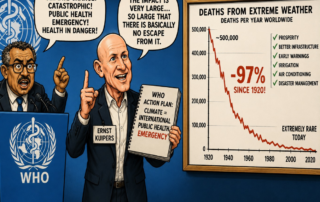
Shameless climate propaganda from the WHO and The Lancet
This week, the WHO tried once again to scare us senseless with fearmongering about climate change. It allegedly poses a catastrophic threat to public health. These claims are easily debunked and raise the question of what the WHO’s real agenda is, says Marcel Crok.

