
Is Climate Change the New Doctrine of The Catholic Church?
Anthony Watts examines the growing intersection between faith and environmentalism, asking if climate change has become the Catholic Church’s new doctrine.

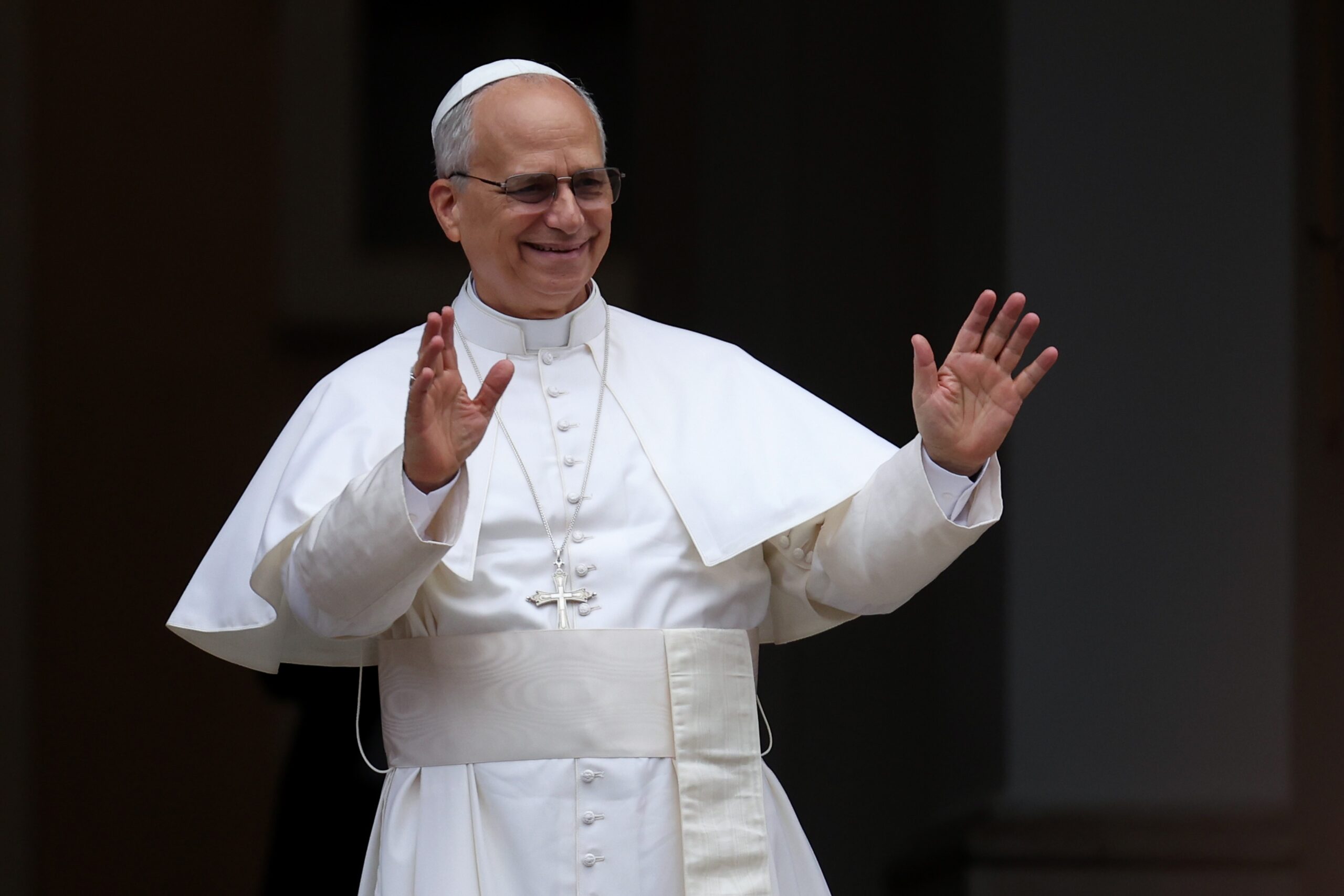
Pope Leo XIV Source: Shutterstock
Clintel Foundation
Date: 16 October 2025
At Castel Gandolfo last week, Pope Leo XIV managed to make global headlines—but not for preaching the gospel. Instead, he solemnly blessed a block of ice at the Raising Hope for Climate Justice conference.
The gesture, intended as a symbol of melting glaciers and a warming world, was met with laughter and disbelief. “Will this become Holy Water?” one observer quipped online. Others were blunter: the papacy, they said, has become climate theater.
The pope’s symbolism was meant to inspire. Instead, it revealed something troubling: the Vatican’s moral authority is being melted down into a prop for environmental politics. When the Bishop of Rome plays to the gallery with ice blocks and photo ops, the message is clear: faith is being repackaged to serve as a public relations tool.
This spectacle was not an isolated event. It came paired with a speech in which Pope Leo condemned those who “minimize the increasingly evident impact of rising temperatures” and derided critics who “ridicule those who speak of global warming.” It was a script that echoed Pope Francis’s 2015 encyclical Laudato Si’, which firmly planted the Roman Catholic Church in the middle of global climate activism.
Leo XIV insisted, “We will raise hope by demanding that leaders act with courage, not delay.” But these words ring less like pastoral guidance and more like political sloganeering. A shepherd’s role is to guide souls — not to issue rallying cries that could just as easily be lifted from a UN climate summit.
The blessing of ice exposed the problem most starkly. A papal blessing traditionally sanctifies elements that nourish the life of the Roman Catholic Church: water for baptism, bread and wine for the Eucharist, oil for anointing. Here, ice was not consecrated for divine purposes, but conscripted as a prop for political messaging.
That distinction matters. The sacraments draw their power from Christ, not from climate metaphors. When holy ritual is used as a stage device, it cheapens both the faith and the message. A block of ice cannot stand in for stewardship of creation, nor does blessing it advance the mission of the Roman Catholic Church.
Pope Leo also repeated the familiar claim that climate change hits the poor hardest, and that skeptics are “blaming the poor for the very thing that affects them the most.” But here again, rhetoric outruns reality. In practice, it is the poor who suffer most under the weight of climate policies themselves. High energy costs, stifled development, and curtailed opportunities are the bitter fruits of the “green” agenda. Europe’s recent energy crisis, driven by overreliance on renewables and a retreat from affordable fossil fuels, left families struggling to heat their homes. Across Africa, development is stifled by Western climate aid packages tied to restrictions that prevent industrial growth. These policies, cheered on by elites, deepen poverty rather than relieving it. Yet the pope reserves his sharpest criticism not for policymakers, but for skeptics.
This is not the first time the Roman Catholic Church has tied itself to a scientific consensus. The Galileo affair remains a cautionary tale: doctrine was entangled with prevailing science, and when that science shifted, Rome’s credibility collapsed. Today, climate models — uncertain, politicized, and often wrong — are treated as moral absolutes from the pulpit. It is a dangerous repetition of history.
Yes, the climate changes. It always has. But the leap from “some warming” to “existential crisis requiring radical global transformation” is not theology — it is ideology. The papacy should never mistake one for the other.
As a Roman Catholic, I want to be clear: I do not deny the call to stewardship of creation, nor do I reject the authority of the Roman Catholic Church in matters of faith and morals. But I cannot support the Holy See when it uses the papal office to advance politicized views on climate science. My disagreement is not with the faith but with a misguided application of it. The pope’s duty is to lead souls to Christ, not to serve as a spokesman for contested policies.
Scripture is clear: we are to care for the Earth. But stewardship is not synonymous with political posturing or theatrical stunts. Blessing blocks of ice may make headlines, but it does nothing to strengthen faith or lift the burdens of the poor.
The Roman Catholic Church’s mission is eternal salvation, not temporal activism. Its message should be timeless, not tied to the agenda of climate conferences. If Pope Leo truly wishes to raise hope, he would do better to preach than pontificate. For Roman Catholics, salvation will never be measured in tons of CO₂ — but in faith, truth, and fidelity to the gospel.

Anthony Watts
Anthony Watts (awatts@heartland.org) is a Senior Fellow for Environment and Climate at The Heartland Institute.

This article was published in The Western Journal on 11 October 2025.
Last year, Clintel published an essay about the previous Pope. You can read this essay here.

more news

Britain: Time To Go Back to Coal
Adding more and more wind and solar does not solve the problem of Britain’s looming ‘firm generation capacity crisis’, says Francis Menton. How about doing the unthinkable — bring back coal!

Fire Fighting in the European Union: Don’t Forget The Decade of Policy Failures in California
Whether in the Mediterranean or the American West, the narrative around wildfires has become a convenient shield for policymakers: blame “climate change,” ignore the structural rot, and then demand more taxpayer money to sustain a broken status quo.
Climate.us: A Sign That the Climate Debate Is Far From Over
Many commentators have suggested that recent political changes represent some sort of permanent turning point in the climate debate. That would be a mistake, says Anthony Watts. The Climate.us project for instance, demonstrates that there remains a substantial network committed to maintaining the climate narrative.

