
EXCLUSIVE. Professor Richard Lindzen: There Will Be No Climate Catastrophe
Dr. Richard Lindzen, a distinguished atmospheric scientist, says that a half-degree of warming is far from being an existential threat: “People have to ask, what the hell are they talking about?”

“If you reach Net Zero by 2050, if you do it worldwide, you avoid about a third of a degree of warming. If it’s just Europe and the Anglosphere, it’s closer to a tenth of a degree,” says Dr. Richard Lindzen, an atmospheric physicist and professor emeritus of the Massachusetts Institute of Technology (MIT). “So you have avoided a tenth of a degree of warming at a cost of probably tens of trillions of dollars. Doesn’t seem like a bargain to me,” he adds. “How far will the population go in saying, we will sacrifice ourselves for a symbolic gesture?”
And who cares about a tenth of a degree of warming, Lindzen asks. “When somebody says the change of a tenth of a degree, or when (UN Secretary-General António – HS) Guterres says, if it changes a half-degree, we’re finished as a species, this is an existential threat – people have to ask, what the hell are they talking about?”
According to Lindzen, all recent predictions of climate catastrophe have proven false, and future ones will be as well. “2030 will pass. 2050 will pass. Fifty years will pass. There will be no climate catastrophe,” he says.
In the interview, Lindzen thoroughly discusses what climate scientists know about climate change and its processes, as well as the half-truths and outright lies propagated by those proclaiming a climate crisis. He addresses topics such as the limited capacity of CO₂ to warm the planet, its actual role on Earth, misleading claims about the increasing frequency of extreme weather events, the absurdity of climate policies, and the future of energy.
Dr. Richard Lindzen is an internationally recognized American atmospheric scientist and MIT emeritus professor whose contributions to climate science are significant. Over the course of his career, Lindzen has published almost 250 scientific papers, exploring the greenhouse effect and other complex aspects of climate change, like dynamic meteorology, hydrodynamic instability, planetary waves, monsoon meteorology, planetary atmospheres, and hydrodynamic instability. His research has involved studies about the role of the tropics in mid-latitude weather and global heat transport, the moisture budget and its role in global change, the origins of ice ages, seasonal effects in atmospheric transport, stratospheric waves, and the observational determination of climate sensitivity. He has made major contributions to the development of the current theory for the Hadley Circulation, which dominates the atmospheric transport of heat and momentum from the tropics to higher latitudes and has advanced the understanding of the role of small-scale gravity waves in producing the reversal of global temperature gradients at the mesopause. He pioneered the study of how ozone photochemistry, radiative transfer, and dynamics interact with each other.
Lindzen has also contributed to the scientific reports of the United Nations Intergovernmental Panel on Climate Change (IPCC).
He earned his doctorate from Harvard University in 1964. He served as a professor there until 1983 and as Director of the Center for Earth and Planetary Physics from 1980 to 1983. Lindzen has been affiliated with Tel Aviv University, The Hebrew University in Jerusalem, and the Laboratory for Dynamic Meteorology, Paris, as a visiting professor during his academic career. In 1983 he joined MIT, where he became a professor of atmospheric sciences. Lindzen retired in 2013.
Lindzen has been recognized for his scientific contributions with several prestigious awards. The American Meteorological Society honored him with the Clarence Leroy Meisinger Award (1968) and the Jule Charney Award (1985) for ‘highly significant research in atmospheric sciences’. The American Geophysical Union awarded him the James B. Macelwane Medal (1969), and the Engineers’ Council recognized him for outstanding achievements in engineering (2009), among other honors.
Lindzen is a member of both the U.S. National Academy of Sciences (elected in 1977) and the American Academy of Arts and Sciences (elected in 1977).

more news
Success of American climate sceptics is the result of hard work
The current success of the climate sceptic movement in the United States is not accidental. It is the result of several decades of deliberate work, networking, and strategic campaigning, says Craig Rucker of CFACT.

Indonesia and India Are Jointly Planning a Hydrocarbon-Powered Future
India is the world’s most populous nation, and Indonesia the fourth. Together, they represent 1.8 billion people. At the top of their agenda is a massive expansion of energy trade.
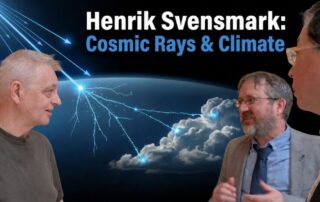
Svensmark on Cosmic Rays, Clouds and the Politics of Climate Science
At the EIKE Conference in Halle (Germany), Willie Soon and Ronan Connolly from the CERES Team met with recently fired Danish physicist Henrik Svensmark for a wide-ranging discussion about his research into the relationship between solar activity, cosmic rays, clouds and climate. The cosmic-ray mechanism he proposes deserves to be investigated on its physical merits rather than dismissed because it does not fit comfortably into existing climate-model frameworks.

