
Germany’s Gas Crisis Escalates: Storage Sites Nearly Empty in Mid-Winter
Germany is heading toward a serious gas crisis as storage levels plunge in the middle of winter, with some facilities nearly empty. While households are still protected, industry faces growing risks as the government remains largely silent.

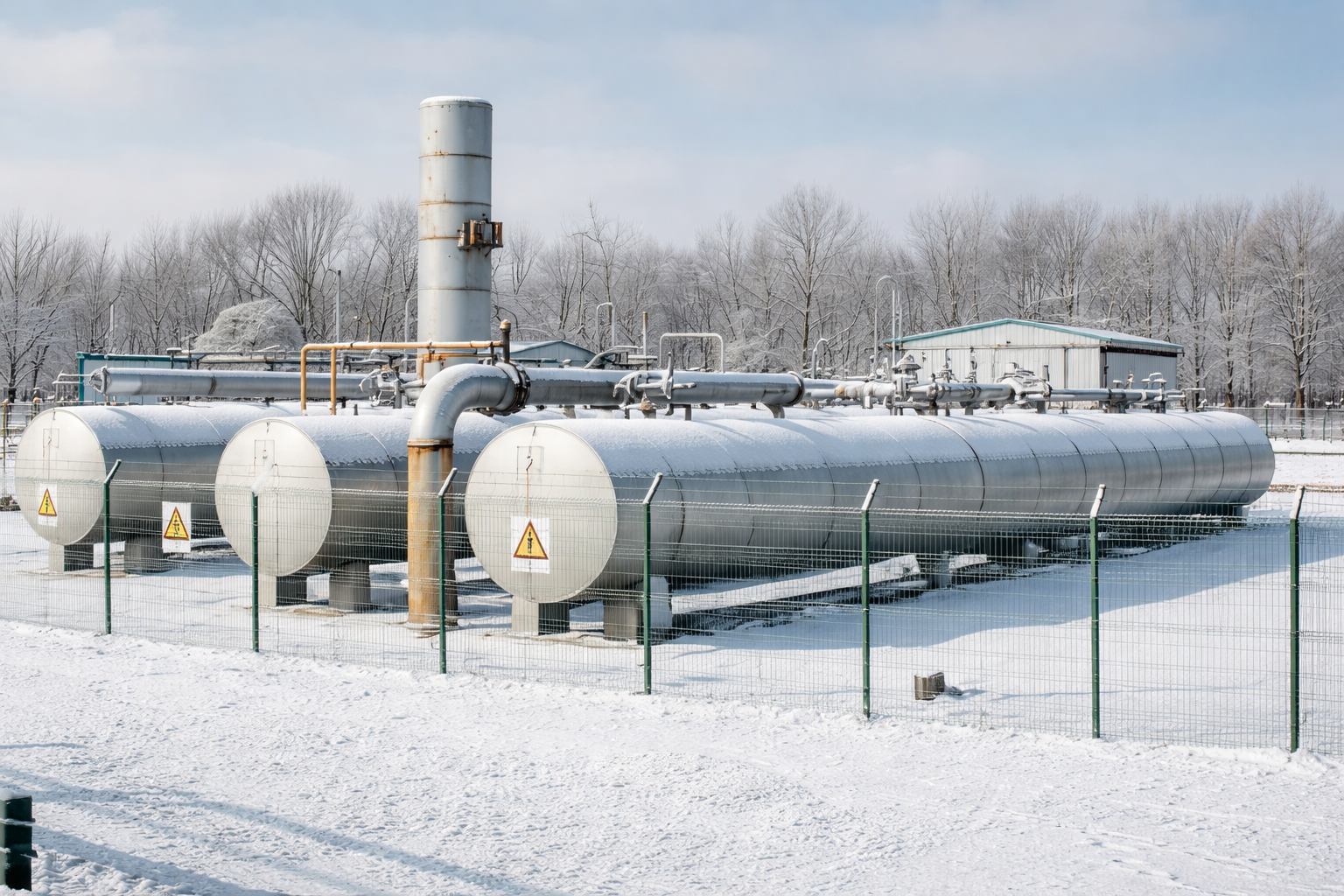
Symbol image generated by ChatGPT
P Gosselin
Date: 30 January 2026
Germany’s shift to green energy has really turned into a nightmare. It’s the dead of winter and already the first heating gas storage facility in Germany is near empty, only 6% full! Germany desperately needs to pray for a warm February miracle if the country is to avoid an energy disaster and a state of emergency.
Currently, there’s no danger to private households as their supply is guaranteed. The risks, however, are for industry. Should storage levels drop to even more dangerously low levels, then energy-intensive industry will be forced to shut down — a step that would cripple the already struggling German economy.
Bavarian gas storage levels at critical lows
No place is as critical as in the southern state of Bavaria. Apollo News describes a worrisome situation regarding Bavarian natural gas storage facilities, where fill levels are now significantly below legal requirements.
While the Federal Government mandates a fill level of 40% for Bavarian storage facilities by February 1st (due to their strategic importance for Southern Germany), the actual average in Bavaria is currently just 25%.
Only 6% full – virtually empty!
The situation is particularly dramatic at the Wolfersberg storage site, which is filled to less than 6%, making it effectively empty. Other sites like Inzenham-West (under 19%) and Bavaria’s largest facility, Breitbrunn (approx. 20%), are also far below the target.
Germany-wide levels dip below 38%
Across Germany, the situation is hardly better. Total storage levels have fallen below 38%. According to the “Natural Gas Emergency Plan,” levels below 40% are officially classified as “critical.” Yet, the German government and media continue to keep silent on the issue, which is only spawning and fueling conspiracy theories. There are reports that the government has stopped updating storage levels.
Industrial hubs face shutdowns
Since Germany’s largest storage facilities are located in the North (Lower Saxony/North Rhine-Westphalia), the Upper Bavarian sites (representing about one-eighth of total capacity) are essential for supplying the industrial hubs of Southern Germany.
In neighboring Austria, storage levels remain significantly higher at approximately 50%.

more news
Norway keeps on drilling in the Arctic
Norway’s Minister of Energy Terje Aasland has told Reuters that his country will keep developing oil and gas in the Barents Sea irrespective of a European Union (EU) ban on Arctic drilling.

Was 2026 really the “hottest summer on record” in the United States?
Summer 2026 was the “warmest on record” in the US based on average daily temperatures. But not when measured by average daily maximum temperatures, says Chris Martz. Furthermore, there are legitimate concerns about the adjustments NOAA applies to its raw data.

Press Blames Climate Change for Bear Encounters
Some news media now blame climate change for bears breaking into cars and homes in Colorado. They are promoting the catastrophe narrative of climate change in any way they can, regardless of nuances, says Linnea Lueken.

