
Lindzen and Happer on Joe Rogan: money is the most important factor in climate madness
Two leading climate sceptics, Richard Lindzen and William Happer, recently joined Joe Rogan for an in-depth conversation about the state of climate science and the powerful financial forces driving today’s climate alarmism. Peter Baeten reflects on this remarkable exchange and its broader implications.

Peter Baeten
Date: 23 October 2025
A joyful event for climate sceptics: on October 21st, two of the world’s most prominent climate sceptics were able to tell their story at length on perhaps the most famous podcast in the world: the Joe Rogan Experience. Host Joe Rogan usually attracts an audience of millions with his extensive conversations with all kinds of people, for example from politics or entertainment, and now with scientists William Happer (professor emeritus at Princeton) and Richard Lindzen (professor emeritus at MIT).
It is extremely important that as many people as possible hear Happer and Lindzen’s story. If only because, together with Rogan, they calmly reviewed the exaggerations and misconceptions in the official climate narrative (e.g. that extreme weather is not increasing and that the climate is constantly changing). Rogan proved to be quite knowledgeable, for a layman, about the state of climate science and its many flaws. But the two-hour conversation became even more interesting when it turned to the (psychological) mechanisms behind climate alarmism. Lindzen and Happer, both in their eighties, pointed out that it is certainly not new for the scientific world to uncritically follow a fad, as was the case for example with racial theory in the 1930s.
Furthermore, experience teaches them that nothing human is alien to the individual scientist. Scientists are just as sensitive to money, jobs, power, status, and ideology as other people. According to Lindzen, the tendency to uncritically follow a hype is even stronger at universities than among ordinary people. But both sceptics ultimately see money as the most important factor in the ongoing climate madness. Stop funding alarmist climate research and the whole ideological house of cards will collapse on its own, they say. This is something Trump is currently trying to do in the United States.
Even for someone who is highly critical of the establishment, such as Rogan, the image that Lindzen and Happer paint of science and scientists is sobering and difficult to believe. He still sees scientists as a better category of people in terms of knowledge, wisdom, and moral standards. And you see that a lot, even among people who have not been involved in academia themselves. Hopefully, this podcast will open the eyes of millions of other (non-academically educated) people a little.
This does not mean we should reject science as a whole; it has brought us a lot of progress, but it has simply been put on too high a pedestal. Lindzen: Science is not an authority, it’s a methodology.
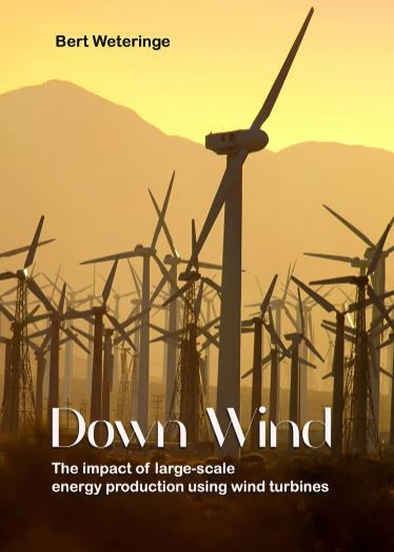
Richard Lindzen and William Happer both appear in the award-winning documentary Climate: The Movie (The Cold Truth) by director Martin Durkin on our YouTube channel.

more news
Norway keeps on drilling in the Arctic
Norway’s Minister of Energy Terje Aasland has told Reuters that his country will keep developing oil and gas in the Barents Sea irrespective of a European Union (EU) ban on Arctic drilling.

Was 2026 really the “hottest summer on record” in the United States?
Summer 2026 was the “warmest on record” in the US based on average daily temperatures. But not when measured by average daily maximum temperatures, says Chris Martz. Furthermore, there are legitimate concerns about the adjustments NOAA applies to its raw data.

Press Blames Climate Change for Bear Encounters
Some news media now blame climate change for bears breaking into cars and homes in Colorado. They are promoting the catastrophe narrative of climate change in any way they can, regardless of nuances, says Linnea Lueken.

