
The DOE climate report: a scientific milestone that Europe does not want to see
While alarmist studies are spreading like wildfire in Europe, the groundbreaking report A Critical Review of Impacts of Greenhouse Gas Emissions on the U.S. Climate is being completely ignored. This report finally pays explicit attention to uncertainties, alternative insights, and factual observations in climate science. The European silence is not only remarkable, it is downright shocking. It casts a shadow over the intellectual honesty of the European climate debate.

Op-ed by Evert Doornhof/Clintel
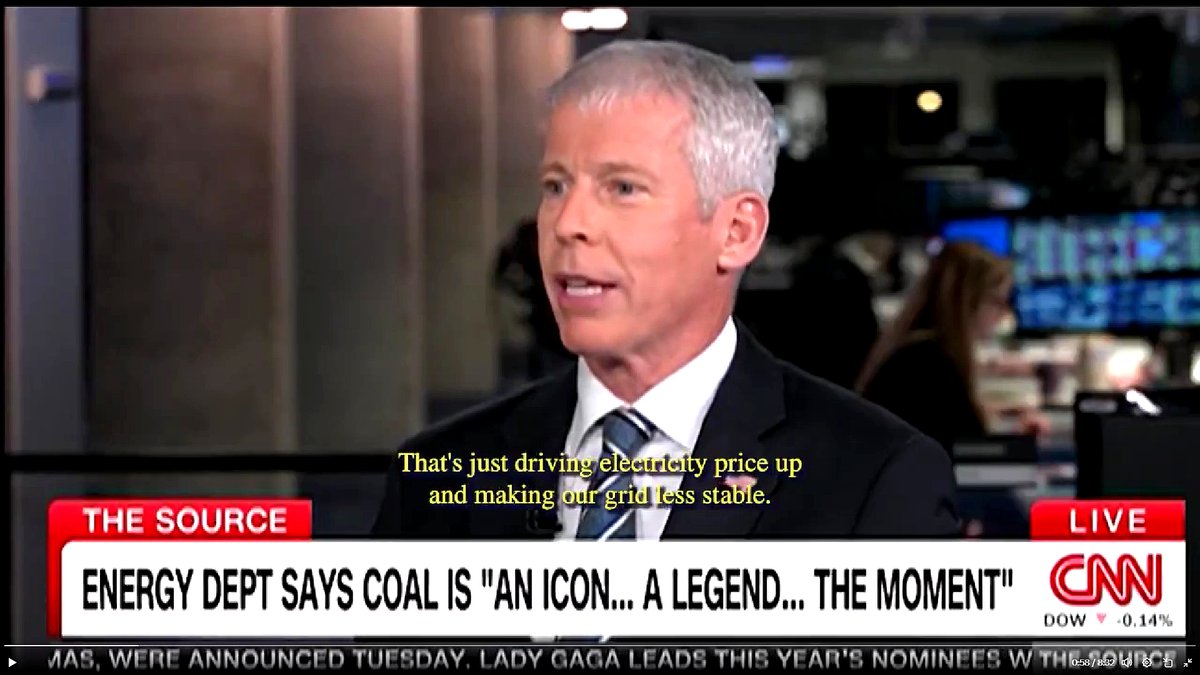
In July, the U.S. Department of Energy (DOE) published a groundbreaking document: A Critical Review of Impacts of Greenhouse Gas Emissions on the U.S. Climate. At the request of Energy Secretary Chris Wright, five leading scientists provided a clear and well-founded overview of climate science, finally paying explicit attention to uncertainties, alternative insights, and factual observations. The authors are not bloggers or activists, but internationally recognized researchers with decades of expertise in climate science, meteorology, economics, and physics. [See the box at the bottom of this article for their credentials].
Sober, well-founded, and without alarmism
Energy Secretary Chris Wright gave the researchers complete freedom in writing this report: “I exerted no control over their conclusions.” The report stands out for its clarity, objectivity, and scientific integrity.
Some key points of the report are:
- CO₂ should no longer be seen as ‘pollution’: the report advocates a scientific review of this US position (since 2009), including recognition of the positive effect of CO₂ on crop growth.
- Global greening: satellite images show greening of the Earth due to higher CO₂ levels.
- Models vs. observations: the discrepancies between model results and actual observations are shown. There is also more emphasis on natural climate variability.
- Weather extremes: there is no alarming increase in extreme weather conditions in the US.
- Economic consequences: interventions on CO₂ emissions have little climate impact in the short term, but can entail high economic costs.
Reactions from Europe
The report has certainly been noticed within the US. Among others, researcher Roger Pielke Jr. devoted a widely read article to it on his Substack channels. Pielke describes the DOE report as a serious scientific text that has carefully processed sources.
This report should also have shaken Europe awake, but what happened? Complete silence. No news bulletins, no parliamentary questions, no editorial commentary. While alarmist reports are spreading like wildfire across Europe, this report is being ignored. This is not only remarkable, it is downright shocking. It casts a shadow over the intellectual honesty of the European climate debate.
Two articles on the Dutch blog Klimaatgek.nl endorse this. On August 8, DoE report and media silence (in the Netherlands) was published, noting that the report was widely discussed in US circles, but remained unseen in the Netherlands, despite its importance for the automotive, energy, and agricultural sectors, among others. Earlier, on July 30, Klimaatgek headlined: Breakthrough: revision of CO₂ vision in the US. The report is called a potential turning point in the American climate vision, something that Europe cannot ignore.
Why this is so essential for Europe
Europe is guided by a single narrative: the climate crisis is urgent and catastrophic. Those who think differently are ignored or denounced. This report does the opposite: it acknowledges human influence, puts it in context, highlights uncertainties, identifies the benefits of CO2, and advocates for balanced policy considerations. As mentioned, the European silence is distressing. It is not only journalistically inappropriate; it is a democratic and scientific shortcoming. The consequences are:
- A limited public debate – the public only hears one side.
- Democratic deficit – policy-making based on incomplete information.
- Scientific impoverishment – essential uncertainties and alternatives disappear from view.
Time to wake up
The DOE report deserves open debate, not silence. Europe should be proud of space for scientific diversity. Anyone who truly trusts science cannot ignore this report. Clintel remains committed to increasing the visibility of this and similar contributions – not to prove itself right, but to make the conversation complete. Only with all the facts, uncertainties, and perspectives can sensible choices be made.

The five authors of the DOE climate report
- Professor of Atmospheric Sciences, University of Alabama in Huntsville.
- Co-developer of satellite measurements of global temperatures.
- Former professor and chair of the School of Earth and Atmospheric Sciences, Georgia Tech.
- Expert in uncertainty analysis and climate modelling.
She wrote an article about (the creation of) the report, which can be read here on clintel.org.
Judith Curry also appears in a recent interview by Freedom Research.
- Physicist, former Undersecretary for Science, DOE.
- Author of Unsettled: What Climate Science Tells Us, What It Doesn’t, and Why It Matters.
- Professor of Economics, University of Guelph.
- Specializes in statistical climate data analysis and economic climate impact.
- Senior Research Scientist, University of Alabama in Huntsville.
- Expert in satellite observations and atmospheric physics.
Climate: The Movie (The Cold Truth)
Steven Koonin, Roy Spencer and Ross McKitrick also appear on our YouTube channel in the documentary Climate: The Movie by director Martin Durkin and producer Tom Nelson.

more news

Renewables still provided only 6% of global primary energy in 2025
The highly touted renewables provided only 6% of the world’s primary energy supply last year, according to the Statistical Review of World Energy, released earlier this week. Robert Lyman analyses the important overall statistical trends for the Friends of Science Society.

The Democrats’ Green Delusion: Using the Iran War to Double Down on Renewables
We can now see a familiar rhetorical manoeuvre from the Climate Establishment, says Tilak Doshi: Every crisis becomes a reason to accelerate the energy transition, and every inconvenient cost is attributed to insufficient commitment to the cause.

Europe’s Heat Deaths Are a Policy Failure, not a Climate Failure
More than 90 percent of American homes have air conditioning. Europe chose a different, deadly, path. It pays the price for ideology disguised as environmental policy, says Anthony Watts.

