
The Great UN Climate Con
The United Nations Framework Convention on Climate Change (UNFCCC), signed at the Rio Earth Summit on June 12, 1992, is not just another communiqué. Unlike the Paris Agreement, which the U.S. joined by executive action and designed specifically to avoid Senate ratification, the 1992 framework went through the Senate and still anchors U.S. participation in the UN climate regime. That’s why it has more staying power than virtuous pledges. President Trump should begin the formal process to end U.S. participation in the 1992 framework itself, writes Matthew Wielicki.

Matthew Wielicki
Date: 26 September
Global elites have spent three decades telling us “climate is a global problem, so only global solutions will do.” That framing didn’t appear by magic. It was written into U.S. law when President George H. W. Bush signed the United Nations Framework Convention on Climate Change (UNFCCC) at the Rio Earth Summit on June 12, 1992, and the U.S. Senate gave its advice and consent on October 7, 1992. Bush then signed the instrument of ratification on October 13, 1992, making the U.S. the first industrialized nation to ratify the treaty.
Most people have never read what that treaty actually says. The UNFCCC’s “ultimate objective” is to stabilize greenhouse-gas concentrations at levels that “would prevent dangerous anthropogenic interference with the climate system.” That sentence became the North Star for everything that followed: Kyoto, Copenhagen, Paris, and the sprawling COP process… with little success.
Before “DEI” became a campus and HR mantra, equity was written into U.S. climate policy through this Senate-ratified treaty. The treaty’s guiding principle of “common but differentiated responsibilities,” which tells developed countries to “take the lead” and makes climate finance from rich countries to poor countries a standing expectation. Over the years, that principle evolved into the $100-billion-per-year climate-finance pledge and the Green Climate Fund machinery.
Here’s why that matters now. The UNFCCC is not just another communiqué. Unlike the Paris Agreement, which the U.S. joined by executive action and designed specifically to avoid Senate ratification, the 1992 framework went through the Senate and still anchors U.S. participation in the UN climate regime. That’s why it has more staying power than virtuous pledges.
I’ve warned for years about how this architecture hard-codes confirmation bias into climate assessment and policy. In “Confirmation bias within the IPCC,” I show how the Panel’s mission is framed around identifying risks and “future risks,” not weighing benefits like CO₂ fertilization or the measurable drop in climate-related mortality with development. The result is a one-way ratchet toward alarm, regulation, and wealth transfers… while neglecting the gains from energy abundance.
Likewise, in my public comment urging EPA to reconsider its Endangerment Finding, I catalog the observational record that undercuts crisis headlines: robust global greening under higher CO₂, flat or mixed trends in normalized disaster losses, and the overwhelming role of adaptation. Readers who want receipts can start there.
And when DOE’s recent climate review landed, I walked through how it challenges the popular script on extremes and model performance… again emphasizing observations over virtue signaling.
Today, as President Trump addresses the U.N. General Assembly in New York, there’s a perfectly concrete step he could encourage: begin the formal process to end U.S. participation in the 1992 framework itself. The treaty explicitly provides a withdrawal mechanism: a country may notify the U.N. and, one year later, the exit takes effect. If the Paris executive pledge could be reversed, this Senate-ratified foundation can be lawfully revisited as well.
If you care about evidence-based climate policy and American self-government, everything starts here… with the text the Senate actually ratified in 1992 and the bureaucracy it empowered.
Subscribe to unlock the full analysis below, including exactly what the 1992 treaty says, how it locked in the UN/IPCC confirmation-bias loop, and a concrete roadmap for Congress and the White House to unwind it. You’ll also get access to 400+ data-driven posts that separate measurements from messaging at IrrationalFear.com.


more news
Success of American climate sceptics is the result of hard work
The current success of the climate sceptic movement in the United States is not accidental. It is the result of several decades of deliberate work, networking, and strategic campaigning, says Craig Rucker of CFACT.
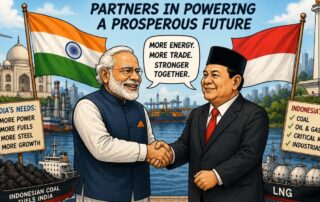
Indonesia and India Are Jointly Planning a Hydrocarbon-Powered Future
India is the world’s most populous nation, and Indonesia the fourth. Together, they represent 1.8 billion people. At the top of their agenda is a massive expansion of energy trade.
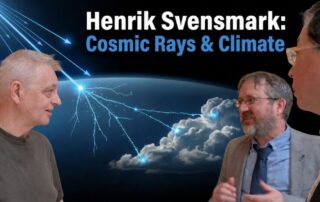
Svensmark on Cosmic Rays, Clouds and the Politics of Climate Science
At the EIKE Conference in Halle (Germany), Willie Soon and Ronan Connolly from the CERES Team met with recently fired Danish physicist Henrik Svensmark for a wide-ranging discussion about his research into the relationship between solar activity, cosmic rays, clouds and climate. The cosmic-ray mechanism he proposes deserves to be investigated on its physical merits rather than dismissed because it does not fit comfortably into existing climate-model frameworks.

