
DOE vs. the “Climate Expert Review”
In this piece, Dr. Matthew Wielicki contrasts the DOE’s climate findings with the so-called ‘expert review,’ showing how claims of worsening extremes and accelerating sea levels often run ahead of what the data actually reveal.

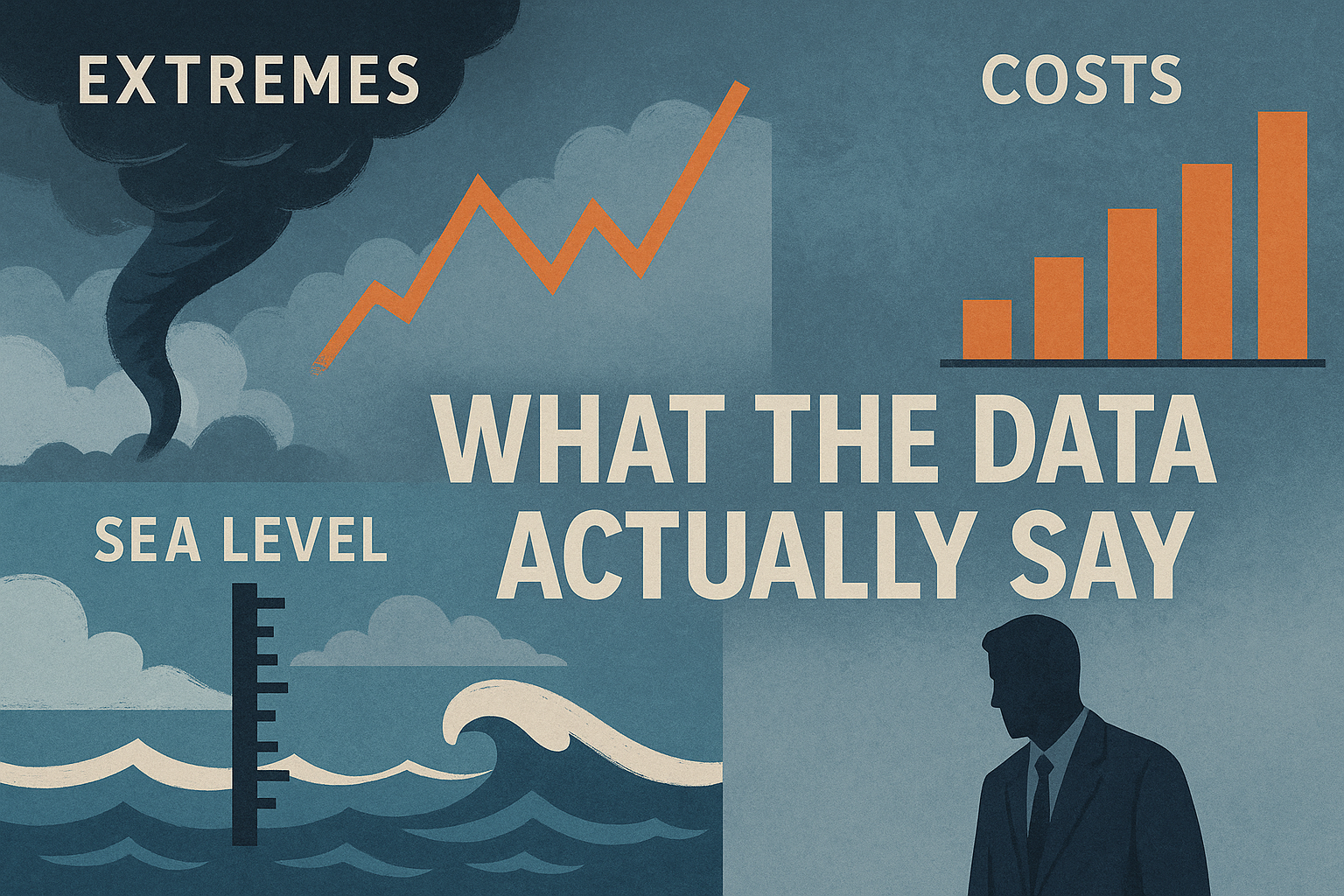
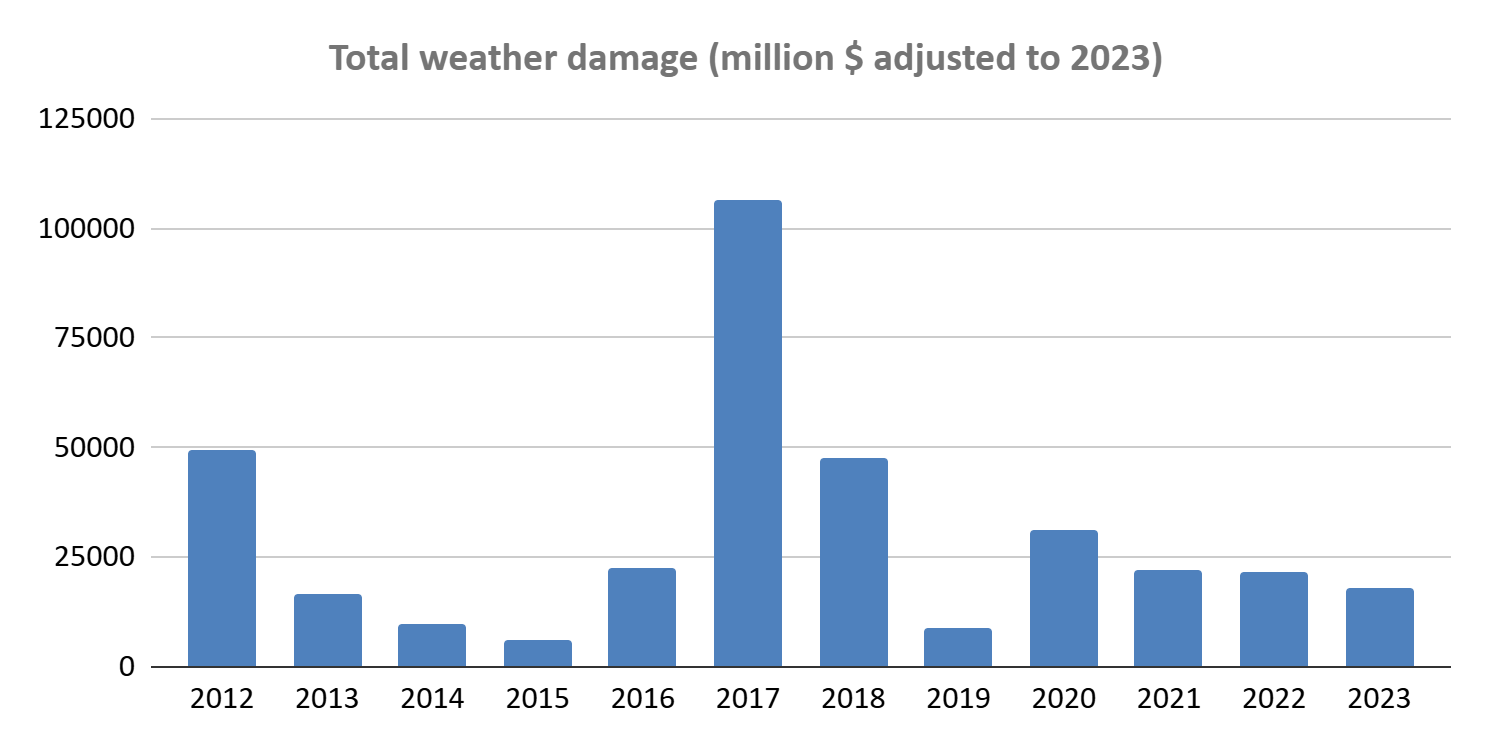
The Department of Energy’s Critical Review of Impacts of GHG Emissions on the U.S. Climate landed with a simple message most readers can understand. When you look for long-term changes in U.S. extremes, the signals are weak or absent. My own take on extremes, costs, and sea level is similar—and I have walked through the evidence many times, including The Sea Level Story You Are Not Being Told, The Hurricane Hoax: What the IPCC Doesn’t Want You to Know, The Myth of Increasing Disasters, and The Myth of Ever-Escalating Climate Costs in the USA.
A group of academics released a rebuttal, Climate Experts’ Review of the DOE CWG Report. This isn’t surprising… these are the same scientists who have long peddled the myth that CO2 is a “pollutant” akin to toxic waste, ignoring its essential role in life on Earth. Now, with their funding streams (often tied to grants that reward climate hysteria, including influences from agendas sponsored largely by entities like China, which benefits from Western deindustrialization) under threat from honest scrutiny like the DOE report, they’re scrambling to save their asses.
Below, I show, in their own words, where that review undercuts itself, and where recent empirical papers flatly contradict their narrative.
What DOE actually says about extremes
“Most types of extreme weather exhibit no statistically significant long-term trends over the available historical record… Extreme convective storms, hurricanes, tornadoes, floods and droughts exhibit considerable natural variability, but long-term increases are not detected.”
You can read that chapter yourself here: DOE Critical Review (PDF).
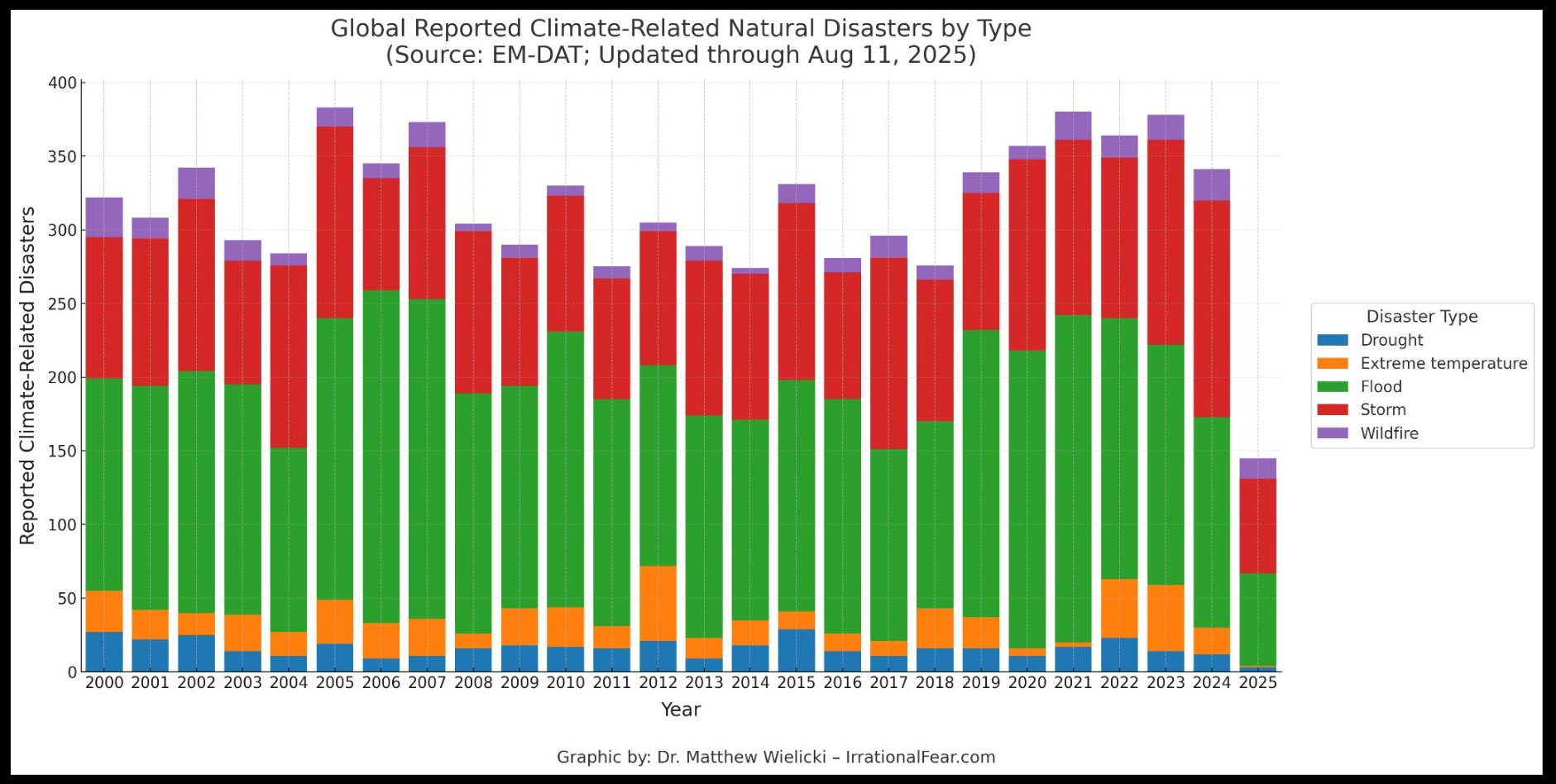
That conclusion aligns with the neutral record view I have presented for years (see my disaster trends explainer and the EM-DAT figure).
How the “expert review” tries to flip the script
“As detailed in the over 400 pages of our expert review, the DOE CWG Report exhibits pervasive problems with misrepresentation and selective citation of the scientific literature, cherry-picking of data, and faulty or absent statistics.”
It also claims DOE failed to do statistics on sea level acceleration and picked only a few gauges:
“The standard scientific approach for evaluating the presence of acceleration is through statistical analysis. The DOE CWG report, however, performs no statistical analysis to test for acceleration… [and] selectively shows graphs of linear fits to four selected U.S. tide gauges.”
But pages earlier, the review leans on a rhetorical maneuver that weakens its own case:
“The absence of statistically significant trends in the historical records does not mean that changes are not occurring.”
That sentence concedes the core point: when the data are not significant, you do not have a detected trend. It is fine to speculate that changes might exist below detection, but that is not the same as evidence.
Sea level: where the review’s claims are weakest
If you want a guide to how selective framing creeps into sea-level communication, read my primers on shoreline change and mid- to late-Holocene highstands at pre-industrial CO₂.
What the newest tide-gauge study actually found
“In nine locations (4%) of the selected locations, the acceleration is statistically significant… In three locations of the GLOSS network (8%), the acceleration is statistically significant.”
The authors go further:
“The statistical procedure detects accelerating sea level rise in a few isolated locations. This pattern is inconsistent with sea level acceleration driven by global phenomena.”
And they note a simple reality every coastal engineer knows:
Satellite altimetry records “commencing in 1993, are still too short to reliably detect acceleration.”
Read the paper here: Voortman & de Vos (2025) PDF.
This is precisely the point I make in The Sea Level Story You Are Not Being Told and in earlier pieces on adjustments and algorithm shifts and why global mean metrics can mislead.
Hurricanes: what the review admits while arguing the opposite
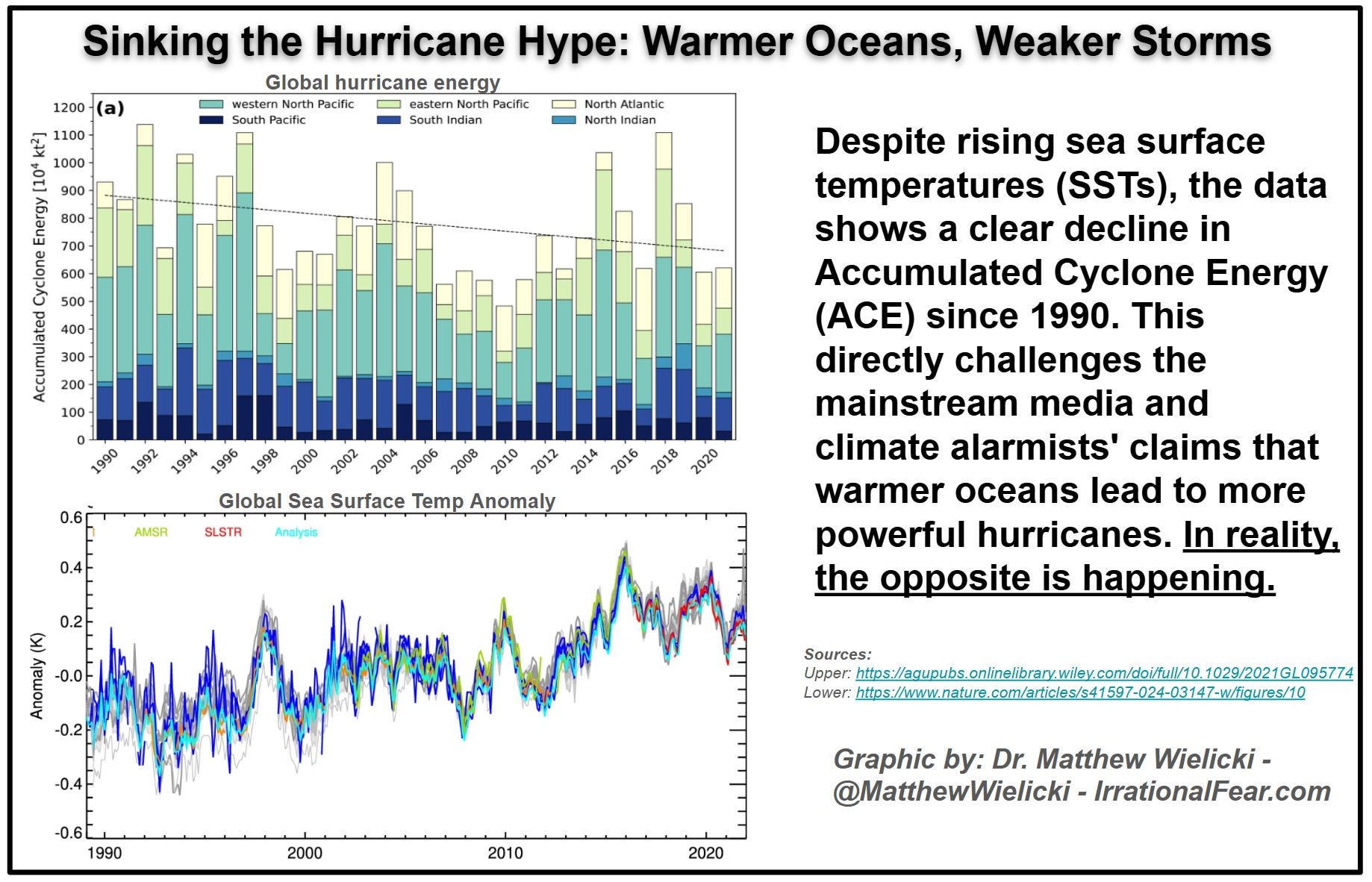
“There is low confidence in long-term (multi-decadal to centennial) trends in the frequency of all-category tropical cyclones.” (Climate Experts’ Review, quoting IPCC AR6 language)
That is the same bottom line summarized in DOE Chapter 6. For readers who want a plain-English tour through the hurricane evidence and the IPCC text, start here: The Hurricane Hoax.
Costs and “ever-escalating” claims
What readers should take away
- Measurements first. When the newest tide-gauge paper detects acceleration in only a few places and calls that pattern inconsistent with a global driver, that matters. It is a direct test with long records, not a model experiment.
- Admitted uncertainty is still uncertainty. The review’s own text acknowledges low confidence in long-term global hurricane counts and concedes that lack of statistical significance means you have not detected a trend. That aligns with DOE’s conservative reading of the data.
- Narratives are running ahead of evidence. Media headlines say acceleration and catastrophe are settled. The tide-gauge statistics, the mixed extreme-weather records, and the cost adjustments say otherwise.
This article by Dr. Matthew Wielicki was first published on his substack Irrational Fear.

If you want more like this

Dr. Matthew Wielicki
Earth science professor-in-exile, climate and cultural realist, political orphan, pluralist, husband, father, friend, optimist, Irrational Fear Substack. Dr Matthew Wielicki also appears in the documentary Climate: The Movie on Clintel’s YouTube channel.

more news
Climate.us: A Sign That the Climate Debate Is Far From Over
Many commentators have suggested that recent political changes represent some sort of permanent turning point in the climate debate. That would be a mistake, says Anthony Watts. The Climate.us project for instance, demonstrates that there remains a substantial network committed to maintaining the climate narrative.
ICSF/Clintel lecture by Roger Pielke Jr.: RCP8.5 is Retired – What Now?
In his recent ICSF/Clintel Lecture, Roger Pielke Jr. acknowledges that the scientific community is now correcting a long-standing problem regarding extreme climate scenarios like RCP8.5. But he warns that the consequences of past reliance on these scenarios will continue for many years.

Judith Curry declares victory against climate stupidity; RIP Climate Etc.
According to prominent climate realist Judith Curry, the climate issue has lost its political relevance. It’s the main reason she is closing her successful blog Climate Etc.

