
In a Warming World, Rising Cold Deaths Outnumber Heat Deaths 12 to 1
A new paper shows that in the USA, cold weather is a much larger contributor to mortality than heat, and that social vulnerability plays a major role in determining outcomes.

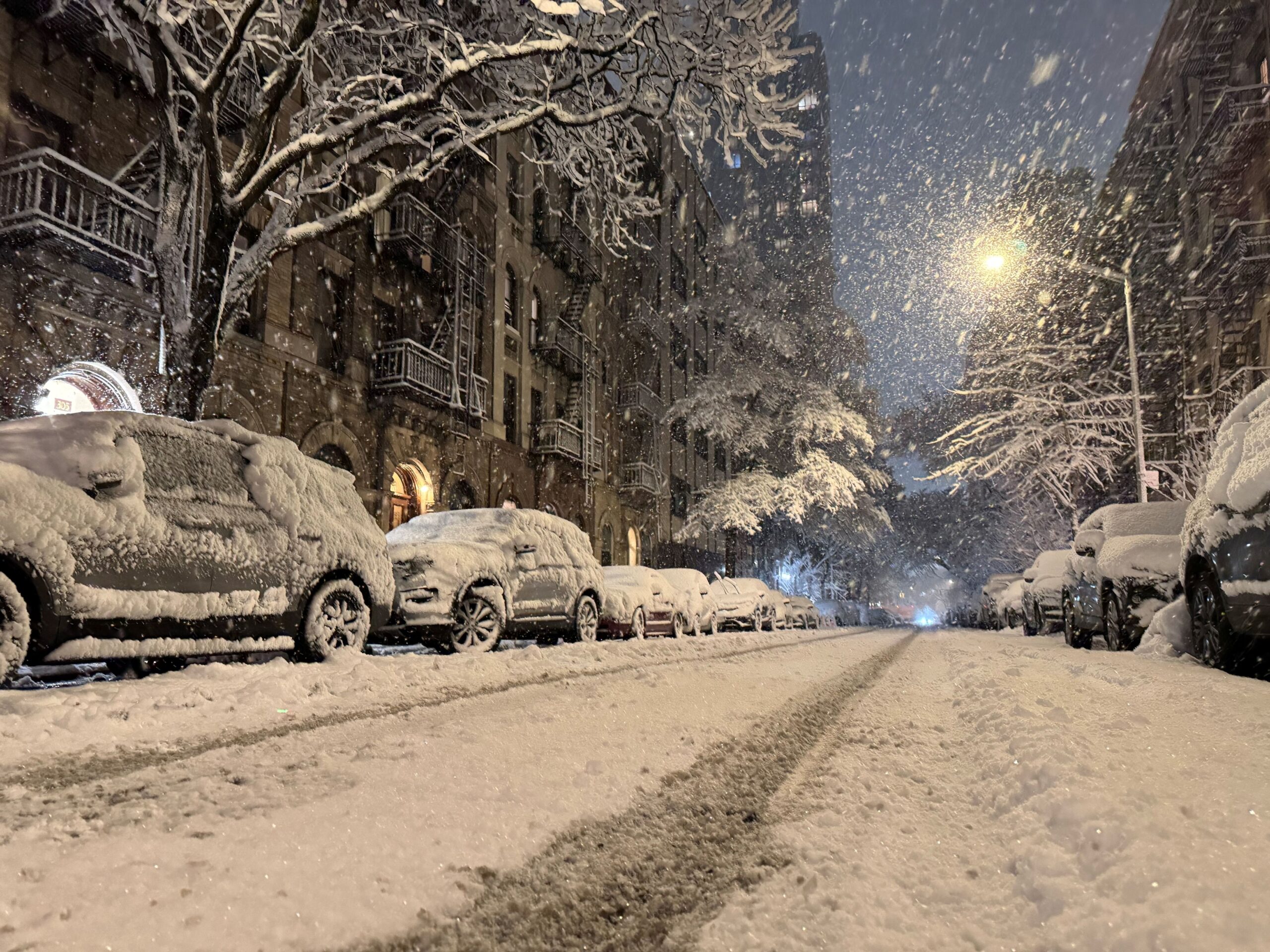
Extreme cold in Manhattan in February 2026. (Source: Shutterstock)
Anthony Watts
Date: 2 April 2026
A new paper published in Current Problems in Cardiology takes a detailed look at how temperature—both hot and cold—affects mortality across the United States. The study, covering the period from 2000 to 2020, analyzes data from over 1,500 counties and more than 33 million deaths. Its goal is to estimate how many deaths are associated with “non-optimal” temperatures, and how social vulnerability influences those outcomes.
At first glance, the framing of the paper fits a familiar narrative: climate change is often linked to rising heat waves and concerns about increasing heat-related deaths. However, the actual findings paint a more nuanced—and in some ways contradictory—picture.
The most striking result is that cold weather remains by far the dominant temperature-related killer in the United States. The authors estimate that, on average, about 72,361 deaths per year are attributable to cold temperatures, compared to only about 6,129 deaths per year from heat.
In other words, cold-related mortality is roughly twelve times higher than heat-related mortality.
Increasing cold-related deaths
This alone challenges the common perception that warming temperatures will necessarily lead to a surge in deaths. If anything, the data suggest that cold remains the far more significant public health risk.
Even more surprising is the study’s observation that cold-related deaths have been increasing over time. According to the authors, cold-related mortality has risen by approximately 9% per year since 2000 in the United States. This trend runs counter to the expectation that a warming climate would reduce cold-related risks.
So how do the authors reconcile these findings with concerns about climate change?
One key concept introduced in the paper is the “minimum mortality temperature” (MMT), which represents the temperature at which the lowest death rates occur. In this study, the national average MMT is about 22.7°C (roughly 73°F), meaning that mortality increases when temperatures are either above or below this level.
Importantly, most days in most regions fall below this optimal temperature. That means a larger share of time—and therefore a larger share of deaths—is associated with cooler conditions rather than extreme heat. This helps explain why cold-related mortality dominates the statistics.
Social vulnerability
Another major focus of the paper is “social vulnerability.” The authors use an index that includes factors such as income, housing, access to healthcare, and demographic characteristics. They find that more vulnerable populations experience higher death rates from both heat and cold.
However, the increase is especially notable for cold exposure. Counties with higher social vulnerability not only have higher overall mortality rates, but also steeper increases in risk as temperatures drop. This suggests that socioeconomic conditions—such as poor housing, limited heating, or lack of access to medical care—play a critical role in determining outcomes.
This raises an important question: are temperature-related deaths primarily a climate problem, or a poverty and infrastructure problem?
The data in this study strongly point toward the latter. While temperature extremes matter, the ability to cope with those extremes appears to matter more. Populations with better resources, housing, and healthcare are less vulnerable—even when exposed to the same temperatures.
The paper also highlights that socially vulnerable counties tend to have slightly higher optimal temperatures (MMT), meaning they are more accustomed to warmer conditions. Yet despite this, they still suffer higher mortality from both heat and cold. This again underscores that adaptation and resilience are key factors.
Policy implications
From a policy perspective, the authors argue for “vulnerability-responsive public health strategies.” In plain terms, that means targeting assistance—such as heating, cooling, and healthcare access—to populations most at risk.
That conclusion is reasonable and well-supported by the data. However, it also shifts the emphasis away from climate change itself and toward local socioeconomic conditions. If cold deaths are twelve times more common than heat deaths, and if they are rising despite warming trends, then simply reducing global temperatures would not address the main driver of mortality.
There are also some limitations worth noting. The study uses an ecological, county-level approach, which means it cannot track individual exposures or behaviors. It also relies on statistical modeling to attribute deaths to temperature, rather than direct cause-of-death records. As with all such studies, the results depend on assumptions about how temperature influences mortality.
Consistent
Additionally, the paper focuses on adults aged 25 to 84, excluding older populations who may be particularly vulnerable to temperature extremes. This could affect the overall estimates. Even with these caveats, the central findings are strong and consistent with previous research, such as the 2015 Lancet study.
Bottom line: cold weather is a much larger contributor to mortality than heat, and social vulnerability plays a major role in determining outcomes.
In the broader climate debate, these results are significant. Much of the public discussion emphasizes the dangers of heat waves and rising temperatures. While those risks are real, this study suggests they are only part of the picture—and not the dominant part.
If policymakers are primarily concerned with saving lives, then addressing cold-related risks and improving resilience in vulnerable communities may yield far greater benefits than focusing exclusively on heat.
In short, the paper provides a useful reminder that climate and health are complex issues. The relationship between temperature and mortality is not a simple story of “warming equals more deaths.” Instead, it is shaped by a combination of environmental conditions, infrastructure, and social factors.
And for now, at least in the United States, the data show that cold—not heat—remains the bigger threat.

This article was published first at wattsupwiththat.com on 31 March 2026

Anthony Watts
Anthony Watts is a senior fellow for environment and climate at The Heartland Institute. Watts has been in the weather business both in front of, and behind the camera as an on-air television meteorologist since 1978, and currently does daily radio forecasts. He has created weather graphics presentation systems for television, specialized weather instrumentation, as well as co-authored peer-reviewed papers on climate issues. He operates the most viewed website in the world on climate, the award-winning website wattsupwiththat.com.

more news

Met Office still whipping up fear with 2056 ‘weather forecast’
Five months after the IPCC ruled that the infamous RCP8.5 doomsday climate scenario was “implausible”, the British Met Office is still whipping up unjustified Net-Zero convenient fear, says Chris Morrison.

Al Gore: “Scientists have been proven absolutely correct”
Twenty years after An Inconvenient Truth, Al Gore still believes in the climate fight: “We are going to win this”.

How much Climate Change angst is propped up by China?
Just how much of the climate obsession in the West is driven by China, Jo Nova wonders.

