Roger Pielke Jr.: “Don’t accept the label climate sceptic so easily”
In his first of two recent lectures for Clintel, Roger Pielke Jr. examined the politicized debate over climate change. His central argument was that climate change is real and deserves serious attention, but that public discussion frequently goes far beyond what the scientific evidence supports. He also described how he was a target of political attacks, including some from the Obama White House.
Photos: MKFotografie
Clintel Foundation
Date: 22 October 2026
Researcher Roger Pielke Jr. began his first lecture on October 11, by emphasizing that the existence of human-caused climate change is not the central question. The more important questions concern the magnitude of future risks, the reliability of projections and the policies governments should pursue.
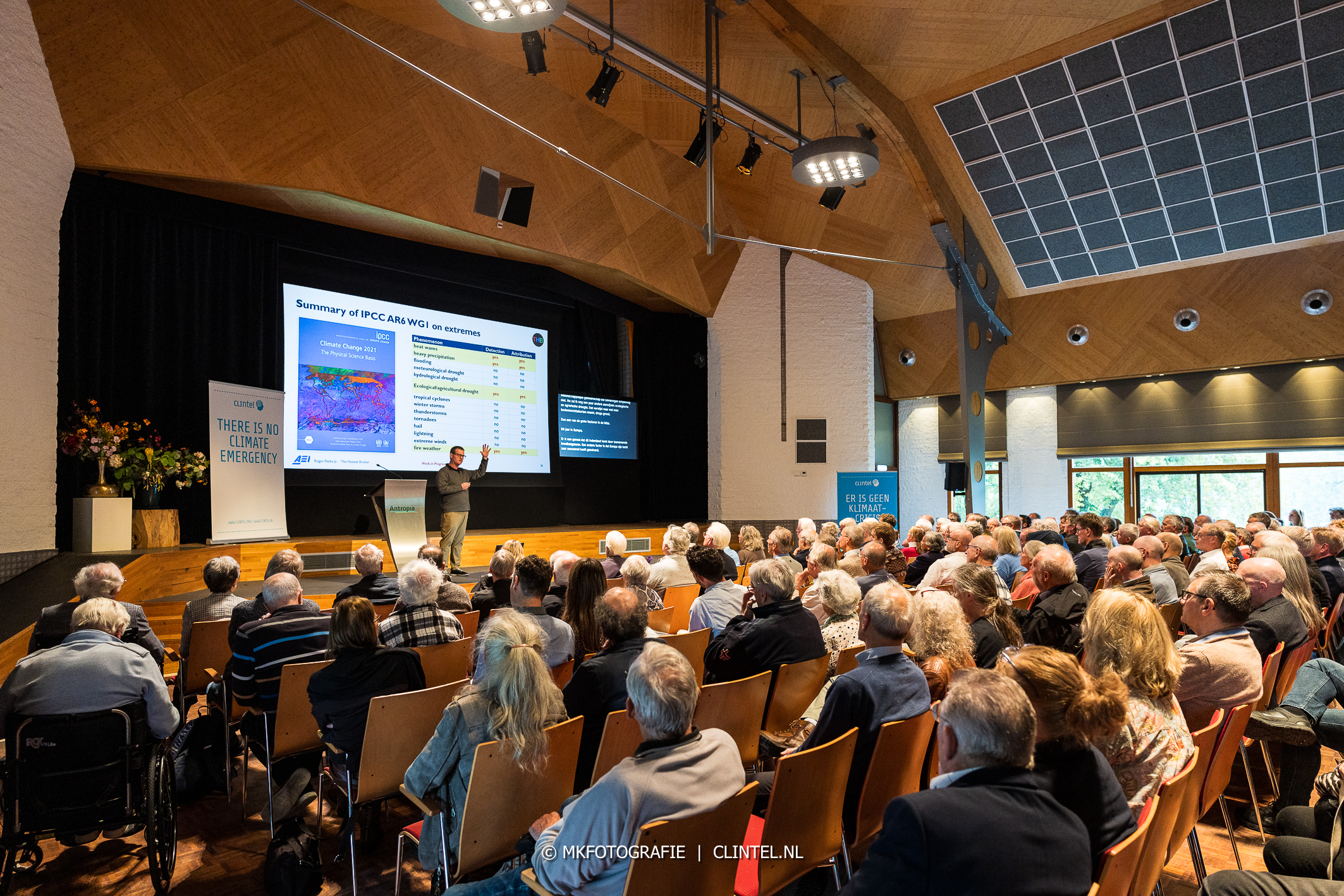
You can see his entire presentation below:
Pielke’s own career changed dramatically after he questioned claims linking extreme weather to global warming. Pielke’s research examined whether increases in economic losses from hurricanes, floods and other disasters could be attributed to climate change. His findings were consistent with the conclusions of the Intergovernmental Panel on Climate Change (IPCC), which stated in its 2012 report that long-term trends in disaster losses, adjusted for population and wealth, had not been attributed to climate change, although a contribution could not be ruled out.
Nevertheless, Pielke found himself suddenly labelled a climate-change denier. The label was particularly striking because his work had been peer-reviewed and had not been overturned by subsequent evidence. The controversy illustrated a broader problem: scientific disagreement over particular claims was increasingly treated as evidence of hostility towards climate science itself.
The White House turns against him
Pielke described how this hostility escalated after he testified before the US Senate Committee on Environment and Public Works in 2013. The committee had invited him to summarize what the IPCC’s extensive report actually said about extreme weather. He was given just five minutes, but his testimony attracted approximately 400,000 YouTube views in a week.
A few months later, President Barack Obama’s science adviser, John Holdren, testified before the Senate on extreme weather. According to Pielke, Holdren made claims that conflicted with the IPCC findings Pielke had presented. A senator challenged Holdren, pointing out that Pielke had previously given the committee a different account of the scientific assessment. Pielke said Holdren responded to the embarrassment by arranging for a six-page document about him to be published on the White House website.
In Pielke’s account, this was an extraordinary intervention by a presidential administration against an individual academic. The White House’s institutional authority meant that the episode had consequences far beyond an ordinary scientific disagreement. Pielke said that his professional life changed from that point onwards.
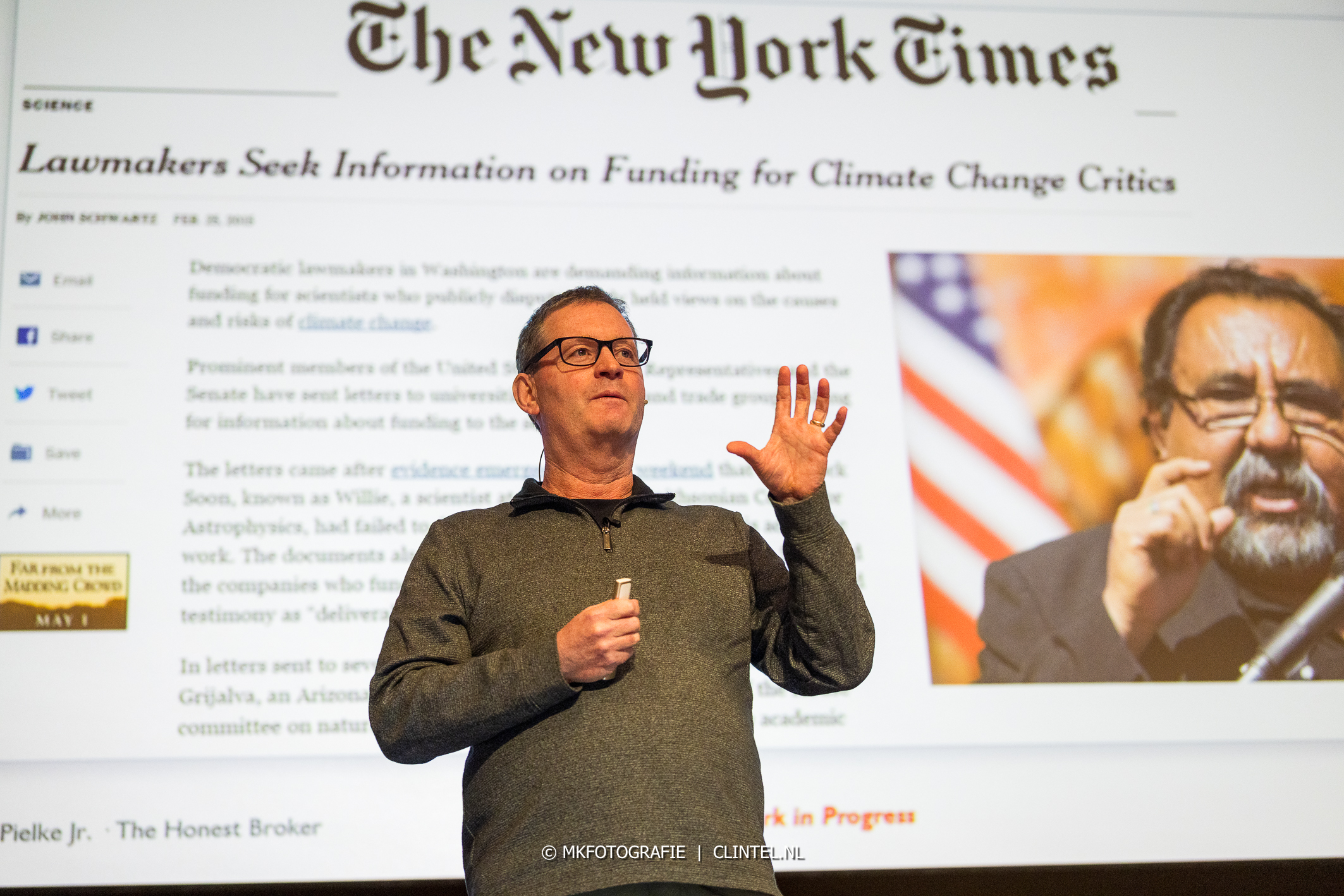
The pressure soon extended to Congress. Representative Raul Grijalva, then a prominent Democratic member of Congress, sent letters to several universities seeking investigations into researchers whose work had challenged climate claims. Pielke was among those targeted, alongside scientists including Judith Curry and John Christy.
The letter to Pielke’s university president included a particularly damaging allegation: “We believe Roger Pielke is taking money secretly from ExxonMobil.” It requested an investigation of his funding, access to his emails and the drafts of his Senate testimony.
Pielke described the experience of a congressional investigation as deeply unpleasant. The allegations also affected his standing among colleagues. Some were reluctant to associate with him, even if they personally believed him to be honest, because prominent media coverage had linked his name to claims of secret fossil-fuel funding. He joked that he could now laugh about the affair, but stressed that it had been no laughing matter at the time.
His wider complaint was that critics had sought to discredit him rather than engage with his evidence. Instead of asking to see his data, code or analysis, they questioned his motives and financial integrity. This approach undermined open scientific debate and damaged his career.
Pielke argued that the episode reflected a larger tendency in climate politics: researchers who challenged influential narratives could be treated as politically suspect, regardless of whether their findings were consistent with the scientific literature. The label “denier” was not merely an insult; it made it harder for a scientist to be heard at all.
What the evidence says about extreme weather
Pielke then returned to the scientific issue at the heart of the controversy. He stressed that different types of extreme weather must be examined separately. Evidence of more frequent or intense heatwaves does not automatically establish a similar trend in floods, hurricanes, droughts, tornadoes or other phenomena.
The IPCC has found that human influence has contributed to increases in heat extremes in many regions and to heavier precipitation in some areas. But the evidence is not uniform across all categories of extreme weather. Pielke argued that public statements suggesting that virtually every major flood, hurricane or drought is becoming more frequent or severe because of climate change often go beyond the assessment literature.
He also distinguished extreme weather from disasters. The human and economic consequences of a weather event depend not only on the meteorological conditions but also on population growth, development, infrastructure, preparedness and warning systems. Rising disaster losses cannot automatically be interpreted as evidence that the weather itself has become more extreme.
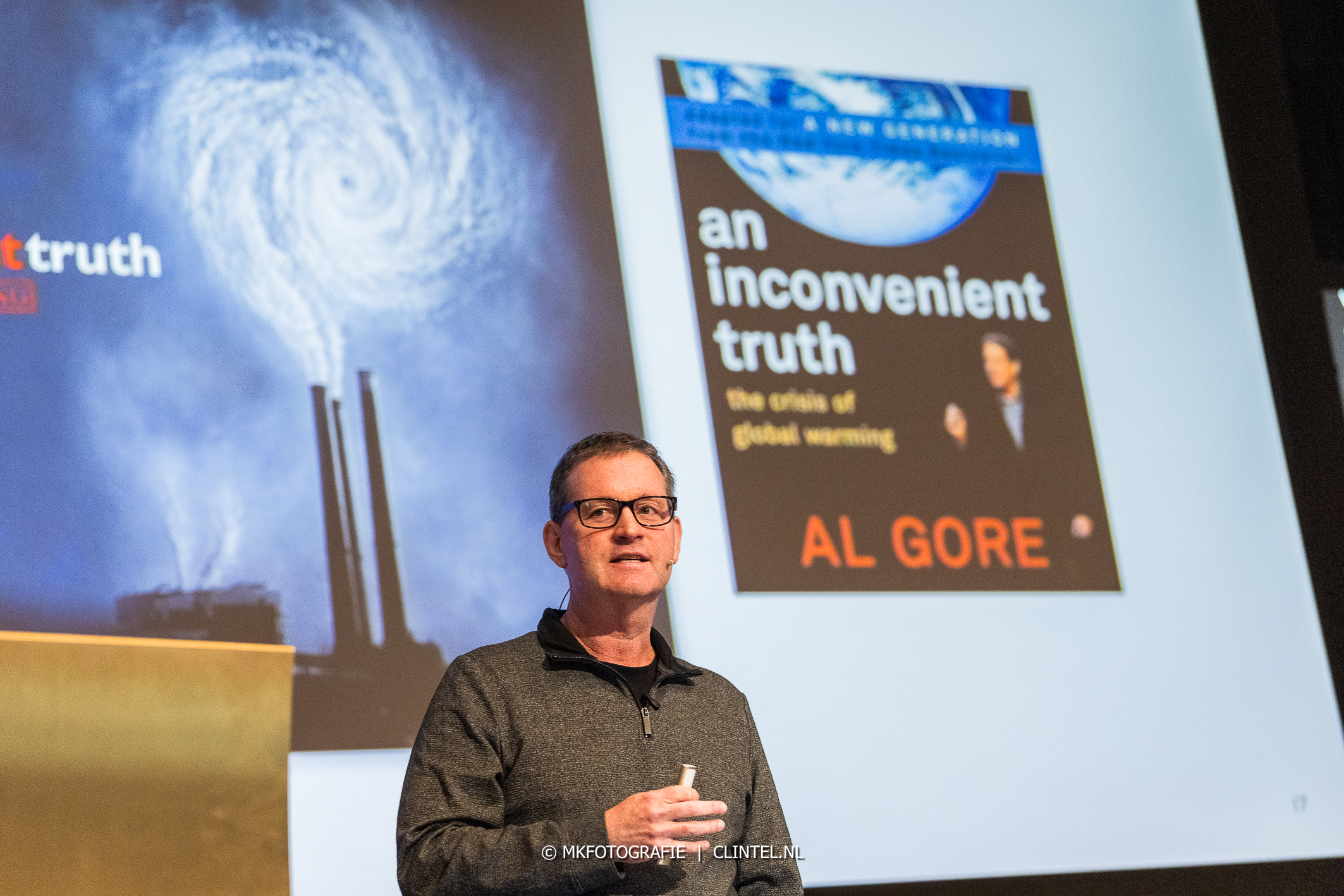
Extreme Weather Attribution is ridiculous
Pielke reserved some of his sharpest criticism for Extreme Weather Attribution, or EWA. These studies attempt to estimate how human-caused climate change has altered the likelihood or intensity of a particular event. Their conclusions often become prominent media headlines shortly after a heatwave, flood or other disaster, but the method that is used is ridiculous.
Pielke argued that some EWA methods are structured in ways that make their conclusions appear more definitive than the evidence warrants. Their complexity can also make it difficult for journalists and the public to assess the assumptions involved. As he put it: “It assumes its conclusion.”
To illustrate his concern, Pielke applied the same type of reasoning used in attribution studies to examples unrelated to climate change. One involved Major League Baseball home runs. The number of home runs reached a record in 2019. Applying the attribution approach, he argued, could produce a headline claiming that without climate change, the players would never have hit so many home runs. The example was intended to show how an observed trend can be turned into a causal claim when the method builds in the relationship it is supposed to test.
He offered a second example involving patent applications. By applying the same approach to the rising worldwide number of patent applications, he said he could construct an attribution claiming that the increase in patents had caused flooding in Japan. The point was not that patents influence rainfall, but that a method can generate a seemingly meaningful attribution between unrelated trends if its assumptions and statistical procedures are not sufficiently scrutinized.
Pielke said he had published these examples and invited the authors of attribution studies to explain what was wrong with his analysis. He reported receiving little public response, although some climate scientists privately thanked him for raising the issue. He interpreted this reluctance to engage openly as another symptom of the political sensitivity surrounding the subject.
His criticism was not that climate change has no influence on extreme weather. Rather, he argued that individual-event attribution is vulnerable to overinterpretation and that headlines often convey greater certainty than the underlying studies justify. “Extreme weather has become politicized,” he warned, while insisting that sound scientific research remains possible.
The case for evidence over labels
Pielke concluded that scientific assessments such as those produced by the IPCC remain essential. He encouraged researchers and organizations to examine the evidence carefully rather than adopting a predetermined identity as either climate sceptics or climate advocates.
His position, as presented in the lecture, was that the mainstream scientific literature should be taken seriously—including its limits and uncertainties. It recognizes human-caused warming while also showing that trends differ substantially between types of extreme weather. Political and media narratives that flatten those distinctions risk misleading the public.
The experience of being investigated and accused of taking secret ExxonMobil money had convinced Pielke that the climate debate had become dangerously intolerant of dissent. He argued that scientists should be judged by their methods and evidence, not by assumptions about their political loyalties or financial motives.
His closing message was therefore both scientific and institutional: better policy requires accurate assessments of risk, and accurate assessments require the freedom to question claims without being personally discredited.
Pielke also urged the audience not to accept the label “climate sceptic” too readily, arguing that many of their views are much closer to mainstream scientific findings than they may realize. “If you’re on the right side of the evidence, you’re on the right side of the evidence.”
Have a look at the slides of this lecture: What Climate Science Actually Says About Extreme Weather.
This article is about Pielke’s first lecture for Clintel on 11 October 2026. Soon the second lecture will be published as well.
The article you have just read was made possible by our donors.
Every day, Clintel publishes articles on climate, energy and science. We also translate and share international analyses in multiple languages, produce videos, publish reports and organize conferences and events around the world.
We receive no government funding and rely entirely on the support of our donors. Your support helps us promote independent research and contribute to a more open and balanced debate on climate and energy issues.
Would you like to support our work? Choose the option that suits you best:
• Become a Friend of Clintel – support us with an annual contribution
• Make a recurring donation – provide ongoing support and help us plan ahead
• Make a one-time donation – every contribution helps
Thank you for your support.
more news
Australian Bureau of Meteorology in trouble for copy-pasting temperature records
Jennifer Marohasy gives an update about the scandal surrounding the temperature records of the Australian Bureau of Meteorology. Its digital file showed August 1867 and August 1907 as identical on all 31 days, to a tenth of a degree. But that’s not the only problem.

The Climate Narrative is Collapsing
The climate house of cards is collapsing, as became clear last week at the IPCC meeting in Ethiopia. The climate narrative has never had any substance, and now that the flow of funding is being cut off, there will soon be nothing left, says Wim Röst, Chair of the Clintel Board.
Global Burned Area 18% Below Average
Global burned area was 18% below average this past season and has been falling for two decades. Why is that only one sentence in the annual State of Wildfires report, Charles Rotter asks.