
News
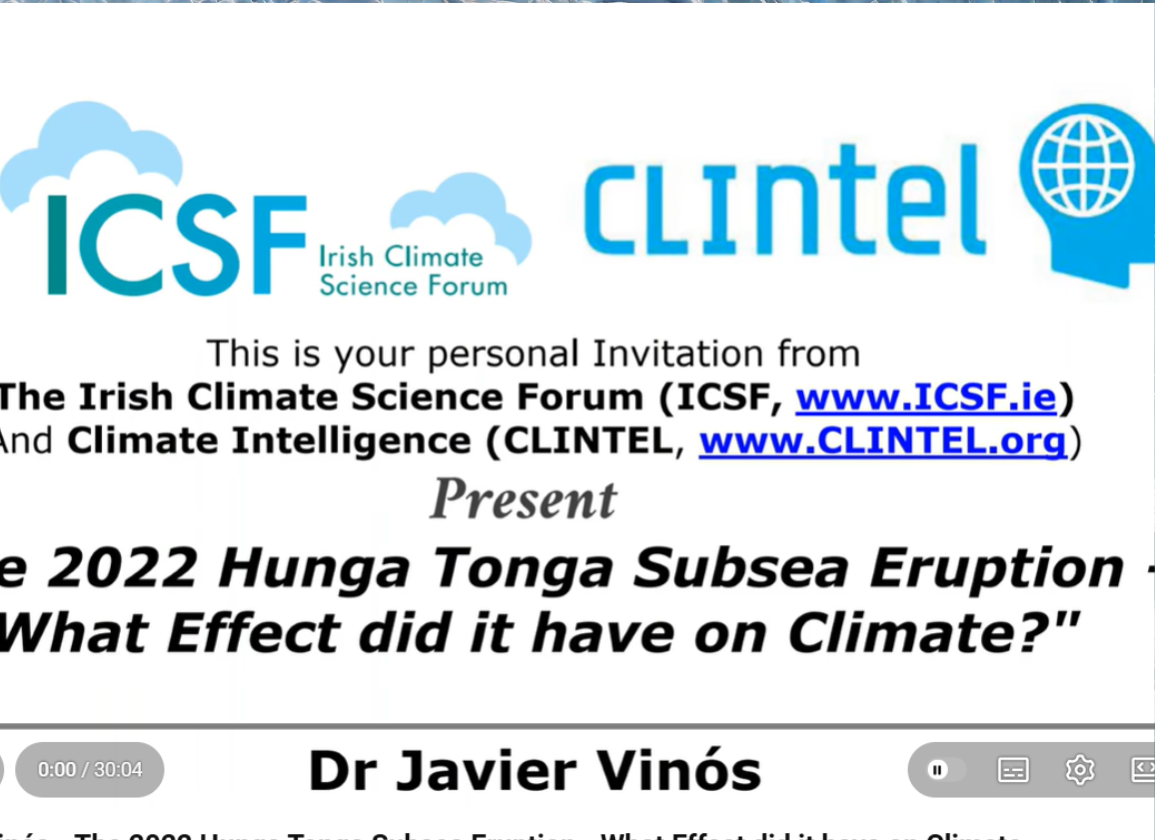
Javier Vinós on the Hunga Tonga Eruption and its extraordinary Climate Effects
In a recent ICSF/Clintel lecture, Dr. Javier Vinós argued that the January 15, 2022 Hunga Tonga eruption was the main cause of the extraordinary global climate anomalies of 2023–2024. He describes them as the first genuine multi-year global climate event in roughly 80 years, widely misinterpreted by mainstream analyses.
Swiss television tries to refute climate sceptics and fails
The editorial team of the Swiss weather program SRF Meteo has attempted to expose ‘arguments of climate sceptics’ as false. However, what they present as the alleged ‘state of science’ does not stand up to fact-checking.
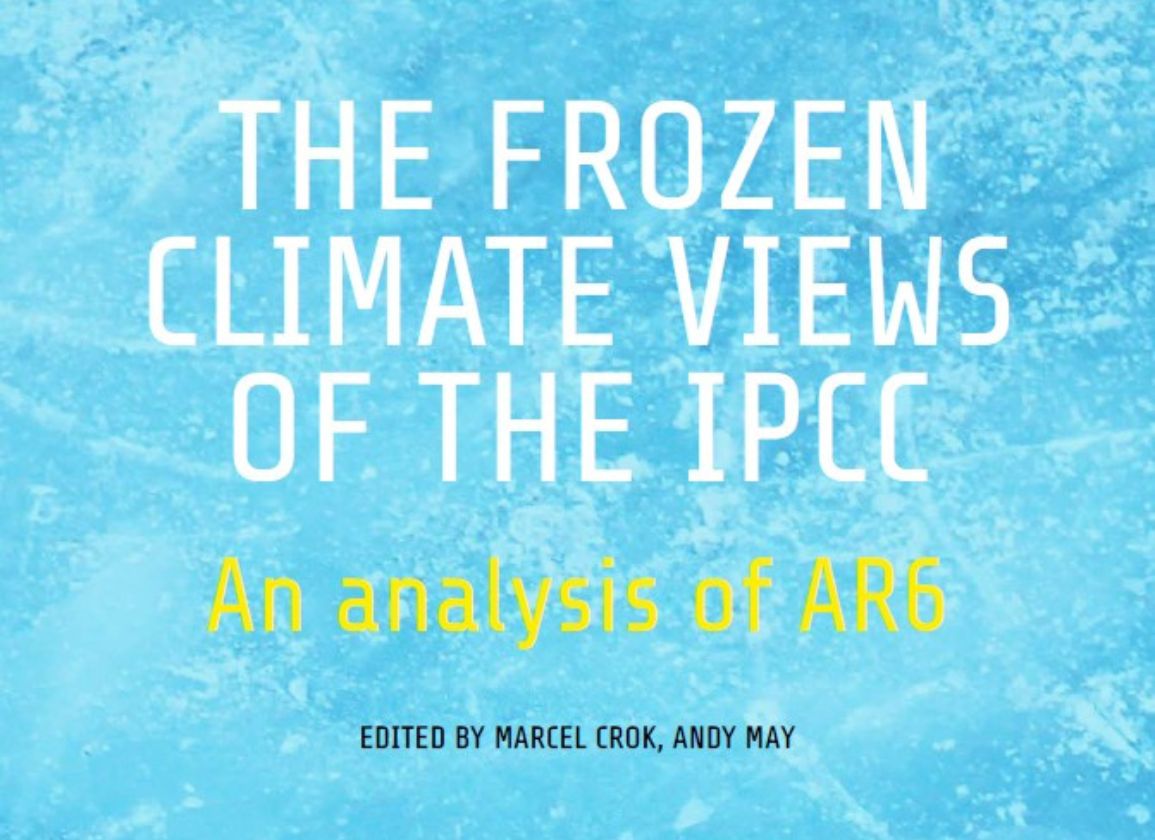
A review of The Frozen Climate Views of the IPCC, part 1
Clintel has analyzed IPCC’s Assessment Report 6 (AR6) and has published an important report on it, entitled: The Frozen Climate Views of the IPCC. It’s a report that provides many serious criticisms of the work carried out by the IPCC. Here you find part 1 (of 2) of a review of this important work by Clintel recently published by the French website: Climat et Vérité.

Yet more proof that Mother Nature is far worse than man-made climate change
New research suggests that prolonged natural drought — not ecological self-destruction — played a decisive role in the cultural transformation of Easter Island. Using hydrogen isotopes preserved in leaf wax, scientists reconstructed centuries of rainfall data, revealing a severe 16th-century drought that challenges the popular narrative of human-driven collapse.
Clearing up some misconceptions about the DoE report
After environmental groups sued to halt a critical Department of Energy climate report, accusations of secrecy and political bias quickly followed. Ross McKitrick responds by challenging what he calls widespread misconceptions about the project, defending its transparency, scientific grounding and editorial independence.
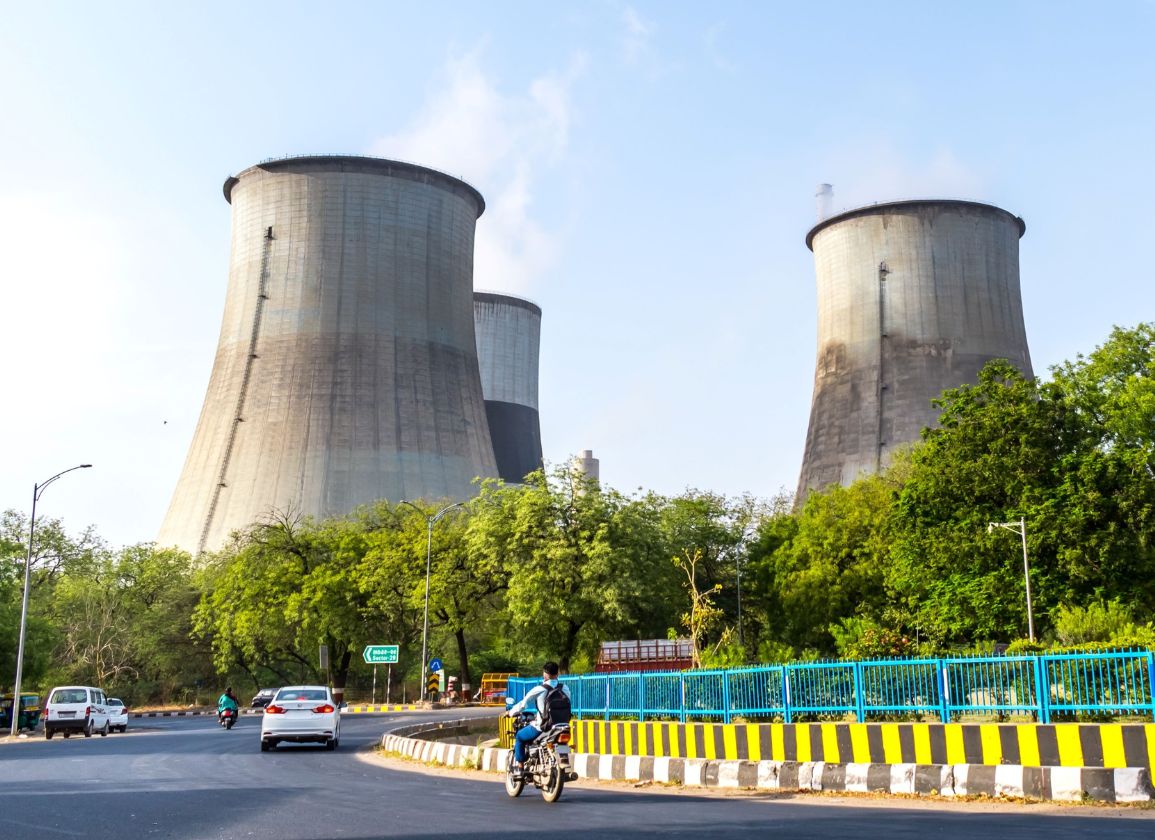
India Builds a ‘Fossil Future’
While Western governments continue to speak the language of net zero, India is rapidly expanding coal, oil and natural gas production to secure long-term energy security and economic growth. By strengthening hydrocarbon trade with the United States and other partners, India is building what the author calls a “fossil future,” prioritizing reliable and affordable energy over climate pledges.
News
Javier Vinós on the Hunga Tonga Eruption and its extraordinary Climate Effects
In a recent ICSF/Clintel lecture, Dr. Javier Vinós argued that the January 15, 2022 Hunga Tonga eruption was the main cause of the extraordinary global climate anomalies of 2023–2024. He describes them as the first genuine multi-year global climate event in roughly 80 years, widely misinterpreted by mainstream analyses.
Swiss television tries to refute climate sceptics and fails
The editorial team of the Swiss weather program SRF Meteo has attempted to expose ‘arguments of climate sceptics’ as false. However, what they present as the alleged ‘state of science’ does not stand up to fact-checking.
A review of The Frozen Climate Views of the IPCC, part 1
Clintel has analyzed IPCC’s Assessment Report 6 (AR6) and has published an important report on it, entitled: The Frozen Climate Views of the IPCC. It’s a report that provides many serious criticisms of the work carried out by the IPCC. Here you find part 1 (of 2) of a review of this important work by Clintel recently published by the French website: Climat et Vérité.
Yet more proof that Mother Nature is far worse than man-made climate change
New research suggests that prolonged natural drought — not ecological self-destruction — played a decisive role in the cultural transformation of Easter Island. Using hydrogen isotopes preserved in leaf wax, scientists reconstructed centuries of rainfall data, revealing a severe 16th-century drought that challenges the popular narrative of human-driven collapse.
Clearing up some misconceptions about the DoE report
After environmental groups sued to halt a critical Department of Energy climate report, accusations of secrecy and political bias quickly followed. Ross McKitrick responds by challenging what he calls widespread misconceptions about the project, defending its transparency, scientific grounding and editorial independence.
India Builds a ‘Fossil Future’
While Western governments continue to speak the language of net zero, India is rapidly expanding coal, oil and natural gas production to secure long-term energy security and economic growth. By strengthening hydrocarbon trade with the United States and other partners, India is building what the author calls a “fossil future,” prioritizing reliable and affordable energy over climate pledges.

